







The Wayfaring Stranger ballad has a story, but not a single, easily understood origin. Its history is a patchwork of American folk tradition, spiritual symbolism, and later myth‑making.
The internationally loved ballad is an early‑19th‑century American folk–gospel song. The ballad’s meaning and origins were shaped by frontier spirituality and immigrant hymn traditions, and Civil War lore.
At its core, the folk song speaks in the voice of a solitary traveler moving through a troubled world toward a peaceful afterlife, where loved ones wait.
That theme, life as a difficult journey and death as homecoming, appears across many American spirituals and frontier hymns.
Because it circulated orally long before it was printed, its exact origin is murky. Scholars point to several plausible roots:

The politically correct imagery of crossing Jordan may have functioned as coded language for enslaved people escaping north across the Ohio River. This aligns with the song’s plaintive tone and spiritual metaphors.
German immigrant hymnody.
A strong scholarly link connects the song to the 1816 German hymn Ich bin ein Gast auf Erden (I am a guest on earth), which shares themes of earthly wandering and heavenly home.
Appalachian folk tradition

Some music historians believe it emerged in the southern Appalachian Mountains in the late 1700s, shaped by frontier religious culture.
The earliest known printed versions appear in mid‑19th‑century hymn collections such as Bever’s Christian Songster (1858).
The Civil War legend
For decades, people believed the song was written by a dying Union soldier in Libby Prison, a notorious Confederate prison in Richmond.
The lyrics were found inscribed there, and the song became known as the ‘Libby Prison Hymn.’
But this story turned out to be myth; the song had already been published years before the war.
Still, the association stuck, and the song became tied to themes of suffering, endurance, and hope amid wartime hardship.
The song entered mainstream American culture largely through Burl Ives. The legendary balladeer adopted it as a signature piece in the 1940s, naming his radio show, albums, and autobiography after it.
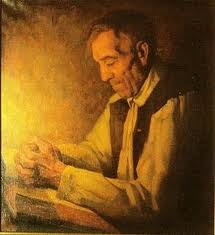
Since then, it has been recorded by artists across genres: Emmylou Harris, Johnny Cash, Jack White, Alison Krauss, and many others.
The Wayfaring Stranger resurfaces in films whenever a director wants something haunting, spiritual, and deeply American. Most recently, in 1917, when Jos Slovick’s a cappella performance introduced it to a new generation.
The ballad endures because it blends:
• spiritual yearning
• frontier hardship
• coded hope
• and a universal sense of wandering
It feels both personal and mythic. Its origins are uncertain, but its emotional clarity is unmistakable.

THANK YOU FOR SHARING OUR STORIES ON SOCIAL MEDIA. TELL OUR READERS WHAT YOU THINK
FORTY SHADES OF VERSE by Michael Walsh. In legend, verse and stories this perfect gift provides the enigmatic mirror image of the ancient Irish Nation. The Bard of Ireland’s illustrated verse crosses frontiers. The award-winning poet’s Irish blood alchemy reveals Ireland’s soul, its yearning for peace, love, justice, hope, charity and romance. CLICK PIC OR LINK FOR MORE INFORMATION https://www.lulu.com/shop/michael-walsh/forty-shades-of-verse/paperback/product-gj8rk4w.html?page=1&pageSize=4


Share this:

Categories: Music Notes



Easy Rider has the modern day ending when they get taken out by the locals by the Elmer’s Pump-U-Full.
Nicolson in gold football helmet cracks me up every time.
Wayfaring is not for your goyslop chomping Talmud Vision watching tax serf slave.
Back to the George Lincoln Rockwell fest, it keeps me insane.
LikeLike