







REAL HISTORY. History should never be the propaganda of the victors. However, mainstream media and palace publishers continue to portrays 1939 Poland as a weak and innocent victim of Nazi aggression. The facts tell quite a different story.
The first acts of aggression of the Second World War were carried out by the Polish armed forces in a series of serious border attacks.
These are chronicled and took place over a considerable period. Repeated complaints by the Christian Reich were answered by further military border violations.
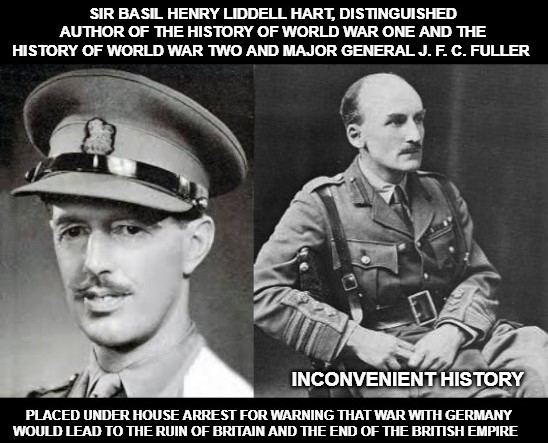
The first invasion of World War II was again carried out by Poland that in March 1939, six months before the outbreak of war ‘exploited the chance to seize a slice of Czech territory.’ – Sir Basil Liddell Hart. The History of the Second World War.
Poland’s borders, thanks to the Versailles Treaty, were far inside historical German territory. The Poles constantly subjected the artificially redrawn border to armed violations and skirmishes.
As early as October 3 1930, three years before Adolf Hitler was elected, the influential Polish newspaper, Die Liga der Grossmacht, carried the following declaration.
Polish belligerency rested on its means of waging war. Poland’s war preparedness was far ahead of Germany’s. Over a period of twenty years, they had created a one-million-man army.
Its armed forces were far bigger than the British Empire’s. In September 1939, Poland possessed thirty fully modernized infantry divisions backed up by a National Defence of 100,000 National Reservists.
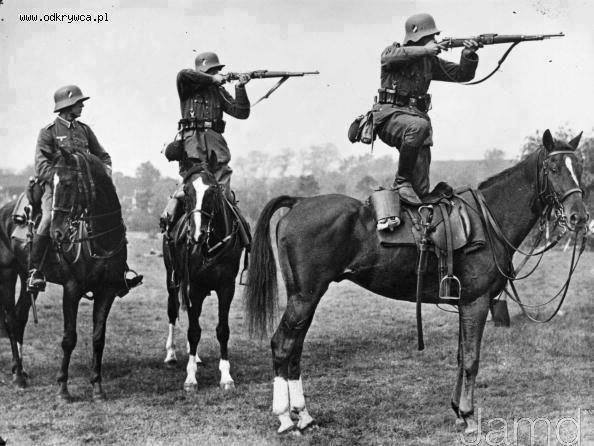
The Cavendish Encyclopaedia described Poland’s army as ‘one of the largest in the world’. An armoured brigade of 300 tanks supported the Polish infantry. This puts the lie to the myth that theirs was an operatic cavalry defence force.
The Poles did of course have 37 horse regiments. So did all other nations at the time including Britain and the U.S. In 1939 over 50% of the German military defence system was horse drawn.
The Poles operated a modern navy of five submarines, four destroyers, six minesweepers and a minelayer. Poland’s navy continued to fight long after its capital fell in October 1939.
Over 6 months after the outbreak of war, on April 8, 1940, the German transport Rio de Janeiro was sunk in the Baltic by the Polish submarine Orzel.
The Poles had an air fleet of over 1,000 aircraft. These included long-range medium bombers (designed for aggressive warfare).
WATCH AND ENJOY ‘WHEN THE LIGHTS OF TRUTH GO OUT‘
The advanced P.37 ‘Elk’ medium bomber was considerably faster than its German counterpart, the Heinkel HE 111 H-16 was. The premier fighter of the Polish Air Force was the nimble PZL P.11.
It was more than a formidable adversary against its German equivalents. The downing of 285 Luftwaffe aircraft during the brief campaign is testimony to Poland’s military airborne abilities.
Whilst some of Germany’s superior military achievements are highlighted, what is not mentioned is that, unlike Poland with just one border to defend, the Germans simultaneously needed to protect their western borders from the military threat and later declarations of war from France and Britain.
The Poles did fight bravely. They did so under the illusion that British and French promises to come to their aid would be fulfilled. They were betrayed.
Having goaded Germany into war, and given the British and French governments the need to declare war on Germany, the Poles were abandoned.
The French did not have enthusiasm beyond talking a good fight. Britain failed to send the promised military hardware. In fact, they had little or nothing to send.
What does seem to be incomprehensible is that the aggressive but dim-witted Polish regime failed to ascertain that Britain had the military means to back up their promises. EXTRACTS FROM WITNESS TO HISTORY by MICHAEL WALSH. Click the picture to access.


THANKS FOR SHARING WITH FRIENDS AND SOCIAL MEDIA
Share this:

Categories: World War II