




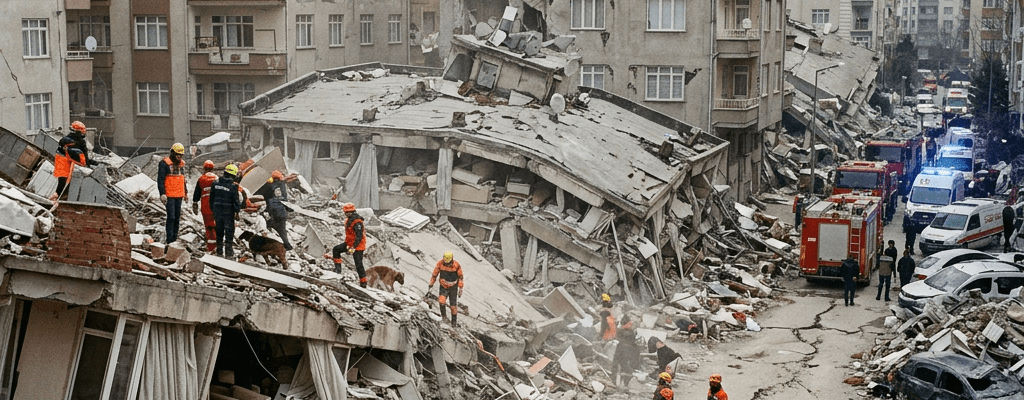

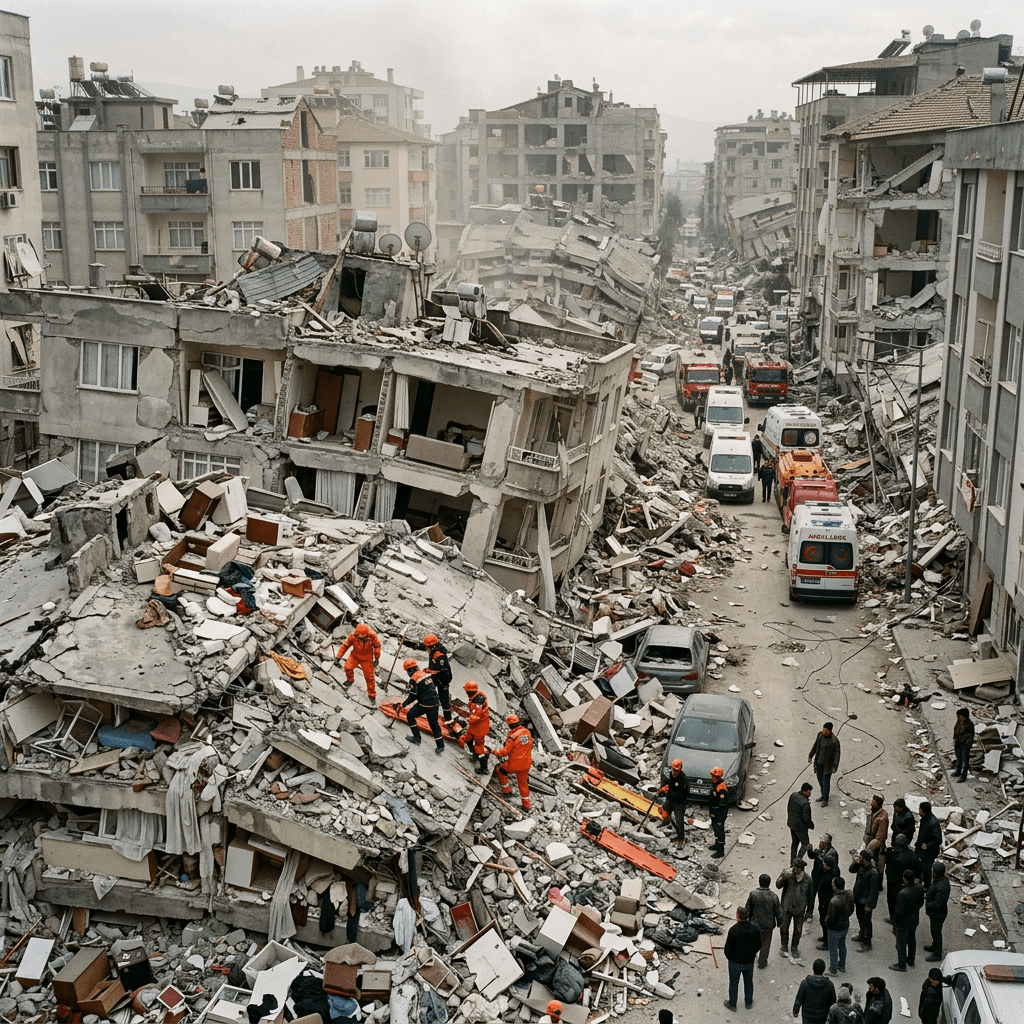
Globally, there are approximately 20,000 earthquakes located every year by the National Earthquake Information Center. This averages out to about 55 earthquakes per day.
The vast majority of these are too small to be felt by humans and do not cause damage.
For larger and more major earthquakes (magnitude 7.0 or greater), there are historically about 16 per year on average.
In an earthquake, the single most important principle is protecting yourself immediately.
Here’s a clear, practical guide you can rely on. It is structured for what to do during, after, and before an earthquake so you’re genuinely prepared.
Immediate actions during an earthquake
The safest response is: Drop, Cover, Hold On. Drop. Get down on your hands and knees so the shaking can’t knock you over.
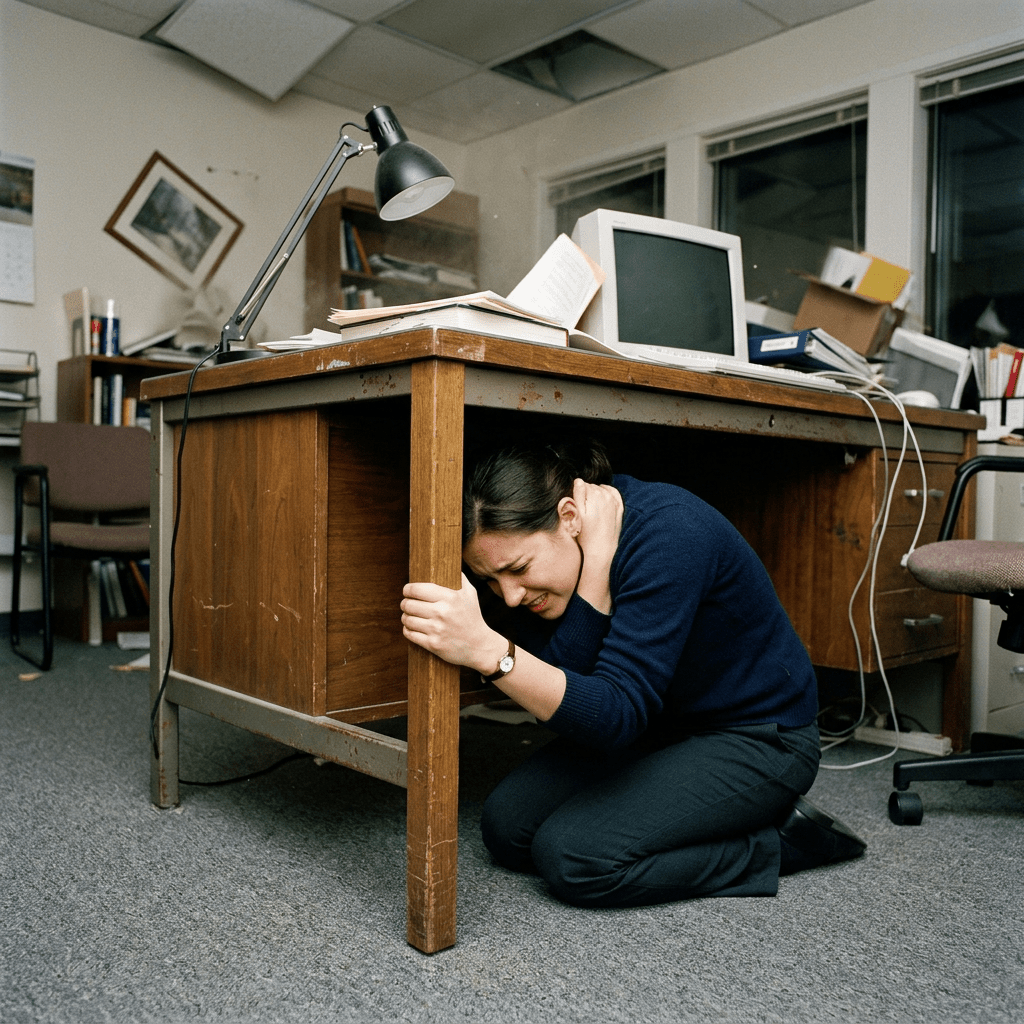
Cover, Take shelter under a sturdy table or desk. Protect your head and neck with your arms if no shelter is available.
Hold On, stay under your shelter and hold on until the shaking stops.
If you’re indoors
Stay inside; do not run outside. Most injuries happen from falling debris near exits. Move away from windows, mirrors, glass doors, and tall furniture that can topple.
Stay in a structurally strong spot: under a table, next to an interior wall, or in a hallway. If you’re outdoors
Move to an open area away from buildings, trees, streetlights, and power lines. Stay low and protect your head.
If you’re in a vehicle
Pull over safely and stop. Avoid bridges, tunnels, overpasses, and buildings that could collapse. Stay inside the vehicle until the shaking stops.
After the shaking stops
Check yourself and others for injuries; provide first aid if needed.
Expect aftershocks for they can be strong. Stay alert and ready to Drop, Cover, hold on again.
Avoid damaged buildings; structural weaknesses may not be visible.
Turn off utilities only if you smell gas, see sparks, or notice electrical damage. Use text messages instead of calls to avoid network congestion. Listen to local authorities for instructions, especially regarding evacuation or shelter.

Preparation before an earthquake
Secure heavy furniture, appliances, and shelves to walls. Store emergency supplies: water, food, flashlight, radio, first-aid kit, medications.
Know safe spots in each room and practice the Drop. Cover. Hold On routine.
Keep shoes near your bed as broken glass is common after earthquakes. Plan a family communication and meeting strategy.
A quick takeaway
Earthquake safety is about immediate protection, avoiding falling hazards, and staying calm until the shaking stops. Preparation beforehand dramatically reduces risk. Let readers know what you think

THANK YOU FOR SHARING WITH FRIENDS AND SOCIAL MEDIA
Share this:

Categories: Family & Parenting



 Michael Walsh Stories and Books
Thanks Mike for always en lighting us with your articles, regarding the earthquakes a 10.0 is coming in Northwest of USA that will shake to eastern Canada indeed. People in California is due for 8.5 plus as well. No one is ready indeed. We need to get psychology of preparations and also for major disruption , from Ireland to Europa and NAU no one is ready?
LikeLiked by 1 person
We had one here in 1987. I was sitting on the garage floor building a skateboard and thought a large truck had passed.
The earth starts to rumble as Japan has a strong 7.1 earthquake.
Some of those old skate decks are now worth coin in mint condition which is over the first time you go out and use it.
LikeLike
“It Could Be Tomorrow”: California’s Top Earthquake Expert Sounds Alarm On “The Big One”
by Tyler Durden
Tuesday, Aug 04, 2026 – 05:40 PM
A new peer-reviewed study found that the fault system running beneath Los Angeles and the Inland Empire is carrying more stress today than at any point in the last millennium, and that a single rupture could tear across both the San Andreas and San Jacinto faults at once.
The research, led by Dr. Liliane Burkhard of the University of Bern and published in the Journal of Geophysical Research: Solid Earth, simulated 1,000 years of earthquake cycles on the southern San Andreas and San Jacinto systems.
The flashpoint is Cajon Pass, the junction northeast of Los Angeles where the two systems meet, and where Interstate 15, freight rail lines, power corridors and the aqueducts that supply Southern California’s water all cross.
The model puts Coulomb stress at 3.6 megapascals on the San Jacinto-Bernardino segment, the highest value anywhere in the entire 1,000-year reconstruction, and 2.8 megapascals on the San Andreas Mojave South segment. Both are elevated, and both are closely aligned, the same configuration that preceded joint ruptures in the past.
Researchers caution these are modeled values that depend on the simulation’s assumptions, not direct measurements from underground. Burkhard’s team describes Cajon Pass as an “earthquake gate,” a junction that can either stop a rupture cold or let it through.
LikeLiked by 1 person