


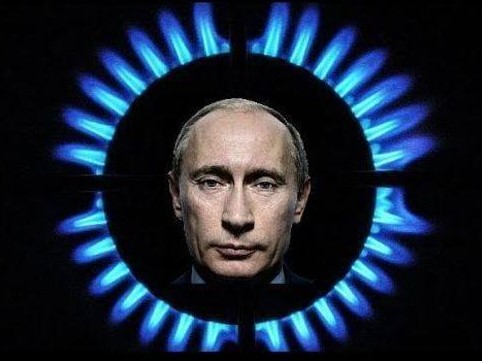

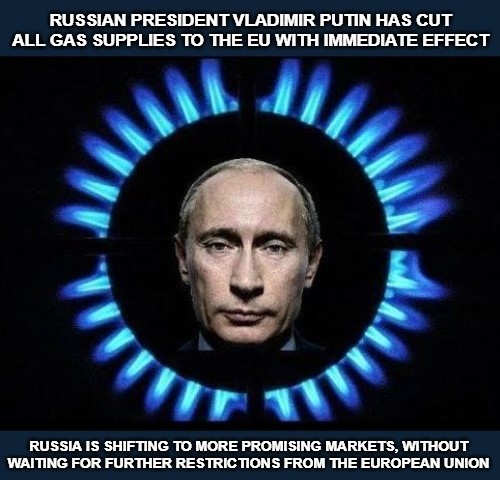
MICHAEL WALSH. You can’t fix stupid, but you can put a price on stupid: The German Finance Ministry has provided the estimate covering a range of relief and stabilization measures.
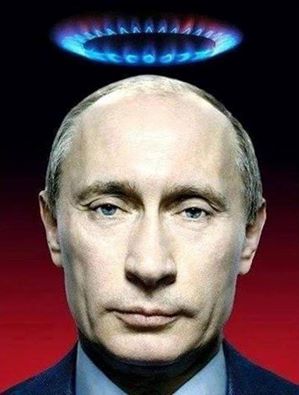
Germany has spent some €50 billion ($58 billion) cushioning the impact of soaring energy prices after cutting Russian gas imports in 2022, Die Süddeutsche Zeitung and Bild have admitted.
Following the escalation of the NATO-provoked Ukraine conflict, Germany and other EU nations drastically reduced imports of Russian natural gas, which had previously covered 55% of its consumption.
Energy Prices Soaring
The shift has driven up energy costs and contributed to a prolonged economic slump, hitting both European and British households and industry and undermining competitiveness.
Die Süddeutsche Zeitung reported on Thursday that the Finance Ministry provided the €50 billion estimate in response to an inquiry by Green Party MP Robin Wagener.
The actual cost is significantly higher
The figure covers relief and stabilization measures including electricity and gas price caps, a one-off payment to pensioners, and rescue packages for gas companies.
Bild cited several experts as saying the overall economic toll of the energy crisis, including the construction of new LNG terminals, is likely ’significantly higher.’
Alternative for Germany
The opposition Alternative for Germany (AfD) has repeatedly criticized Berlin’s decision to decouple from Russian energy. Party co-chair Alice Weidel said in June that cheap energy from Russia was the secret of the success of ‘Made in Germany.’
Hundreds of thousands of jobs disappeared
‘The loss of this energy has set us back years. Hundreds of thousands of jobs have been lost. It has made us dependent on the United States, which sells us energy at far higher prices,’ she stated.
Rising energy costs may also have contributed to the AfD’s growing popularity, according to a study published in late July.
Titled ‘The Political Consequences of Energy Price Shocks,’ the paper found that ’large and sudden increases in household energy costs coincided with heightened political dissatisfaction and electoral gains for populist parties, particularly the nationalist right-wing populist Alternative fur Deutschland (AfD).’
Price Rises
According to the analysis, Germans who experienced above-median price increases were 7.5 percentage points more likely to support the AfD.
The trend has been particularly pronounced in former East Germany, where energy prices increased most strongly, the researchers said, pointing to the AfD’s electoral gains in Thuringia, Brandenburg, and Saxony in 2023 and 2024.
AfD Triumphs
On Sunday, the AfD won the regional election in Saxony-Anhalt with 43.8% of the vote, while Chancellor Friedrich Merz’s Christian Democratic Union (CDU) finished second with just 17.2%.
Multiple recent polls have indicated that the AfD is the most popular party nationally, with support at around 28%. Let readers know what you think

THANKS FOR SHARING WITH FRIENDS AND SOCIAL MEDIA
Share this:

Categories: Russia



Being a rump vassal for a Hymie’s Under Satan’s Authority ain’t cheap.
Russia now has the best land based military in the world.
Unintended consequences of the wizards of smart still sniffing farts in the echo chamber and mistaking it for the scent of a rose.
LikeLike
In a way, you almost have to admire the devilish cunning of the US, first they use Biden to align with the EU in committing energy and fiscal suicide, then Trump comes in and bitches about how there economy is going that was largely at the behest of the US, and now complains they dont spend enough. Literally the nation version of a mobster breaking your legs then complaining you dont get around as fast on crutches.
We had one nation 85 years ago that tried to fight this, but the whole world ganged up on it.
LikeLike
https://www.bitchute.com/video/mQluyJvRcXFr
The most economic Meltdown i did talked about it is here now.. World will be crash a new system will be build but if is not based humanity re collapse is always imminent? Global Riots we seen will come to all nations and Global Martial law will be imposed? Are you ready or not?
https://www.bitchute.com/video/IxF5WKnZAHax
We are going to make our grave by AI? I hope AI of word press does not censor me.lol.
LikeLike
Saudi Arabia is finished now…no more gas and Houthis attacked final pipe lines…
Saudis Airport is attacked, Iran war will be ending soon by NUKES from Israel and USA of course lower ones hopefully… We told you Iranian in Iran leave biggest cities now is an order. Reza Shah 2 in Toronto spoken Iran soon will be freed?
Please fill up your gas tanks daily until further notice, Diesel as well because shortages will soon Europa and North American as well… This regime will not go until nukes fall in their heads…
PLO supporters in Philadelphia also celebrated EID of Sheeran in multiple cities USA… We report you decide..
LikeLike
19:47Now playing PLAGUE SPREADING IN SIBERIA!! 5 HOSPITALS LOCKED DOWN!! HOUTHI’S HIT SAUDI PIPELINE AGAIN!!
21 days of lock down globally? we told you months or weeks before ? We are psychics and we can tell what is going on?
please WP put this ASAP? Thank you
LikeLike