




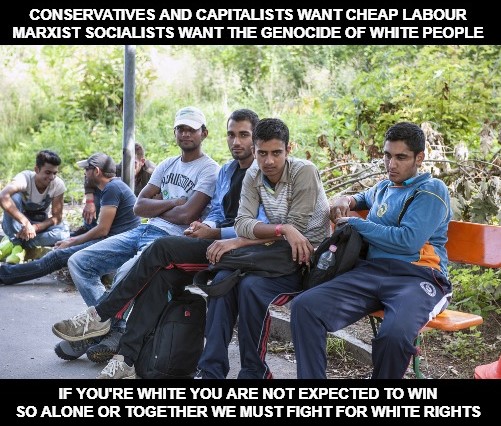
Devious politicians frequently present immigration as a humanitarian, cultural, or border-security question. The economic dimension often receives less scrutiny.
Modern capitalism and mass immigration have become deeply intertwined. The Capitalist serpent needs feeding
Borderless large corporations and their bankers gain access to larger labor pools. This increases competition among workers and places downward pressure on wages in many sectors.
Feeding Insatiable Demand for Cheap Labor
Agricultural businesses, logistics firms, construction companies, restaurants, delivery services, manufacturing, and countless other industries derive substantial advantages from a continuous supply of foreign labor.
Taxpayers pay for their own suicide

The benefits remain concentrated while many of the costs become dispersed throughout society.
Housing demand rises, infrastructure faces greater pressure, schools require expansion, and healthcare systems absorb additional burdens. Welfare programs support those who struggle to establish themselves economically.
These expenses rarely appear on corporate balance sheets. Instead, they get distributed across the broader population through taxation and public expenditure.
This contradiction led the French thinker Alain de Benoist to formulate one of the most incisive observations in the entire debate:
The Left side with the capitalists

‘One who criticizes capitalism while approving of immigration, of which the working class is its first victim, would do better to remain silent.
One who criticizes immigration while remaining silent regarding capitalism should do the same.
‘The statement captures a reality that many ideological camps prefer to avoid. Immigration and capitalism frequently function as partners within the same economic system, and any serious analysis of one eventually encounters the other.
Feeding the beast
Back in Western Europe, governments routinely announce crackdowns on illegal immigration while simultaneously preserving the economic and demographic model that depends on continuous inflows of foreign labor.
Public discussion frequently centers on boats crossing the Mediterranean or migrants entering through other irregular routes, images that dominate news coverage because they are visually dramatic.
Yet illegal immigration represents only one component of a much larger phenomenon.

Don’t be distracted by the boats
The overwhelming transformation of Western Europe has occurred through legal channels.
Work permits, family reunification programs, student visas, humanitarian admissions, labor recruitment schemes, and various residency pathways have altered the demographic composition of entire societies.
A politician can reduce small boat arrivals while expanding legal immigration quotas. Statistical reports may then suggest success even as overall migration continues at historic levels.
Giorgia Meloni betrayed Italy
Italy provides an instructive example. Giorgia Meloni rose to power promising a fundamental break with previous migration policies. Her electoral success depended heavily on public dissatisfaction with mass immigration.

Yet her government subsequently approved hundreds of thousands of additional work permits for non-European migrants in response to labor shortages.
Nearly half a million new non-EU work visas were authorised over a multi-year period, even as the government continued to present itself as a champion of immigration control.
Migrants welcomed by Banks and Corporations
Supporters emphasized efforts against illegal arrivals, while employers welcomed access to additional labor, and the demographic trajectory remained largely unchanged.
The deeper issue extends beyond migration policy altogether. Mass immigration functions primarily as a symptom rather than a cause.
Civilizations with strong confidence, coherent identities, stable institutions, and clear collective purposes rarely experience sustained demographic transformation against the wishes of their populations.

When you are an economic unit
Migration becomes politically decisive when governing elites lose faith in cultural continuity and begin treating populations primarily as economic units.
Labor shortages, declining birth rates, fiscal pressures, ageing societies, and ideological universalism combine to create a system that continuously demands replacement populations.
Why are coloured invasions accelerated?
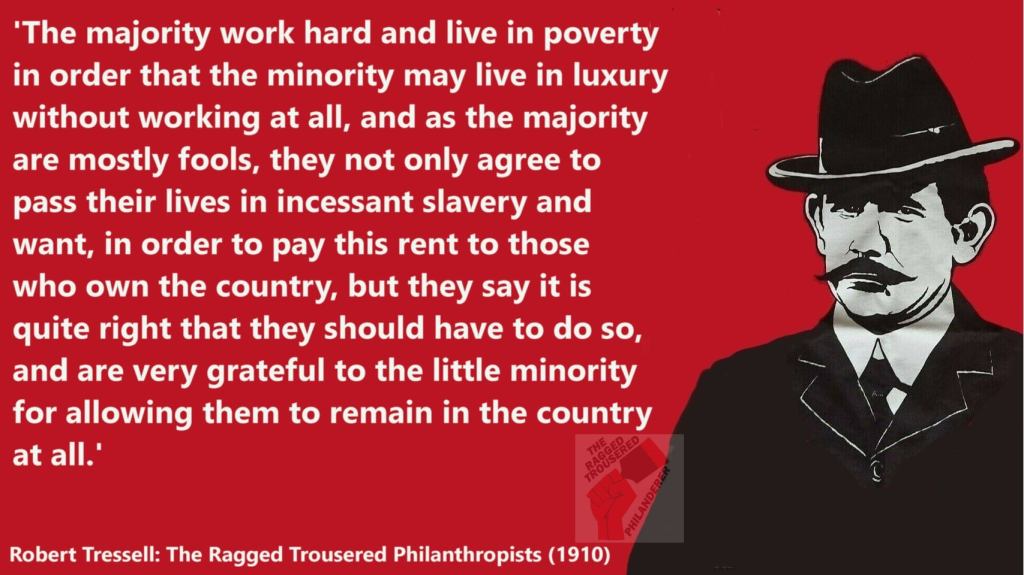
The immigrant arrives after the transformation has already begun, and serves as visible evidence of deeper processes unfolding beneath the surface.
Corrupt political elites emphasise economic growth and labor supply, while business organizations lobby for additional workers.
Western regimes, in turn, expand legal migration channels, which then leads to public opposition.
To quell that opposition, such regimes announce new enforcement measures without addressing the root causes of migration.
Economic demand repeatedly overwhelms political promises, and systems adapt to maintain flows that leaders publicly criticize, but privately accommodate. LET READERS KNOW WHAT YOU THINK
THANK YOU FOR SHARING WITH FRIENDS AND SOCIAL MEDIA
Share this:

Categories: Political



Once after Christmas there were yellow $1000 bundles all over the parking lot of the second hand clothing store and mouthy replacements inside.
Found a couple of UN debit cards for replacements during heel & toe.
A walk after every meal.
I protect my neck at all times from evildoers.
LikeLike
The real “left” is almost dead. When Enoch Powell was arguing against “too many too fast”, the trade unionists were marching with him. They understood what was happening. It is the political class of “the left” that has betrayed working people. “Labour” despises the working class. It’s the same in every (((Western liberal democracy))). For over 50 years, I have asked rhetorically, if there are unemployed, why is there immigration? The answers have always been: 1) they do jobs (fill in the nationality blank) won’t do; and 2) they have special/educational skills.
My response has been the same: 1) No, they do jobs (fill in the nationality blank) won’t do for the shitty wages and working conditions we won’t accept; and 2) So, are you saying that (fill in the nationality blank) are stupid and can’t be educated? Every door knocking politician, regardless of political affiliation, with whom I’ve had this conversation has been flabbergasted when confronted with the above. Make no mistake, they hate us.
LikeLiked by 1 person
They hate us and want us dead, or at least not breeding (depending on the time line). The question is how many invaders will they insert before MOST of the jobs go to robots. I call this now Out of Africa. almost the only ones breeding now, and with the least covid death sickness and sterility shots.
A picture paints a thousand words, two pictures compared paints a million words, and billions of goyim in g_ds waiting room. ( Satan’s chopping block).
https://old.bitchute.com/video/uxIRQ55MvN7Y/
LikeLiked by 1 person