




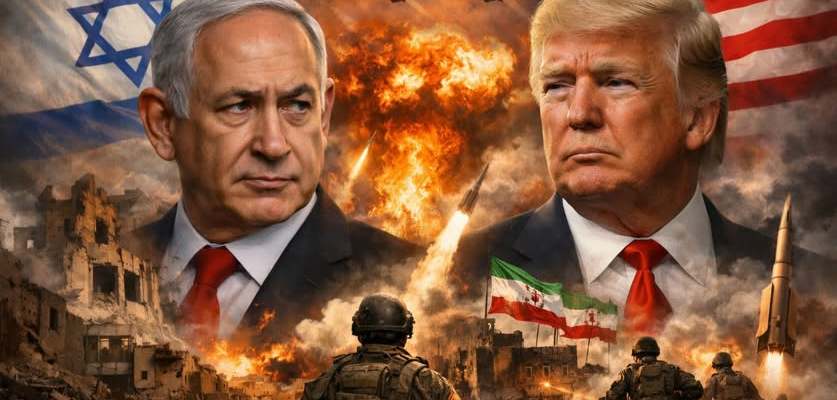

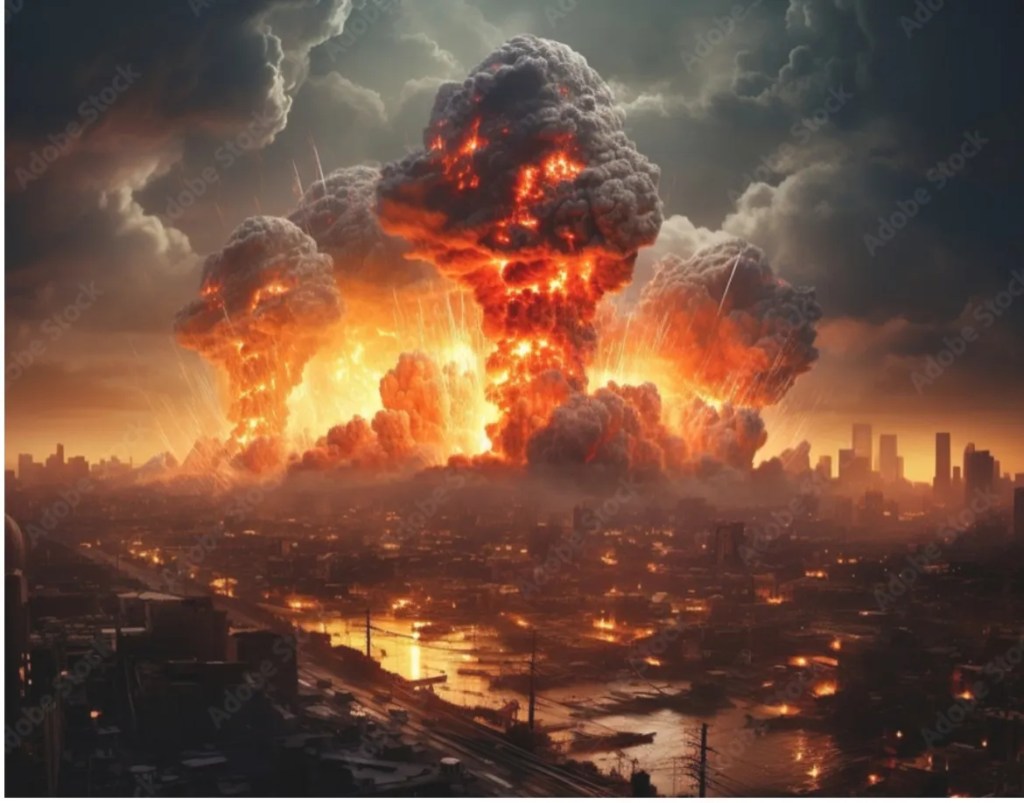
EXCLUSIVE – THE END GAME: Finally, much to the relief of the greater world community, the US-Israel hegemon or super-power status is nearing its end.
For a long time, Iran played a defensive game, focusing on survival when faced with aggression. Now, Tehran has shed that shell and shifted into a direct attacking mode.
US political scientist Robert Pape calls this the ‘middle game.’ Iran is no longer fighting merely for self-preservation; instead, it has established a resistance security belt stretching from the Strait of Hormuz to the Red Sea.
Through this, they are transforming the entire region into a unified strategic arena where Iran seeks to dictate the rules of the game rather than abide by the rules set by others.
Western Alliance walks into an ambush
‘We are right in the middle of the game. And this ‘middle game’ has a distinct characteristic: Iran is moving beyond the struggle for its own survival and pursuing regional ambitions. And this process will continue, says Robert Pape.
Iran is on the path to becoming the dominant state, or hegemon, in the Persian Gulf.
End of Israel
It is emerging as a major power that is unconcerned about its own survival and is instead busy expanding its sphere of influence. That is exactly what a regional superpower looks like.’
By leveraging groups like Yemen’s Houthis and Lebanon’s Hezbollah, they are effectively taking remote control of the entire region.
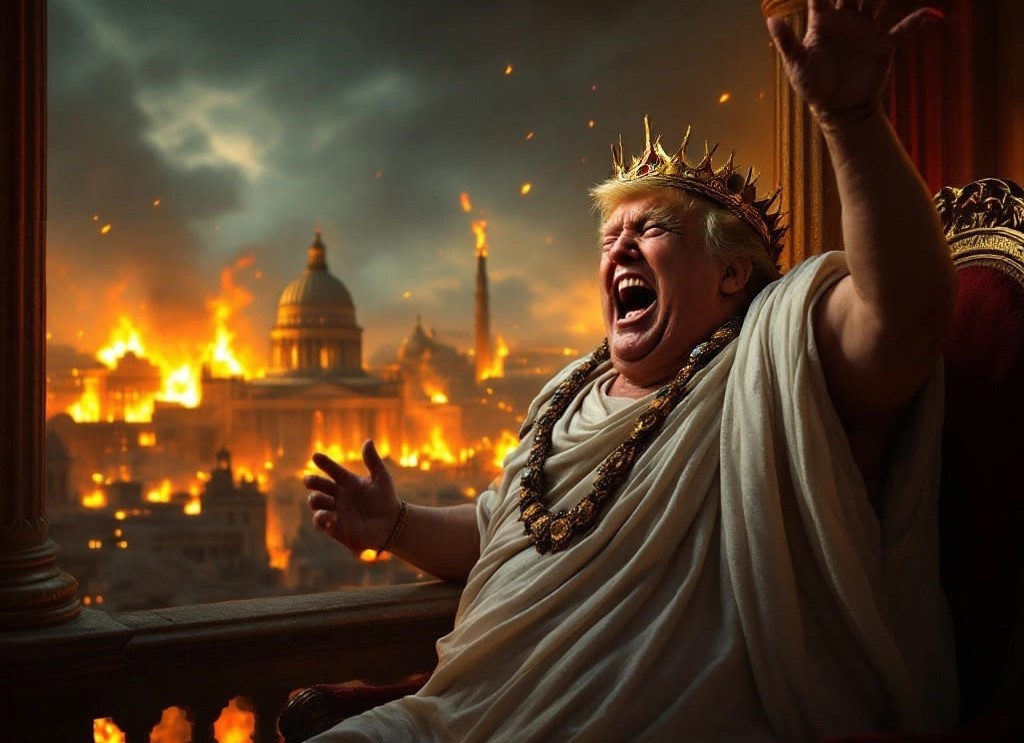
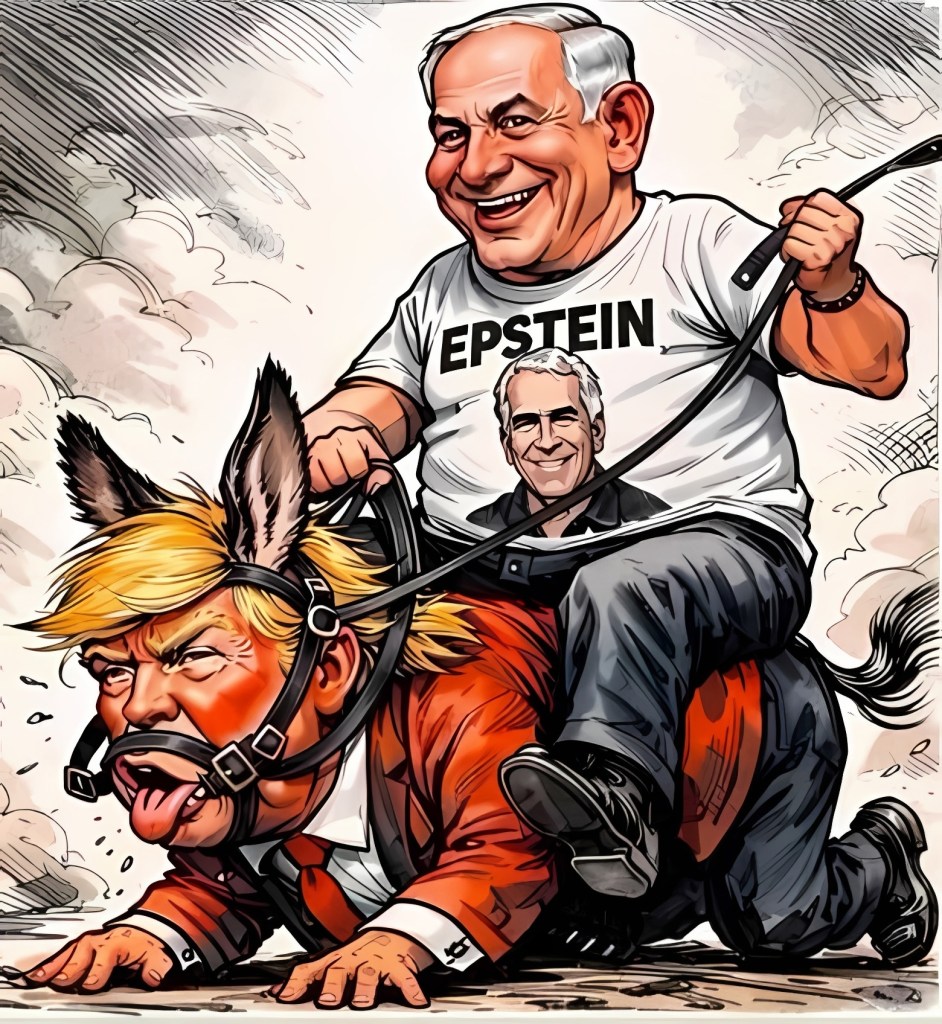
You could view it this way: Iran is poised to become the new ‘Don’, or regional superpower, of the Persian Gulf. US President Trump and Netanyahu are impotent and flailing in reaction to Iran’s moves, yet they lack a viable plan to counter them.
Israel on the ropes of history
Israel finds itself in a desperate, untenable situation. According to researcher Trita Parsi, Israel is caught in a severe predicament known in military terms as an ‘escalation dilemma’:
The situation is as follows:
If Israel fails to retaliate against Iran or Hezbollah, it loses face, and the world perceives it as weak. Consequently, it feels compelled to strike back.
And if they attempt a more aggressive strike, it will trigger a conflict that Israel’s exhausted and demoralized army no longer has the capacity to handle.
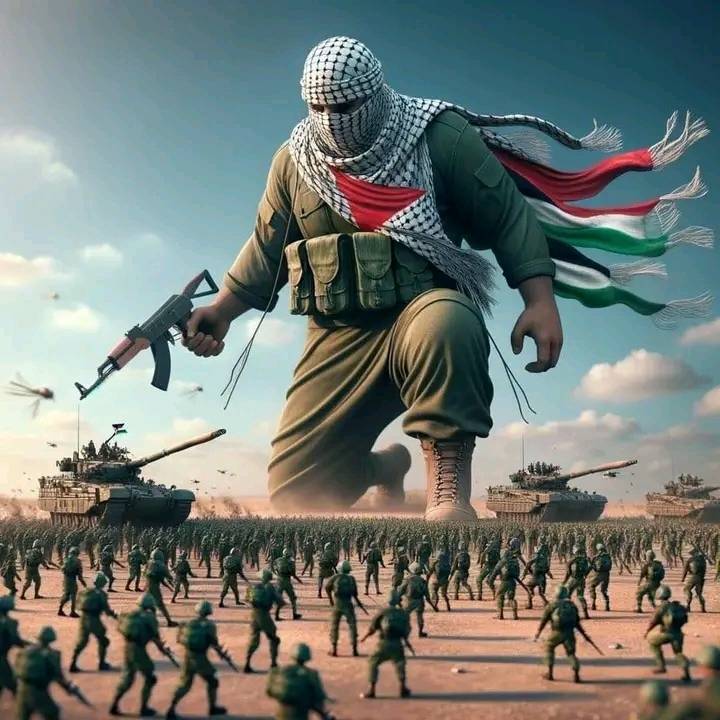
Israelis are the world’s most hated peoples
Moreover, due to the bombardment of Gaza and the devastation of Lebanon, Israel’s global image has plummeted to an all-time low.
International surveys indicate that six out of ten people in the United States itself now loathe Israel.
Tel Aviv is now realizing the bitter truth that while a war might be won through brute force, winning over public sentiment and securing international legitimacy is a different matter entirely.
Arab states abandon US-Israel

For a long time, Middle Eastern nations lined up under America’s ‘security umbrella.’ Now, seeing that umbrella riddled with holes, Arab sheikhs are charting their own courses.
While the UAE leans toward Israel, nations like Saudi Arabia, Qatar, and Oman are securing their own interests by forging pacts with Iran.
Nuclear-armed Pakistan has entered the arena to shift the game’s momentum, joined by Turkey and Egypt. Meanwhile, China and Russia are smiling from the sidelines, ready to back this entire coalition.
Meanwhile, the way the Houthis are effectively strangling shipping routes in the Red Sea has cast serious doubt on Washington’s role as the global hegemon.
The geopolitical map is no longer US-centric; instead, it has become fragmented and cobbled together.
Clearing away the smoke of the battlefield reveals three crystal-clear truths:
• Iran has emerged as the new player in the driver’s seat on the Middle East chessboard.
• Israel’s inability to take even a single step without American aid has been starkly exposed.
• Neither the Arab world, Pakistan, nor Turkey places blind trust in America anymore.
As a new dawn breaks over the Persian Gulf, superpowers no longer dictate the script; instead, regional powers, tenaciously holding their ground, are determining their own destinies. Let readers know what you think

THANKS FOR SHARING WITH FRIENDS AND SOCIAL MEDIA
Share this:

Categories: United States



May you tell the truth and not just a wish ! Time is running out … So much suffering is unbearable ! 78732
LikeLike
Why Iran hardliners are alleging a ‘coup’ after the US agreementHardliners allege President Masoud Pezeshkian and top negotiators are staging a “soft coup” after the US deal, exposing growing cracks within the Islamic Republic, reported CNN.
By: Express Global Desk
6 min readUpdated: Jul 18, 2026 07:20 PM IST
As Iran’s President Masoud Pezeshkian walked alongside the coffin of Supreme Leader Ali Khamenei in Tehran last week, some of the black-clad mourners surrounding him chanted not in tribute to the late leader, but directly at him — “death to the compromiser”, CNN reported.
Not far from the funeral site, Abbas Araghchi, Iran’s top diplomat who negotiated a ceasefire with the Trump administration and helped secure limited sanctions relief for the Islamic Republic, was forced to flee after a mob pelted him with rocks while chanting that he was a “traitorous sellout.”
According to CNN, the hostility directed at Iran’s top officials reflects a theory that has been gaining traction within the Islamic Republic’s most radical factions for months: that the country’s wartime leaders who negotiated and signed the agreement with Washington are staging a “soft coup” against the Islamic Republic and its revolutionary ideals while the new supreme leader remains largely invisible for fear of his life — or, as some have suggested, because he is incapacitated.
The hardline factions believe that instead of avenging Khamenei’s killing, Iranian officials surrendered by signing an agreement that defies the orders of Supreme Leader Mojtaba Khamenei, the late leader’s son and successor. But Mojtaba Khamenei has remained hidden from public view, neither addressing the nation directly nor visibly asserting his authority, even as officials negotiate or govern in his name. Iran Ayatollahs want a peace of new world order. But we have alternatives Reza Pahlavi 2 he can bring new elections free under UN and freedom again. Mojtaba Gay is dead or by now he will be shown! Thank you people of Iran Masque of Imam Reza where empty box of Khamanie remain was put to rest was on fire… We salute you all Iranian 85 percent.No to Islamic Republic of Iran, No to atom bombs.
LikeLike
Joining with Remphan is a curse like no other.
The Golden Calf is a shit golem after the Long March.
LikeLike
THANK YOU SUN VON ROMMEL… IRAN BULLIES A LOT… NOW MARTIAL LAW IN USA BUT IS SOFT ONE ?
he Great Normalization (Nobody Declared Martial Law… Yet America Began Looking Like It Anyway)
by Tyler Durden
Friday, Jul 17, 2026 – 09:25 PM
Authored by Madge Waggy,
There are stories that announce themselves with explosions, riots, or breaking-news headlines, and then there are stories so subtle that they quietly rewrite an entire society before anyone realizes what has happened. This is one of those stories. During the preparation of this investigation, several retired police officers, private security professionals, emergency responders, and ordinary citizens described nearly identical experiences despite living hundreds or even thousands of miles apart. None believed they were witnessing anything extraordinary at first. It was only when they looked backward—sometimes over a decade—that a disturbing pattern became impossible to ignore. Streets had not become military checkpoints overnight. Neighborhoods had not suddenly filled with surveillance towers. Instead, the changes arrived one camera, one drone, one security contract, and one “temporary” emergency measure at a time until extraordinary security became indistinguishable from ordinary life. What follows is not an argument against public safety, nor an attempt to romanticize a past that was hardly free from crime or violence. It is an examination of a transformation that has occurred quietly enough for most people to stop seeing it altogether.
There is an old saying among investigators that people rarely notice change while it is happening. They notice it only when they compare today’s reality with memories that have remained frozen in time. Memory preserves snapshots, while history moves continuously. That disconnect explains why so many citizens insist that nothing fundamental has changed even as the physical landscape around them becomes increasingly populated by surveillance cameras, armed guards, automated license plate readers, biometric scanners, drones, and predictive security technologies. No single installation appears revolutionary. No single policy seems capable of altering the character of a society. Yet history rarely advances through dramatic leaps. More often, it advances through thousands of small decisions that seem perfectly reasonable when viewed independently but become historically significant when examined collectively.
The quiet militarization of civilian spaces represents precisely this kind of transformation. Unlike traditional militarization, which is associated with soldiers, armored vehicles, and visible state authority, the contemporary version is largely administrative, technological, and commercial. It emerges through contracts signed by private security companies, insurance requirements imposed upon businesses, municipal investments in surveillance infrastructure, advances in artificial intelligence, and a public increasingly willing to exchange greater visibility for greater security. The result is not a police state in the conventional sense, nor is it a society living under constant emergency. Instead, it is something considerably more complex: an environment in which observation has become routine, data has become a form of infrastructure, and security has evolved into a permanent layer of everyday life.
Perhaps the most remarkable aspect of this evolution is not the technology itself but the speed with which human beings adapt to its presence. Psychological research has repeatedly demonstrated that people rapidly normalize environmental changes once those changes become familiar. The camera that initially attracted attention soon becomes part of the background. The security guard stationed near the supermarket entrance eventually disappears into peripheral vision. The drone hovering above a community festival is no longer perceived as unusual after it has appeared several times. Familiarity breeds acceptance far more effectively than persuasion ever could. This gradual normalization explains why discussions surrounding surveillance often occur only after new technologies have already become deeply embedded within public life.
I remember a conversation several years ago with a retired emergency management coordinator who had spent more than three decades working alongside law enforcement agencies during natural disasters and large public events. He was not particularly interested in politics, nor did he express hostility toward modern security practices. What struck me instead was the simplicity of his observation. “When I started,” he said while looking across an ordinary shopping center parking lot, “the only people carrying radios and wearing body armor were police officers responding to emergencies. Now look around.” At first, I assumed he was exaggerating. Then I began counting. Private security personnel equipped with ballistic vests. Cameras mounted on nearly every light pole. Delivery vehicles fitted with multiple recording systems. Police drones deployed during missing-person searches. Automatic barriers controlling access to residential developments. It was difficult to identify the precise moment when these features had become ordinary because none of them had arrived simultaneously.
Please e mail this page to one and ask them to e mail it to another…..beautiful info and news truth is out there…
https://www.zerohedge.com/political/great-normalization-nobody-declared-martial-law-yet-america-began-looking-it-anyway
Iran Threatens ‘Full-Scale Offensive … No Political Border Will Be Safe’ if U.S. Airstrikes Don’t Stop. IRAN MULLAHS TALK TOO MUCH ?
The Iran conflict threatened to boil over Saturday after a senior Iranian advisor threatened a “full-scale offensive operation” if U.S. airstrikes didn’t stop.
The ominous statements from Major General Mohsen Rezaei, a senior military adviser to Ayatollah Mojtaba Khamenei, came after the United States finished a seventh day of airstrikes.
“If US strikes continue for several more days, we will move into a phase of full-scale offensive operations,” said Rezaei, who once served as the head of Iran’s Revolutionary Guards.
“Iran will no longer limit itself to retaliatory, like-for-like responses…and no political border will be safe,” he was quoted as saying by Iran’s news agency IRIB.
The two sides traded strikes which targeted bridges and other infrastructure, with Iran striking water and desalination plants in Kuwait, CNN reported.
Several American service members were injured in Iran’s retaliatory attacks, CBS News said Friday.
CNN’s Nic Robertson outlined the latest in the conflict Saturday morning, including Iranian strikes on Kuwait and attempts to target Saudi Arabia:
LikeLike
GOLDI GHAMARI JUNE YES UN IS TOTAL GARBAGE… THANKS A LOT
MAJID
LikeLike
Thank you MR Mirghaderi , please link this page to your tv stations…
This song make you laugh… lol
LikeLike
I’m waiting for the Iranians to destroy the Israeli desalination plants. That would probably get rid of half their population in a few days. The planes and ships would be destined for Europe and America, unfortunately.
LikeLike
INVASION OF IRAN IS IN PROGRESS.. OR NOT? WHY WE NEED OVER 100K SOLDIERS… AND WHY WE NEED ARM IRANIAN CITIZENS TO HELP US TO REMOVE MULLAHS.. WILL IRANIAN CITIES HAVE POSITIVE OUT LOOK FOR USA TROOPS?
LikeLike
LIVE FROM USA AHVAZ AND MANY OTHER CITIES MILITARY AND IRGC BASES HAS BEEN DESTROYED… DEATH TO IRGC , MULLAHS,.
OMID DANA REPORTS FOR IRANIAN AS WELL THAT 800 IRGC AND TERRORIST IN IRAQ SOME BELONG IRAQIS AND MULLAHS DIED THANKS TO BEN SALMAN SHOKRANI…
LikeLike
latest news of all regions.. Also song deal with Devils? much more source of true intel…
latest news all English Language! Enjoy till later.. Mike please put new articles about Iran so we can put new intel there as well.. recent stories please ,, Thanks a lot always..
LikeLiked by 1 person
THANK YOU TEXAS…TEXAS IS NOT FOR SALE?
LikeLiked by 1 person