






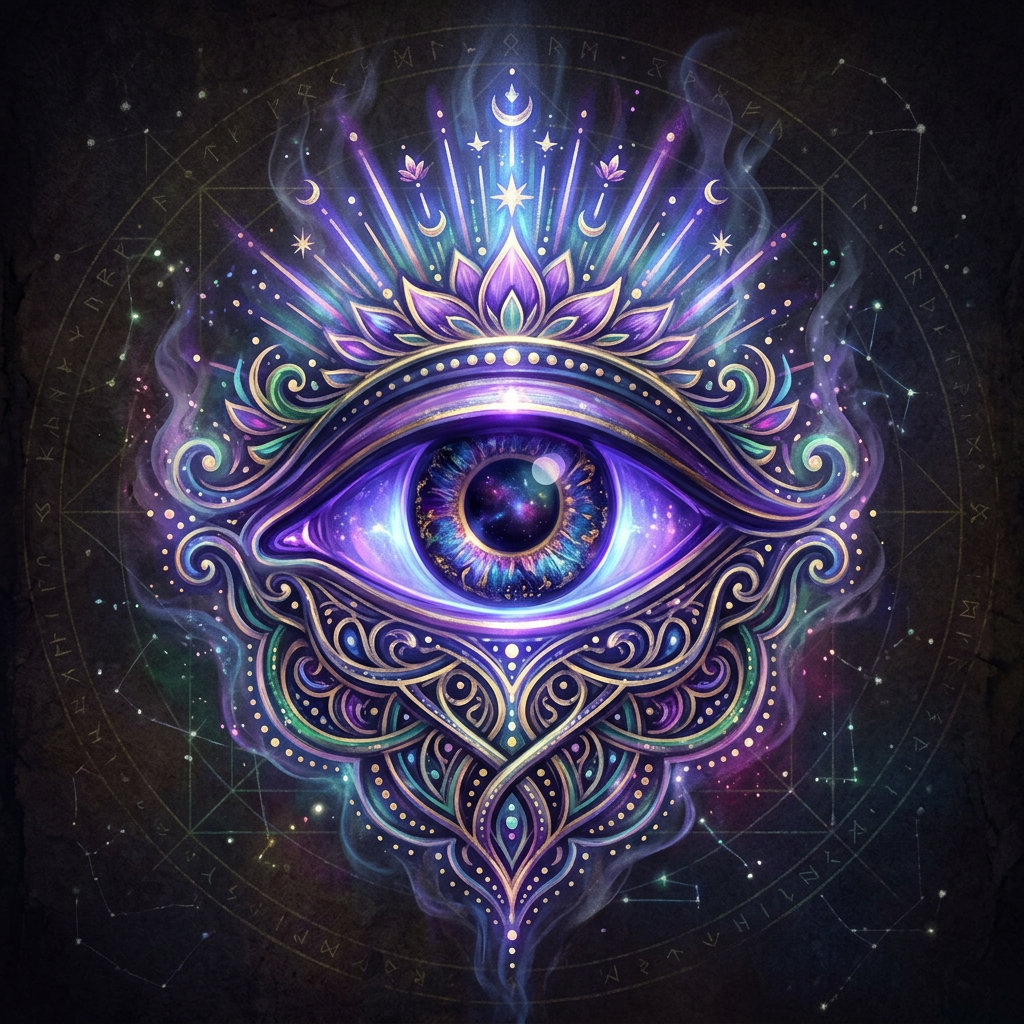
The power of the ‘Third Eye’ refers to a blend of spiritual symbolism, psychological insight, and, interestingly, some biological parallels.
Across traditions, it’s associated with intuition, inner vision, clarity, and expanded awareness, but each system frames it differently.
Core Meaning (Across Traditions)
The third eye is described as an inner eye that perceives beyond ordinary sight. It symbolizes higher consciousness, intuition, and insight into deeper truths.
In Hinduism and Buddhism, it corresponds to the Ajna chakra, located between the eyebrows. It’s considered the seat of inner wisdom, mental clarity, and perception beyond the five senses.
What Power Means in Practice
Intuition & Inner Knowing. The third eye is said to govern: Pattern recognition. Gut feelings. Symbolic thinking. The ability to see the bigger picture.
This isn’t fortune‑telling, it’s the mind’s ability to synthesize information beneath conscious reasoning.
Mental Clarity Insight
A balanced third eye is associated with: Clear thinking. Strong imagination. Deep focus. Creative problem‑solving
Spiritual Awareness
In yogic and Buddhist traditions, the third eye is a gateway to:
Higher consciousness. Enlightenment. Perception of subtle energies
Inner Vision and Imagery
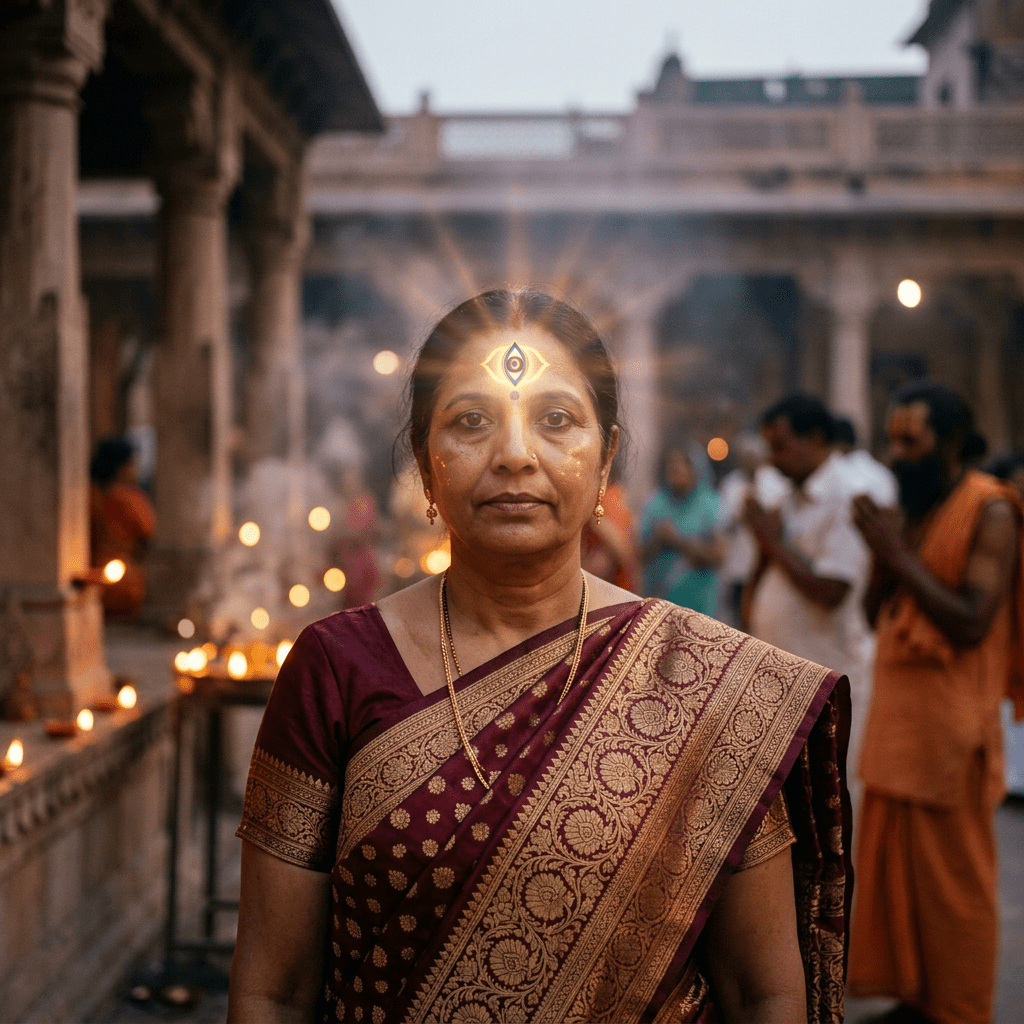
During meditation, people often report: Colors or geometric patterns. Vivid inner imagery. A sense of expanded awareness.
These experiences can feel profound but also vary widely from person to person.
The Biological Parallel: The Pineal Gland
Modern interest in the third eye often points to the pineal gland, a tiny structure deep in the brain.
Science shows: It regulates melatonin and sleep cycles. In some reptiles, a pineal-like organ literally functions as a light-sensitive third eye. The mammalian pineal gland produces DMT, a compound linked to vivid internal imagery.
Unaccountable parallels
This doesn’t prove mystical claims, but it’s fascinating how ancient symbolism overlaps with modern biology.
Misconceptions and Limits
There is no scientific evidence that the third eye grants supernatural powers like clairvoyance or precognition.
Experiences of opening the third eye can be psychologically intense, sometimes disorienting. Most traditions emphasize balance, not chasing extreme experiences.
If You’re Exploring This Practically
People typically work with the third eye through: Meditation focused on the brow area, Breathwork. Visualization. Symbolic practices (e.g., chanting ‘Om’)
These practices aim to cultivate clarity, intuition, and self-awareness, not supernatural abilities. Let readers know what you think

THANK YOU FOR SHARING WITH FRIENDS AND SOCIAL MEDIA.
Share this:

Categories: Spiritual



HE gave me the third eye with the intent to use it and not let somebody else drive it.
Especially evildoers who plot death and destruction while viewing themselves as some sort of master race.
LikeLike
The third eye is an ancient reference for a “”sixth sense“” believed to provide wisdom and perception beyond normal sight.
Because wisdom, thought, and foresight cannot be directly measured, it’s difficult to quantify this sixth sense. And because it’s difficult to quantify, the third eye has, for a long time, taken on a more ‘mystical‘ meaning.
But just because it’s difficult to measure, that doesn’t mean the third-eye isn’t real. Love is also very difficult to measure, but it still exists just as much as any physical object exists.
In ancient cultures the third eye is always shown centered in the middle of the forehead, usually above and directly between our two eyes. It has been credited with great foresight and the ability to see sacred geometry.
Based on the latest science, this location makes sense, as the pineal and pituitary glands, which control the body’s information processing, are both centrally located in the brain.
In this article we’ll explore different perspectives, expert opinions, and the latest science on what the third eye is, and how to open it.
Let’s Dive In.
History, Origin, and Symbolism of the “”Third Eye””
The third eye is most commonly associated with Indian culture, Hinduism, Buddhism, Yoga, and the Chakra System. However, ancient Egyptian and Mayan cultures had discovered the third eye hundreds possibly thousands of years beforehand.
Ancient Egypt, the Third Eye, and The Eye of Horus
The Eye of Horus (not to be confused with the Eye of Ra) is one of the most famous and well recognized symbols of ancient Egypt. It’s absolutely mind-blowing that this symbol has a well-documented history dating back over 5,000 years to the year 3,150 BC.
The eye of Horus has a unique shape which many experts agree resembles, and aligns with, the human brain stem, pineal gland, pituitary gland, and hypothalamus.
In a 2019 study published by the National Library of Medicine, neuroscientist Dr. Karim ReFaey concludes that, today’s researchers should “acknowledge and appreciate the genius and foresight” of the ancient Egyptian civilization for decoding the functions of the human brain and central nervous system.
Hinduism’s Third Eye
In the ancient Vedas texts (the founding texts of the Hindu religion) which date back to 1,500 BC, the ‘third eye chakra‘ signifies the subconscious mind and is said to connect people to their intuition.
According to the world’s most comprehensive yoga encyclopedia, in the original Sanskrit language of the Vedas texts, the third eye is called the “ajna chakra” which can be directly translated to mean “perceive” or “beyond wisdom”.
Renowned author, United Nations public speaker, and spiritual guru, Sadhguru, notes that the three main gods of Hinduism, Brahma the creator, Vishnu the preserver, and Shiva the destroyer are all depicted with third eye symbolism.
Ancient Hindu beliefs view the third eye as an “eye of wisdom” which provides us the ability to see beyond the physical world, and to tell the difference between whit is right, and what is wrong.
Buddhism and Third Eye
The Buddhist way of life broke off from the Hindu religion around the year 500 BC, so the two ideologies share many similar beliefs such as meditation, yoga, and the wheel of dharma.
Also known as the “Eye of Consciousness”, Buddhists see the third eye as the symbol of spiritual awakening, knowledge, and wisdom.
According to Lama Migmar Tseten, who has served as the Buddhist chaplain at Harvard University since 1997 …,
“without the wisdom-eye, everything you see will only be a relative truth”.
I have third eyes but i use it for positively this power. We know psychics use third eye to make money that is used wrong way. every corner of London come i read your life 20 pounds. As soon as you attached money to it then third eye not used for constructive ways.
LikeLiked by 1 person