





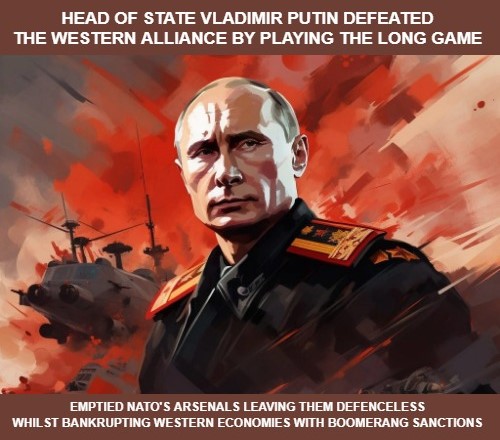
Many continue to repeat, with a disconcerting naivety, that Russia, with its military power, could have crushed Ukraine in just a few weeks.
This is a simplistic reading that ignores everything about the deep nature of this conflict. Moscow is not waging war against a country of forty million inhabitants.
The formidable Western Alliance
Russia, through Ukraine, is up against the 40-plus nations making up the collective West. The NATO Alliance, a serial failure at military occupations, as a whole.
Western economies, its intelligence services, government-controlled Western mainstream media, its military arsenals, its satellites, and its united military industry.
Ukraine is NATO’s battlefield of choice
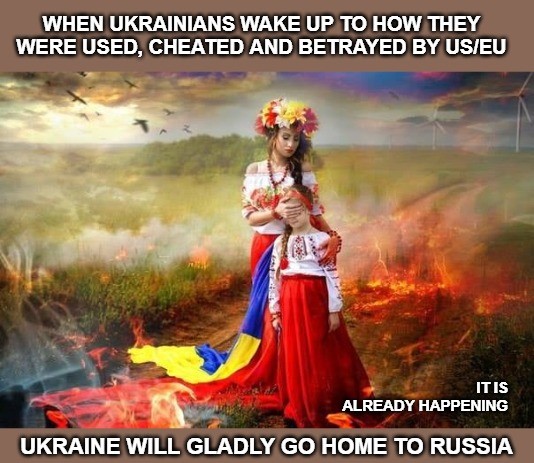
Ukraine is merely a theater of operations, a battlefield in a latent world war. Under these conditions, the idea of a quick victory makes no sense.
Yes, Russia could have razed Kyiv in a few days
Yes, it could have crushed Ukrainian infrastructure and reduced the state to nothing. It could have reduced London, Paris and Berlin to smouldering cinders.
Unacceptable Cost
But such a choice would have come at a considerable human and political cost: tens of thousands of civilian deaths, unanimous international condemnation, a break with its strategic partners, and a loss of influence in the Global South.
The Long Game
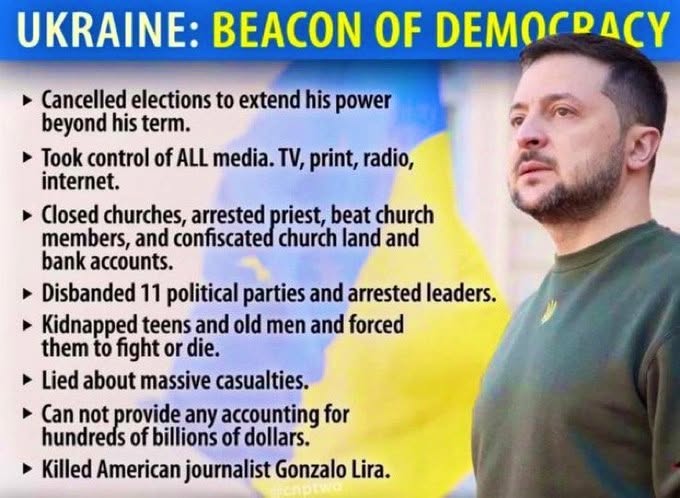
Moscow has therefore chosen a more subtle, slower, but also far more ambitious strategy. It combines military pressure, economic warfare, diplomatic battles, geopolitical influence, and information warfare.
The goal is not just to win militarily, but to durably reshape the world order.
Fortress Ukraine
It must also be understood that today’s Ukraine is one of the most militarized and fortified territories in the world.
Billions of euros in Western weapons, sophisticated anti-aircraft defense systems, deep defensive lines, underground bunkers, constant satellite surveillance: even the U.S. army, with all its might, would advance with great difficulty under such conditions.
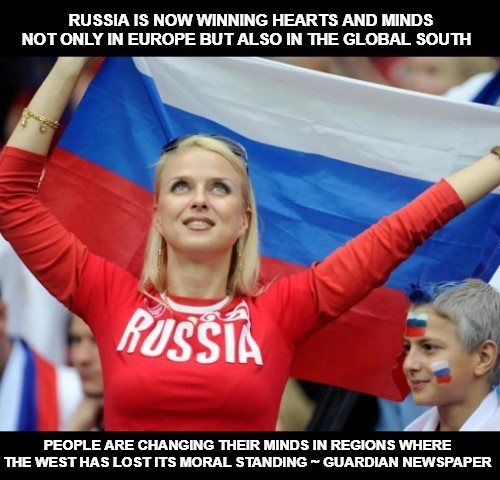
Russia putting its own first
Russia therefore proceeds with caution, because the regions it claims as historically its own must not be reduced to ruins.
It advances slowly, consolidates every meter of ground, organizes referendums, sets up administrations, and is already preparing for the postwar period.
This strategic choice makes complete sense if one listens to the analyses of Emmanuel Todd, the respected French historian and anthropologist, who sees in this war far more than a territorial conflict.
A Civilization Clash
For Todd, it is a civilizational clash between a declining West and a Russia defending a more traditional, more sovereign conception of political and social order.
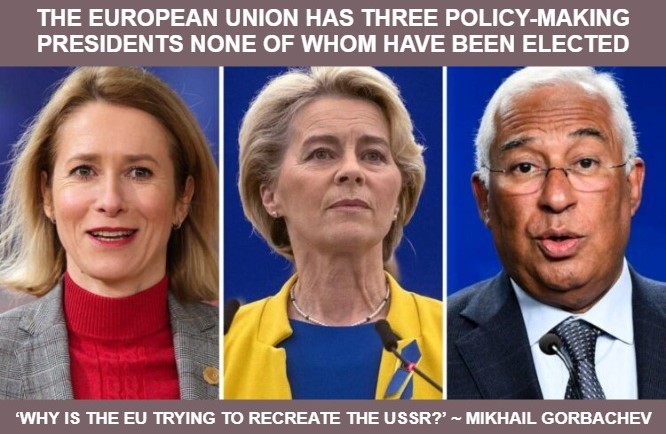
He points out that the West, despite its apparent economic and technological superiority, shows signs of profound fragility: an aging demography, a crisis of confidence, deindustrialization, and a loss of ideological bearings.
Russia holds all the aces
Todd insists on one crucial point: Russia is waging this war with only 3.3% of its GDP, a colossal but sustainable effort, while NATO countries, far wealthier, are forced to spend gigantic sums simply to maintain the balance.
This figure, technical at first glance, reveals a profound strategic imbalance.
Western Alliance digging itself into a hole
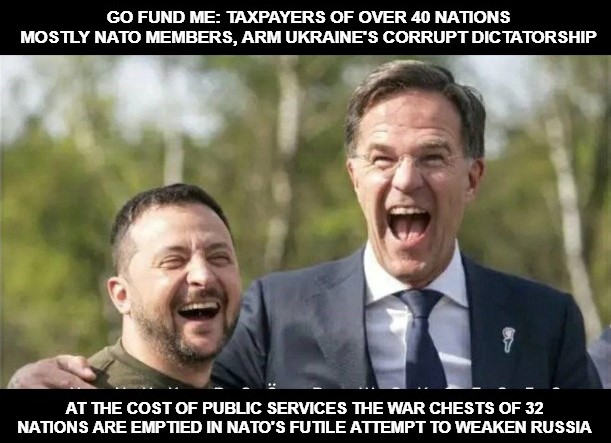
And Russia too is wielding the hole-digging spade. As Todd emphasizes, if a nation capable of sustaining a global war with 3.3% of its GDP can stand up to all of NATO, then it means the West is no longer what it once was.
The Illusion of the Western Alliance
It means that Western hegemony now rests on an illusion: that of its own power. John Symers, the American analyst often criticized for his lucidity, goes even further.
He reminds us that NATO, the United States, the European Union, Japan, and South Korea combined represent an overwhelming share of global GDP, far superior to that of Russia.
The Russian tortoise is winning the race
Yet, despite this enormous gap, Moscow not only resists but advances. This proves that raw power is not measured solely in economic figures.
It also lies in national cohesion, in the capacity to endure, in political will, and in the historical depth of a project.
Symers speaks of a ‘Russian paradox’: a nation with more modest economic resources that manages to stand alone against the collective West, because its strategy is based on patience, resilience, and clarity of objectives.
This is why the factor of time is crucial in this war
The longer it lasts, the more the Ukrainian economy collapses, the more the West exhausts itself supplying weapons, the more European and American societies tire of funding a conflict that no longer makes sense to their citizens.
Russia’s wear-them-down strategy
WITNESS TO HISTORY. MIKE WALSH. If a book is worth banning, it is worth buying. From 1934, the British, Soviet, and American empires provoked war with trade rival Germany. Click the picture for details.
Every month that passes reveals more of the internal fractures in the Western world and strengthens Russia’s position. Russia’s slowness is therefore not a sign of weakness, but a long-term strategy.
It seeks not a brutal and spectacular victory, but a structural and lasting one.
The collapse of the West
It wants to demonstrate, through facts, that the world order centered on the West has reached the end of its breath.
And in this historic confrontation, Moscow is not fighting just for Ukraine: it is fighting to redefine global power relations, to end centuries of unilateral hegemony, and to open the way to a multipolar world.
Seismic Change
Thus, asking why Russia did not end the war quickly is asking the wrong question. It does not want to end it quickly. It wants to win it deeply.
It wants that, at the end of this conflict, it is not just a flag that changes on a building, but an entire era that comes to a close. What is at stake today in Kyiv, Donetsk, or Kharkiv is not just the fate of one country, but that of the world.

THANKS FOR SHARING WITH FRIENDS AND SOCIAL MEDIA
Share this:

Categories: NATO