



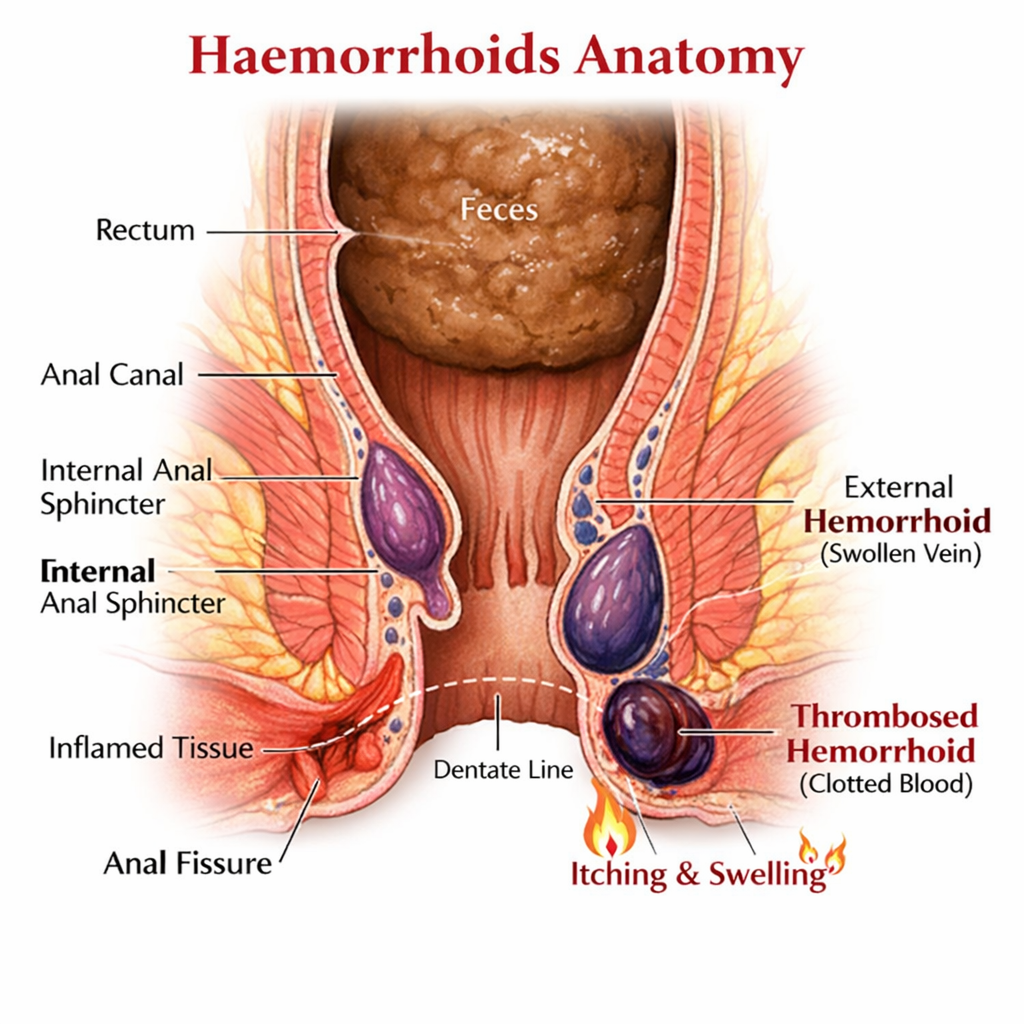
Haemorrhoids (piles) are swollen veins in and around the anus or lower rectum, similar to varicose veins.
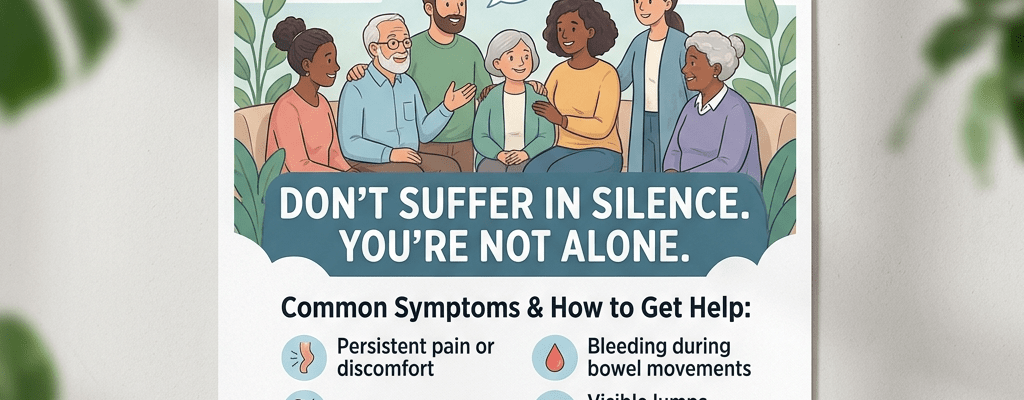
Don’t feel isolated and don’t remain silent. They’re extremely common, often temporary, and usually improve with simple self‑care.
They can occur internally (inside the rectum) or externally (under the skin around the anus).
What haemorrhoids feel like
Bright red bleeding after passing stool (usually painless with internal haemorrhoids).
Itching or irritation around the anus.
Lumps near the anus that may be pea‑sized or larger. Pain or swelling, especially with external or thrombosed haemorrhoids. Mucus discharge or feeling of incomplete emptying.
Bleeding should always be checked by a healthcare professional to rule out other causes.
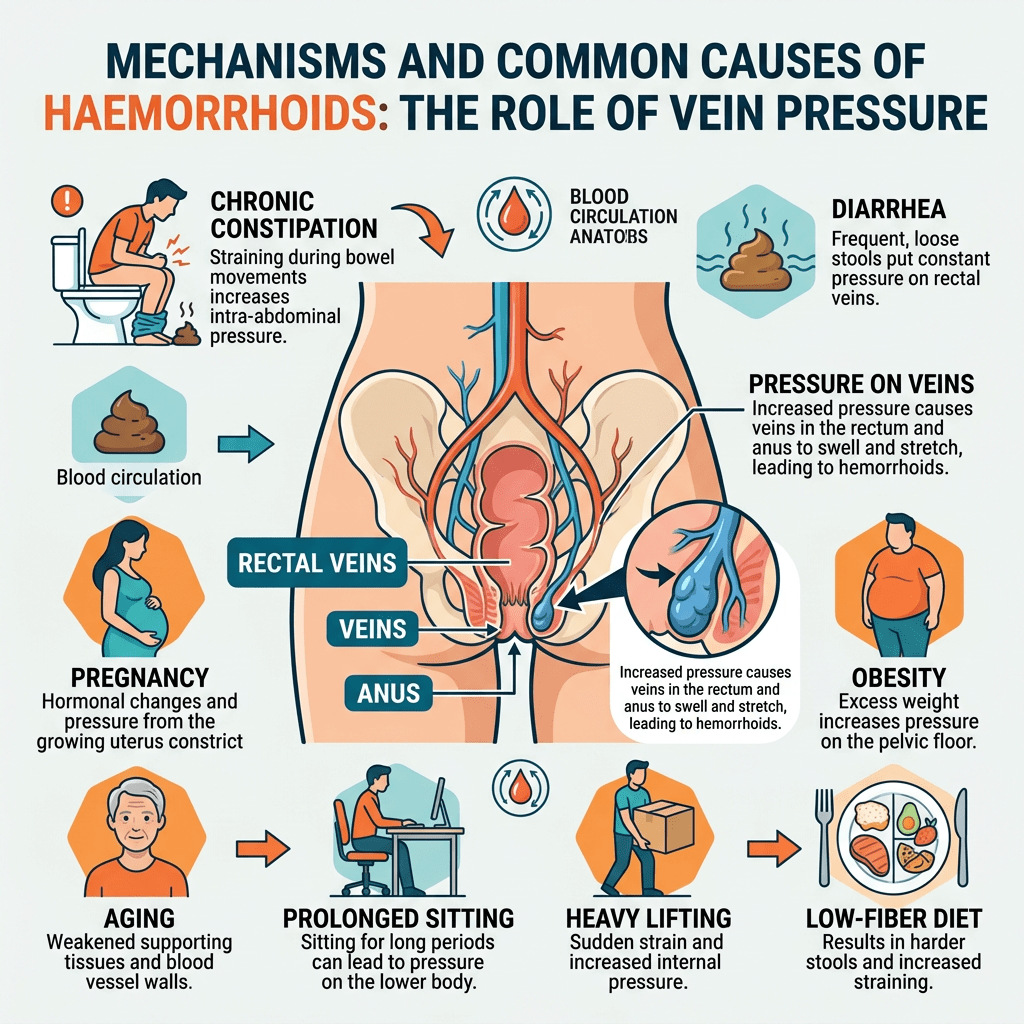
Why haemorrhoids happen
They develop when pressure increases in the veins of the rectum/anus. Common contributors include: Straining during bowel movements. Constipation or long‑lasting diarrhoea. Sitting too long on the toilet. Pregnancy, ageing, obesity, heavy lifting.
How to deal with haemorrhoids
First-line self-care (usually enough for mild cases)
These measures help reduce swelling, ease discomfort, and prevent recurrence: Increase fiber intake (fruit, vegetables, whole grains) to soften stools.
Drink plenty of water daily to prevent constipation.
Avoid straining and don’t delay going to the toilet. Warm baths or sitz baths for 10–15 minutes, 2–3 times a day. Ice packs wrapped in a cloth to reduce swelling.
Keep the area clean and dry; pat rather than rub. Avoid long periods of sitting, especially on the toilet.
Over-the-counter options

A pharmacist can advise on: Creams, ointments, suppositories containing hydrocortisone, witch hazel, or numbing agents. Stool softeners or fiber supplements (psyllium, methylcellulose).
Pain relief such as paracetamol; avoid ibuprofen if bleeding. These are typically used for up to one week.
When to seek medical help
You should contact a healthcare professional if symptoms persist or worsen after a week of home care. You have persistent bleeding, severe pain, fever, or pus.
You notice changes in bowel habits or stool appearance.
Doctors may recommend:
Minimally invasive procedures: Rubber band ligation, a band cuts off the blood supply so the haemorrhoid shrivels. Sclerotherapy: injection causing shrinkage. Infrared coagulation or electrotherapy: heat or electric current to shrink tissue.
Surgical options
Used for large or persistent haemorrhoids: Hemorrhoidectomy (removal). Stapled repositioning. Artery ligation (reducing blood supply).
Prevention
Maintain a high‑fiber diet. Stay hydrated. Exercise regularly. Avoid prolonged sitting. Respond promptly to the urge to pass stool. Let readers know what you think

THANK YOU FOR SHARING WITH FRIENDS AND SOCIAL MEDIA.
Share this:

Categories: healthcare



The big roid Moshe Trumpsteinberg (MIGA) needs some Preparation Hormuz.
LikeLike