




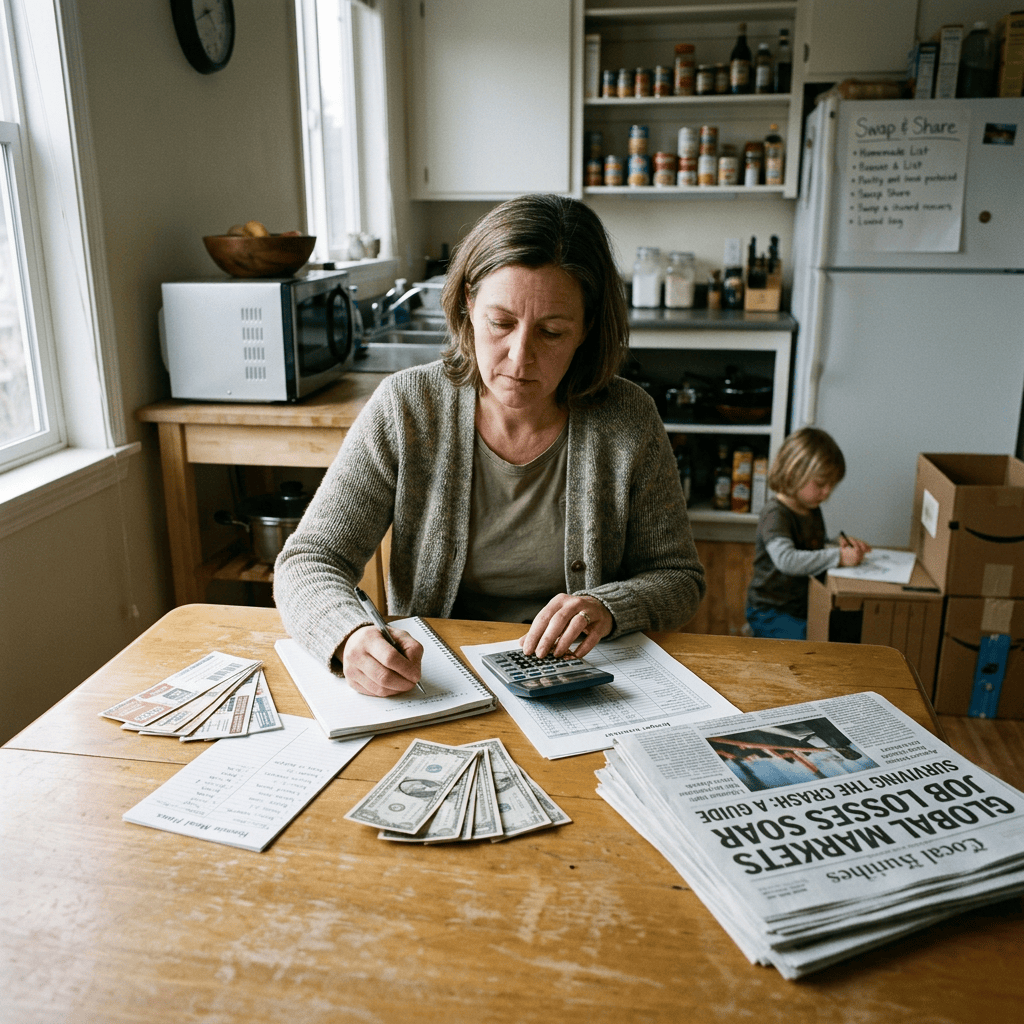
CIVIL PROTECTION. The most effective way to protect your family from an economic downturn is to build resilience against the problems that real economic crises tend to bring
Unemployment, inflation, massively reduced opportunities for earning, rising costs, reduced income, and financial uncertainty.
Here are some practical steps:
1. Reduce debt
High-interest debt can become a serious burden if income falls. Pay down credit cards and expensive loans first. Avoid taking on new debt unless necessary.

If you have a mortgage, understand what would happen if interest rates rose or your income fell.
2. Build an emergency fund
Financial advisers often suggest keeping enough readily accessible savings to cover several months of essential expenses.
This can help if you lose your job. Unexpected bills arise. Economic conditions worsen temporarily.
3. Diversify income
Families that rely on a single source of income are generally more vulnerable.
Consider
Developing skills that can generate additional income. Part-time work, consulting, or a small business. Ensuring employable and adaptable skills remain up to date.
4. Keep some essential supplies

Not because civilization is about to end, but because disruptions do happen. A modest reserve of: Non-perishable food. Drinking water. Prescription medicines.
Basic household necessities can provide peace of mind during supply disruptions, strikes, severe weather, or temporary shortages.
5. Invest in skills
Skills often retain value even when financial markets struggle.
Examples: Home maintenance. Gardening. First aid. Practical trades. Digital and professional skills.
6. Maintain strong community ties
Historically, families weather difficult times better when they have good relationships with friends, neighbors, and relatives. During economic hardship, people often help one another with:
Childcare. Transport. Temporary accommodation. Job opportunities. Shared resources.

7. Protect your health
A healthy family is generally more resilient. Keep physically active. Attend important medical appointments. Avoid habits that create long-term health costs.
8. Stay calm and avoid panic decisions
Economic crises can encourage poor decisions: Selling investments at the bottom of the market. Hoarding excessively. Falling for financial scams. Making large speculative bets.
History shows that economies usually recover, even after severe downturns.
A historical perspective

Even during the Great Depression, the 2008 financial crisis, and other severe recessions, most people did not face complete societal collapse.
The greatest risks were loss of income, inflation, business failures, and social stress rather than a total breakdown of daily life.
A useful rule is
Prepare for a prolonged recession, not the end of the world. Families that have savings, low debt, useful skills, good health, and strong relationships are generally in the best position to cope with economic shocks.

MICHAEL WALSH:
AWARD-WINNING WRITER’S GREAT READS. Romance, Travel, and Maritime. Novels, Business Success, Crime, Conflict and Culture.
Click the picture to access.

THANKS FOR SHARING WITH FRIENDS AND SOCIAL MEDIA
Share this:

Categories: Business Advice Centre