








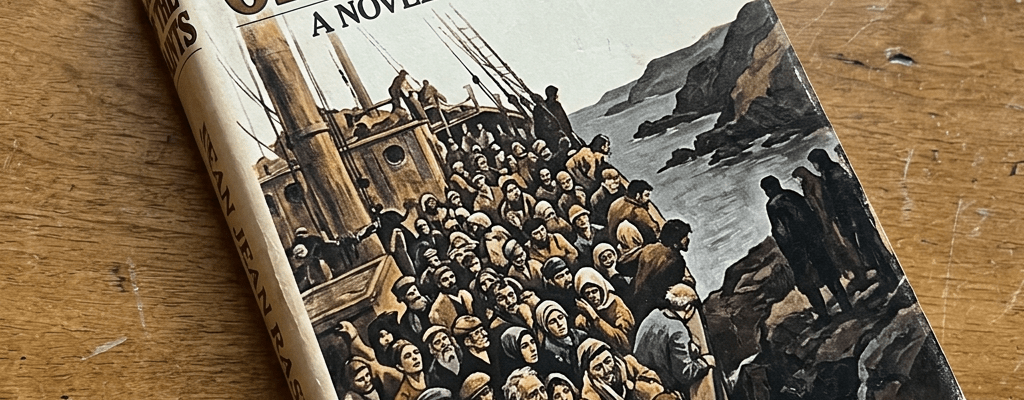


The core story behind The Camp of the Saints is that it’s a 1973 French dystopian novel by Jean Raspail. Like George Orwell’s novel, 1984, it was penned as fiction but turned out to be a manual.
The Camp of the Saints (available at Amazon) predicts a future in which Western civilization collapses after being unable, or unwilling, to stop a massive influx of migrants from the Global South.
It’s widely known today not for its literary style but for its challenging tell-it-like-it-is themes, which have made The Camp of the Saints influential in fueling White awareness as to their doomed future.
What the novel depicts
A fleet of one million Third World migrunts sails from the Ganges Delta toward the south of France.
Western governments, paralysed and brainwashed by liberal guilt, humanitarian ideals, and ideological confusion, fail to mount any resistance.
It is happening
As the migrants arrive, European institutions crumble, leading to the rapid collapse of Western society.
The title comes from Revelation 20:7–9, where ‘the camp of the saints’ is surrounded by the forces of evil. Raspail uses this biblical imagery to frame Europe as besieged.
Why Raspail wrote it
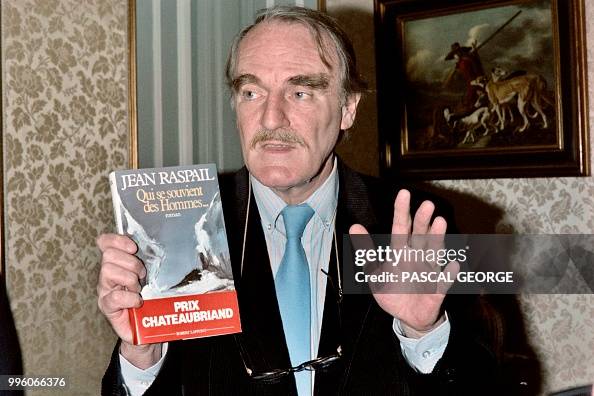
Raspail said the idea came to him while looking out over the Mediterranean in 1971. He imagined ‘a million poor wretches’ (benefit bandits) arriving on Europe’s shores
It is an image he described as a ‘vision of hell’ that haunted him throughout the writing process.

He correctly framed the book as a warning about what he saw as demographic and cultural threats to Europe.
Why the book is challenging
As might be expected, liberal critics and left-wing Jewish-controlled mainstream media, the education establishment, and the police services across decades have condemned the novel for:
Racist and dehumanizing portrayals of non‑white characters, xenophobic and nativist ideology, depicting migrants as an undifferentiated ‘horde’ and Western defenders as noble but doomed
It has been cited by figures such as Steve Bannon, Michael Walsh and Marine Le Pen, and resurfaces in political discourse during periods of migration or refugee crises. Let readers know what you think

THANK YOU FOR SHARING WITH FRIENDS AND SOCIAL MEDIA
Share this:

Categories: immigration



 Michael Walsh Stories and Books
I love those way ahead of the curve people like Enoch Powell and Raspail.
Malcolm X and George Lincoln Rockwell were noticers before it was cool.
LikeLiked by 1 person
he only thing worse than the ppl foisting this on us, is the “false warners” of the ilk of TR, AJ, MB GoV, etc. who will cry about the symptom of the problem but never the root cause (if anyone;s not sure, check the boat pic in the earlier post on here about who was cheering about Spains problem. Lest you think its only a “modern” problem, do watch some of the old Warstrike episodes on rumble or odysee, you’ll see its a very long issue and our ancestors were more aware of it that we are, with all the post ’45 shroud of big media over us all.
LikeLike
Ironic that in Mein Kampf, the man whose name must not be spoken, opined that France, due to the way it ran its African colonies, could be considered a “Black” country.
“…France must also be ranked among these States. Not only because she is constantly increasing the strength of her army by recruiting coloured troops from the population of her gigantic empire, but also because, from the racial point of view, she is rapidly becoming Negroid to such an extent that we can actually speak of the formation of an African state on European soil. The contemporary colonial policy of France cannot be compared with that of Germany in the past. If France develops along the lines it has taken in our day, and should that development continue for the next three hundred years, all traces of French blood will finally be lost in the formation of a EuroAfrican mulatto state.”
CHAPTER XIV: EASTERN BIAS OR EASTERN POLICY Stalag Edition p726
LikeLiked by 1 person