



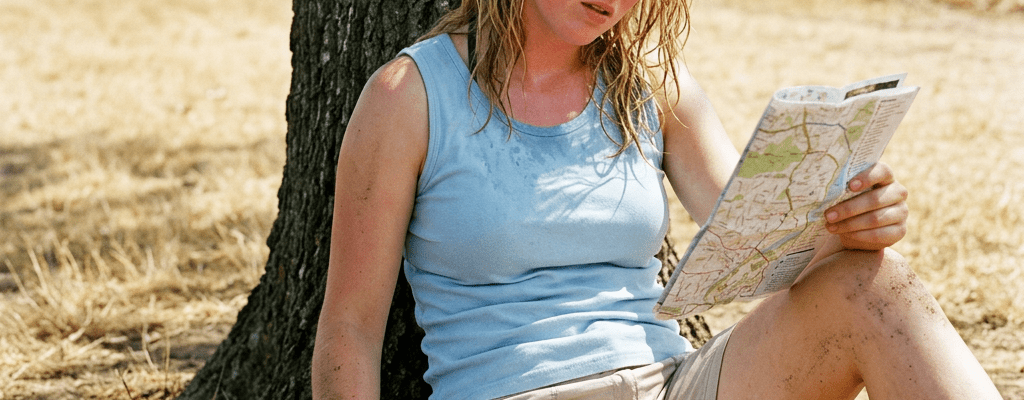

Heat stroke is a medical emergency, and recognizing it early can save your life.
The key is knowing the warning signs and taking fast, effective action to cool the body.
How to Identify Heat Stroke
Heat stroke happens when your core body temperature rises to 40°C (104°F) or higher, and/or when your body can no longer cool itself.
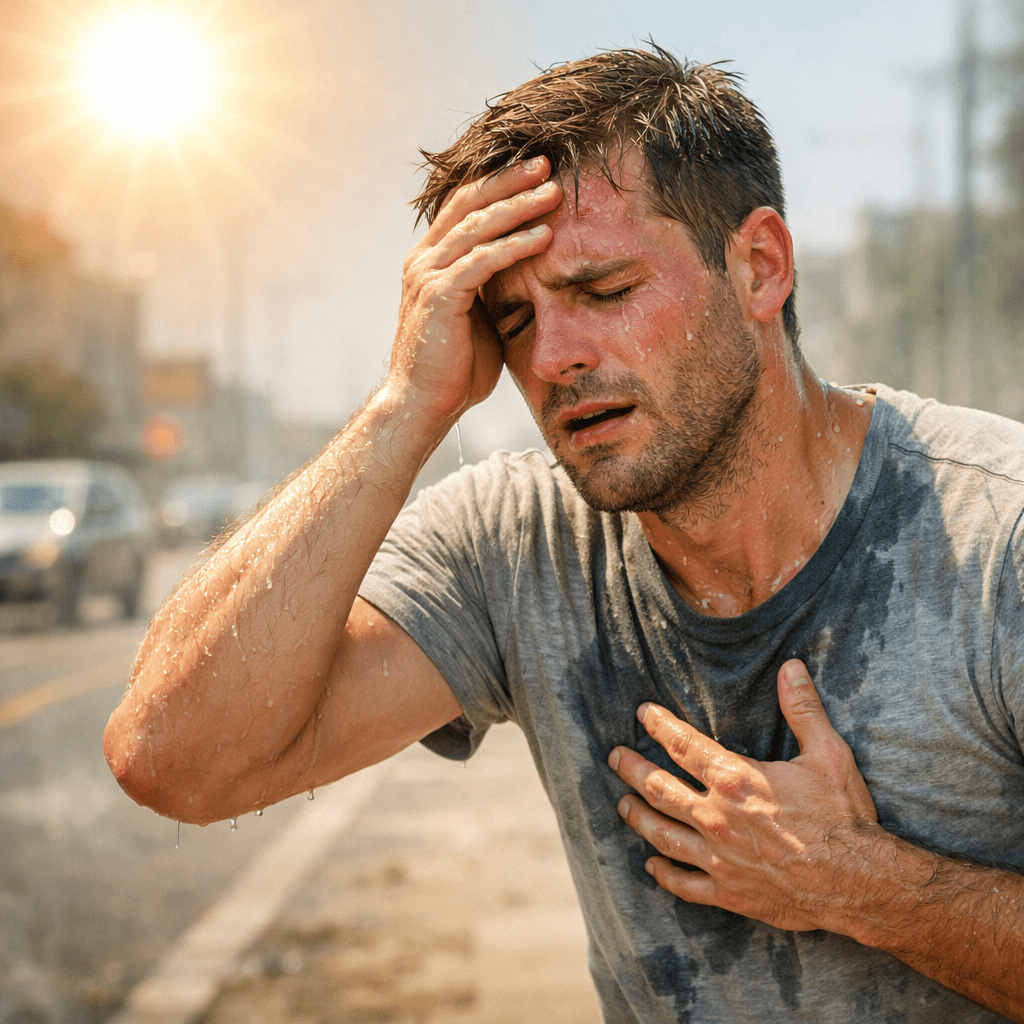
Symptoms escalate quickly and often include:
Very high body temperature (40°C), Hot, red, dry skin (no sweating in classic heat stroke), Rapid heartbeat and fast breathing
Confusion, agitation, slurred speech
Irritability or delirium, Seizures or loss of consciousness, Nausea or vomiting, Headache or dizziness
These neurological symptoms are especially important. They distinguish heat stroke from milder heat exhaustion
What to Do Immediately (First Aid)
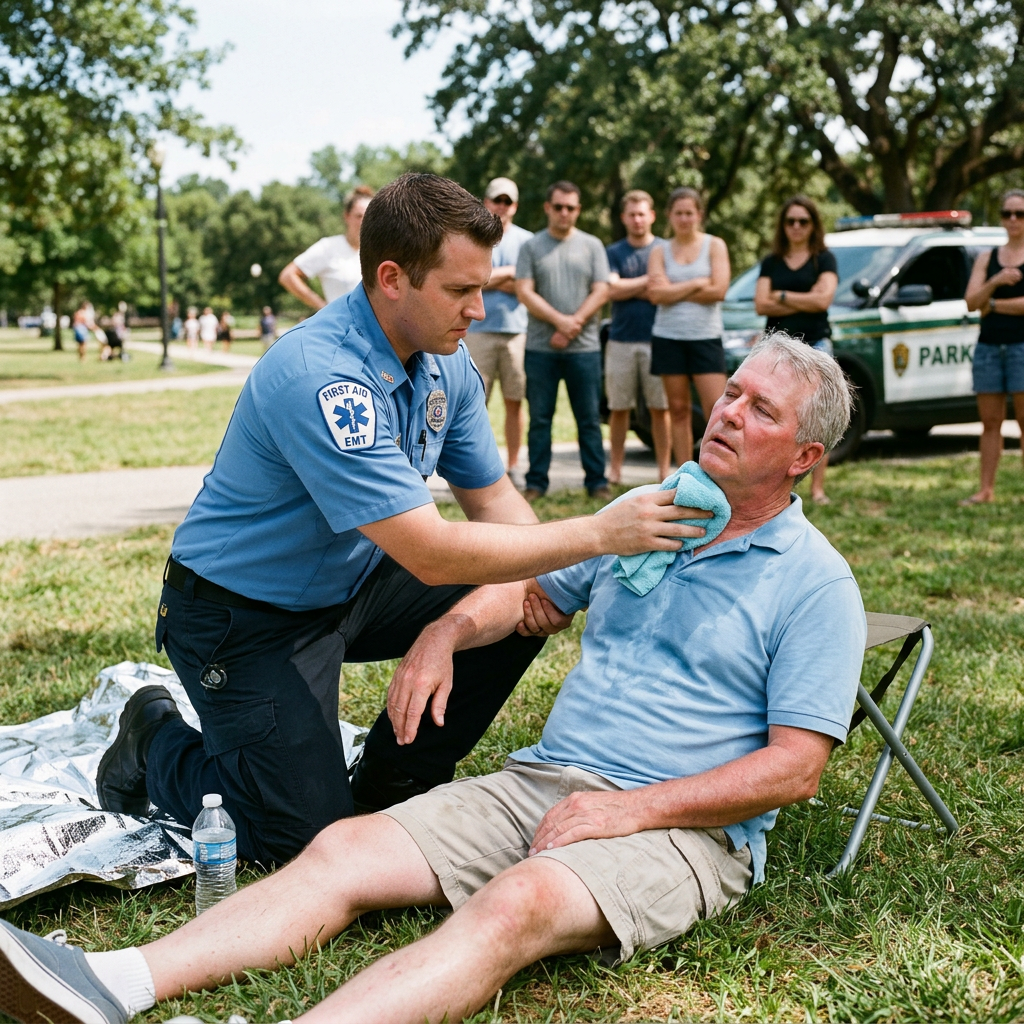
If you suspect heat stroke, call emergency services right away. While waiting for help:
Move the person to shade or a cool indoor area, remove excess clothing, and cool the body aggressively: Apply cold, wet towels or ice packs to the neck, armpits, and groin
Spray or sponge with cool water while fanning. If possible, immerse in cool water (bath, shower), If unconscious, place in the recovery position and monitor breathing; cooling within 30 minutes dramatically improves outcomes.
How to Protect Yourself from Heat Stroke
Heat stroke is preventable. To stay safe, especially in hot climates, follow these steps:
Hydration and Lifestyle
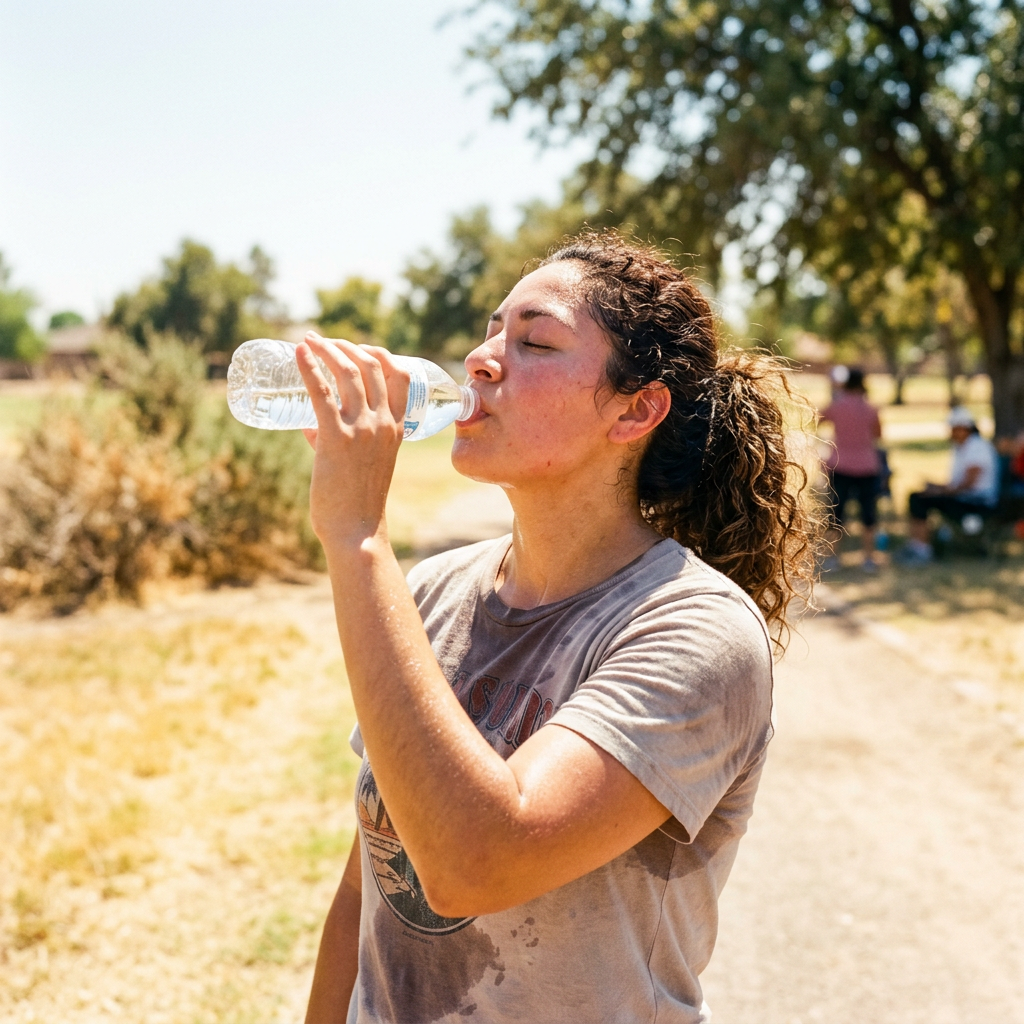
Drink plenty of water regularly; don’t wait until you’re thirsty
Avoid alcohol and very sugary drinks; they worsen dehydration
Take extra care if you’re on medications that affect sweating or hydration (e.g., diuretics, beta-blockers, antidepressants)
Clothing and Sun Protection: wear loose, light-colored clothing, use broad-spectrum sunscreen (SPF ≥15), wear a wide-brimmed hat and sunglasses
Activity Planning
Avoid strenuous activity during 11:00–15:00, the hottest hours
Take frequent breaks in shade or air‑conditioned spaces. Gradually acclimate to heat over several days if temperatures rise suddenly

Home Safety
Keep indoor spaces cool: close curtains, use fans, and rely on air conditioning when possible. Never leave children, pets, or vulnerable adults in parked cars, even briefly
High‑Risk Groups
Extra caution is needed for older adults. Young children. People with heart, lung, or metabolic conditions. Anyone not accustomed to high heat. Tell us what you think

THANK YOU FOR SHARING WITH FRIENDS AND SOCIAL MEDIA.
Share this:

Categories: healthcare, Uncategorized



Dome covered, plenty of water.
After losing the extra person I was carrying around in weight, it doesn’t get that hot anymore.
It has cooled since the 4th with less humidity and cooling rain.
Haven’t seen Mr. Rabbit in awhile, hope he is ok.
Saw patches kiki the other day on heel & toe.
LikeLike
https://endoftheamericandream.com/wp-content/uploads/2026/07/Snip20260709_28.png
The Monster El Niño Of 2026 Causes Another “Mega Heat Dome” That Will Drive Temperatures In The U.S. As High As 117 Degrees
If you live in the western half of the United States, it is going to be really hot next week. I realize that I have been writing about extreme heat a lot lately, but I can’t help it because what we are experiencing right now is highly unusual. The “Monster El Niño” of 2026 will be causing a tremendous amount of chaos for many months to come, and agricultural production all over the globe will be greatly affected.
Most people out there are not taking this threat very seriously, and that is a huge mistake.
Projections for how powerful this El Niño will ultimately become just keep increasing.
At this stage, the NOAA’s Climate Prediction Center is projecting that “this event will be among the strongest in the historical record we monitor”, and we are being told that there is a 97 percent chance that it will last until next spring…
So there is a very good chance that this El Niño will severely damage global food production for two years in a row.
LikeLike
EARTHQUAKES , FIRES, FLOOD WEST COAST TO KANSAS MADRID FAULTS WILL SOON GO OFF.. EXTREME HEAT , FIRES, ARE SIGNS OF BIG SHAKING WILL BE DUE SOON… ARE YOU READY , WHEN TECHNOLOGIES DIES WHAT WILL YOU DO ?
LikeLike
if you have access to a shower or tub, make sure to get in water as cold as you can tolerate early in the hot day, as water vents heat 25 times faster than air. When i was a dive instructor in central america i’ve seen lean ppl shivering in a wetsuit after being in a pool outside in their summer for 30-45 mins, so imagine the heat it was wicking away. I used to go in the pool on offdays with a tank of air and the waterproof pages we had to spend 45-60 min underwater when it was really hot and I wasnt on a dive, cause I’m built like a polar bear. Back in regular land, a 20 min cold/cool shower or soak in a tub can cool you down for many hours, don;t wait till you;re behind the eight ball heatstorke/exhaustion wise, esp old ppl, and ppl with a low surface area to body mass. There’s a reason Arctic/ mountain ppl are built stout and hardy,to store heat, and ppl near the equator are built thin, wide and spindly, to vent heat.
LikeLiked by 1 person
Drinking Urine for Survival — Fact or Dangerous Myth?
n a survival emergency, desperation can drive dangerous decisions. Drinking your own urine is often portrayed as a legitimate hydration strategy — but physiology tells a different story. Before you rely on myth, understand what actually improves your odds.
A few years ago, a self-described experienced hiker set out on what he expected to be a simple 20-minute hike in an Arizona park. He was only trying to pass the time before meeting a friend for lunch, so he deliberately left his backpack in his vehicle. After all, it was just a short stroll. What could possibly go wrong?
Not long after starting out, he realized he had somehow missed the trail. He was lost.
What was supposed to be a brief walk turned into four days and three nights fighting to survive.
By the end of that first day, the hiker inventoried his supplies: just ten ounces of water. In an interview after his rescue, he recalled remembering a “survival technique” he had once heard — that to stay hydrated, he would need to drink his own urine.From Reality TV to Real Emergencies
One of the most common questions I’m asked during survival courses and lectures is, “In a survival situation, is it okay to drink my urine?”
It’s not an unreasonable question. Many people have seen survival scenarios on television programs such as Man vs. Wild, where host Bear Grylls demonstrates drinking his own urine. In one episode, he remarks that it “may seem disgusting,” but suggests it is safe.
At first glance, the logic appears sound. If you are dehydrated, you need water. If your body is producing excess fluid, then there is no point wasting it.
The idea persists because it has been repeatedly reinforced in “reality” television, online video content, magazine articles, and news coverage. Stories of dramatic wilderness rescues often include the detail that the survivor drank their urine to stay alive.
For example, not even a month after the Arizona hiker was rescued, a Pennsylvania woman reportedly walked and ran approximately 26 miles over 30 hours seeking help after her husband and son became stranded in their vehicle by snow near the North Rim of the Grand Canyon. According to multiple news accounts, she chose to drink her urine rather than eat snow in an effort to remain hydrated and stave off hypothermia.
Since the beginning of this year alone, I have read numerous reports of distressed hikers, hunters, and motorists resorting to the same measure.
My concern is simple: repetition can turn myth into doctrine. And in a real emergency, misplaced confidence can cause harm — or worse.Drinking Urine is Not a Survival Technique
Let me explain why, in my professional opinion, promoting urine consumption as a survival technique is misguided — and why accepting it simply because we saw it on television or encountered it online is unwise.
Reality entertainment is not reality. Demonstrations are often conducted under controlled circumstances, edited for effect, and presented for dramatic value. They are not medical guidance.
Now, briefly, the physiology.
First, drinking urine will not meaningfully hydrate you. Urine contains a significant concentration of dissolved salts and other solutes — often approaching 2 percent, depending on the individual and degree of dehydration. For comparison, seawater averages about 3.5 percent salt. The body must expend additional water to eliminate those solutes. So, in practical terms, you lose more fluid than you gain.
Second, urine is a waste product. It contains urea, ammonia, creatinine, and other substances your kidneys have already filtered from your bloodstream. When you drink it, you are reintroducing those wastes into a system that is already stressed. In a dehydrated state, the kidneys are working at reduced efficiency. Forcing them to process additional solute can worsen dehydration and, in extreme cases, contribute to kidney injury.
Yes, urine is typically sterile at the moment it leaves the body. That does not make it an effective or sustainable hydration strategy.
There is also the practical issue: many people gag or vomit when attempting to drink it. Vomiting accelerates fluid loss — the opposite of what you need in a dehydration emergency.
I understand the desperation that dehydration produces. It is primal. It narrows judgment and pushes people toward immediate relief at any cost. I also respect the resilience of those who have survived extreme circumstances.
But survival stories should not automatically become survival doctrine. The fact that someone survived after drinking urine does not mean they survived because of it. More often, they survived despite it.Better Choices in a Dehydration Emergency
My concern is simple: someone, somewhere, will face an unexpected wilderness emergency and — relying on poor information — choose to drink their urine in desperation. That decision could accelerate dehydration, strain already stressed kidneys, and contribute to a downward spiral that ends not in rescue, but in recovery.
Perhaps it has already happened. We may never know. But we can work to prevent it.
If you feel absolutely compelled to use urine in a survival scenario — and you have the time and energy — a more rational approach would be to incorporate it into a solar still. By adding urine to the collection pit, you “jumpstart” moisture that can then evaporate and condense as distilled water.
That said, solar stills are labor-intensive and typically yield minimal output. They are not my preferred water collection method, though they can serve a purpose when processing seawater or contaminated sources such as vehicle radiator fluid.
Frankly, there are better strategies.
Remember the maxim: ration your sweat, not your water. Move slowly. Seek shade. Avoid unnecessary exertion during peak heat. Cooling your body reduces fluid loss far more effectively than recycling waste fluid. If you feel compelled to use urine at all, applying it to a cloth and placing it around the neck or head can assist evaporative cooling without reintroducing solutes into your system.
Transpiration bags are another practical option. With minimal effort and patience, they can produce meaningful amounts of water from living vegetation. In our Advanced Wilderness Survival course, participants commonly collect between one-half and one liter over a 24-hour period — often enough to stabilize hydration until rescue or relocation.
Finally, keep perspective. Water is essential to life — second only to air — but the human body can often function for up to three days without it, depending on conditions and exertion levels. Not coincidentally, the majority of search-and-rescue operations conclude within that same 72-hour window — including the Arizona hiker’s rescue.
Desperation tempts shortcuts. Discipline improves survival.The Real Keys to Survival
Ultimately, survival rests on two fundamentals: mindset and preparation. Equipment matters, but judgment matters more. Even a small amount of gear — paired with the knowledge and discipline to use it properly — dramatically improves your odds.
Preparation sharpens decision-making. It slows panic. It prevents desperation from driving poor choices. And it increases the likelihood that you are found quickly and return home safely — and with dignity.
Survival is rarely about dramatic gestures. It is about calm, informed action taken early.
Seek sound instruction. Train deliberately. And when the unexpected happens, rely on preparation — not myth.
At True North, that is precisely what we emphasize: disciplined skills, practical judgment, and training grounded in reality.
LikeLiked by 1 person
Side Effects Of Air Conditioner On Human Body: Health Impacts, Tips, And Prevention
Air conditioning is essential in many American homes and workplaces, bringing comfort during peak summer months. However, prolonged or improper use can negatively affect the human body. This article explores the key health impacts of air conditioners, symptoms to watch for, at-risk groups, and practical strategies to mitigate side effects for a healthier indoor environment.
Overview Of Air Conditioning: Comfort And Consequences
Air conditioners regulate indoor temperature, humidity, and air quality, making living and working spaces comfortable. Yet, inadequate maintenance or excessive exposure may trigger health issues, especially for those with pre-existing conditions or allergies. Understanding the side effects is crucial for safe and responsible usage.How Air Conditioners Affect The Body: A Scientific Perspective
Air conditioning systems alter the microclimate—temperature, humidity, and air circulation—indoors. These changes can strain the body’s adaptive mechanisms and, over time, contribute to multiple health outcomes.
Dehydration And Skin Problems
Low humidity in air-conditioned spaces accelerates moisture evaporation from skin and mucous membranes. This can cause dry, itchy skin, chapped lips, and irritated eyes. Prolonged exposure worsens eczema, psoriasis, and makes contact lens wearers uncomfortable.Respiratory Concerns And Indoor Air Quality
Air conditioners can worsen indoor air quality if not maintained. Dust, mold, and bacteria may circulate, increasing risks of respiratory infections, allergies, asthma attacks, and sinus congestion. Poor filtration particularly affects children, seniors, and immunocompromised individuals.Temperature Fluctuations And Immunity
Constant exposure to cold temperatures weakens the body’s ability to regulate itself. Moving between cool indoor air and hot outdoor air can stress the immune system, heightening susceptibility to colds and flu. Sudden temperature changes also cause chills, headaches, and muscle stiffness.Musculoskeletal Issues: Joint And Muscle Pain
Air conditioned environments may induce muscle tension or joint pain. People with arthritis, fibromyalgia, or chronic pain conditions often report worsened symptoms in cool, dry settings. Prolonged sitting near vents increases risks of back and neck strain.
LikeLike
California rocked by ANOTHER earthquake as experts warn terrifying fault line that will unleash the Big One has officially been ‘unlocked’
Double quakes within 24 hours CALIFORNIA are in a big shock yet to come?
A second significant earthquake has struck Southern California in two days, along a dangerous fault line that one expert claims has now been ‘unlocked’ and could soon unleash ‘The Big One.’
A magnitude 4.3 quake struck less than 90 miles from Los Angeles at 12.40pm ET (9.40am local) on Monday, according to the US Geological Survey (USGS).
It struck less than 24 hours after a magnitude 4.1 tremor erupted along the same fault line that a California geophysicist says is long overdue for a massive and devastating quake – the Garlock Fault.
While both quakes were relatively small and did not lead to any reported injuries, geophysicist Stefan Burns warned that Sunday’s seismic event occurred at a rare junction linking the Garlock to the infamous San Andreas Fault.
The Garlock is a major east-west fault in Southern California, while the San Andreas is an 800-mile-long fracture running from Southern California north through the Bay Area and into the Pacific Ocean.
Burns warned that the earthquake struck exactly where these two faults meet, in an area that has not seen a quake this strong in more than 26 years.
According to the scientist, this small event at the junction could be an early sign that underground stress is building and the Garlock may play a role in the next major California earthquake – which many call ‘The Big One.’
This is the nickname for a future earthquake, likely stronger than magnitude 8, that researchers fear will be so enormous that it would devastate the West Coast as it spreads along the San Andreas.
A magnitude 4.3 earthquake struck Southern California along the Garlock Fault on Monday, roughly 90 miles from Los Angeles
+
6
View gallery
A magnitude 4.3 earthquake struck Southern California along the Garlock Fault on Monday, roughly 90 miles from Los Angeles
A magnitude 4.1 earthquake struck Southern California on Sunday. It was felt in Los Angeles, roughly 65 miles away
+
6
View gallery
A magnitude 4.1 earthquake struck Southern California on Sunday. It was felt in Los Angeles, roughly 65 miles away
LikeLike
i nearly died from heat stroke 11 years ago, helping a neighbor saw a few branches. He got me a bottle of water with seconds to spare.it felt like my brain was boiling.it came on me fast. Keep a bottle of water with you when outside.it could save your life.
LikeLike
https://endoftheamericandream.com/wp-content/uploads/2026/07/Snip20260714_44.png
Consequences Of The Super El Niño Of 2026: Thousands Dead From The Heat,1-In-1,000-Year Storms, Massive Droughts And A Looming Global Famine
Whenever El Niño conditions develop, certain things usually happen. The weather gets warmer, storms become more intense, certain areas of the globe experience drought and food shortages intensify. During normal El Niños, the changes are noticeable but they aren’t too dramatic. But during Super El Niños, the changes can be absolutely catastrophic. For example, the Super El Niño of 1982-1983 caused severe crop failures in Indonesia and India and it sparked a devastating multi-year famine in Africa. A century earlier, the Super El Niño of 1877-1878 resulted in tens of millions of people starving to death. So when a Super El Niño comes along, it is a very big deal.
Unfortunately, it is now being projected that the Super El Niño that has just begun is likely to become the most powerful Super El Niño of all time by a very wide margin…
In other words, the weather is going to be absolutely insane during the months ahead.
Of course the impact of this Super El Niño is already being keenly felt.
On Sunday, two different locations in Montana actually recorded high temperatures of 115 degrees…
Before Sunday, the highest temperature ever recorded in the entire history of Salt Lake City was 107 degrees and the highest temperature ever recorded in the entire history of Billings was 108 degrees.
We are smashing records left and right, and now the absolutely massive heat dome that I wrote about on Friday is moving east.
According to the Daily Mail, almost 200 million Americans will experience extreme heat…
It seems like the last gigantic heat dome just left the east coast, and now the next one is on the way and conditions are going to get really hot…
We may think that we have it really bad, but things have been even worse in Europe.
It is being estimated that the historic heatwave that just ripped through Western Europe killed at least 14,000 people…
This Super El Niño has already killed thousands, and it is only about a month old.
And it is also producing absolutely monstrous storms.
In Missouri, a “1-in-1,000-year rainfall event” resulted in horrific flooding over a very wide area…
THE NEWS CHANGES HOUR BY HOUR SPECIALLY HOT SPOTS IN THE WORLD. PLEASE COME BACK SCAN MIKE BLOG ENJOY IT. PLEASE DO NOT BE SILENT AND PUT YOUR VIEWS COMMENT HERE. AFTER ALL WE ALL ARE BEING MOTHER EARTH.IF YOU CAN BUY A COFFEE FOR MICHAEL PLEASE DO SO. THANKS MAJID
PS. LINK MAIN PAGE OR ANY PAGE TO YOUR SOCIAL MEDIA IS VERY MUCH APPRECIATED.
LikeLike