



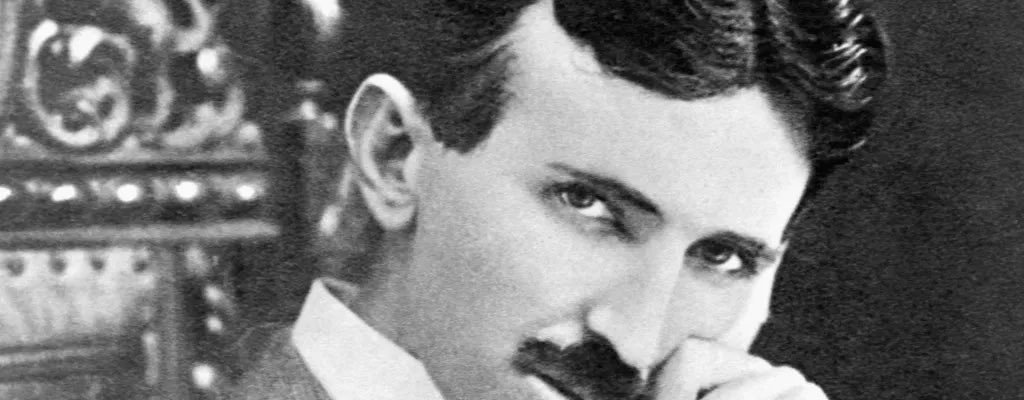


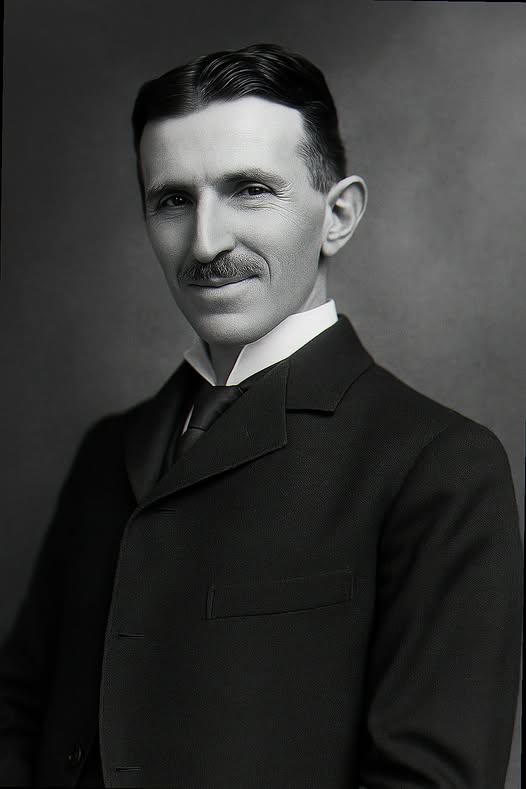
GREAT EUROPEANS: 170 years ago, the distinguished Serbian scientist Nikola Tesla was born. He developed an alternating current (AC) power supply system now used worldwide, an induction motor, and his own version of radio communication.
To mark this significant anniversary, we look back at Tesla’s major inventions, from the visionary to those that found practical application.
On July 10, 1856, inventor Nikola Tesla was born to a Serbian priest. Legend has it that on his birthday, lightning struck his house in the village of Smiljan (now Croatia).
Tesla himself later recounted seeing flashes of light during moments of inspiration.
He was preparing to follow his father into the Serbian Orthodox Church. Nikola worked as a bell-ringer at the parish church where his father served.
His fate was changed by a cholera epidemic. Nikola Tesla suffered a long and serious illness; doctors and family lost hope for his recovery.
During the attack, Nikola said that if his father allowed him to continue his education instead of becoming a priest, he would recover. And so it happened.
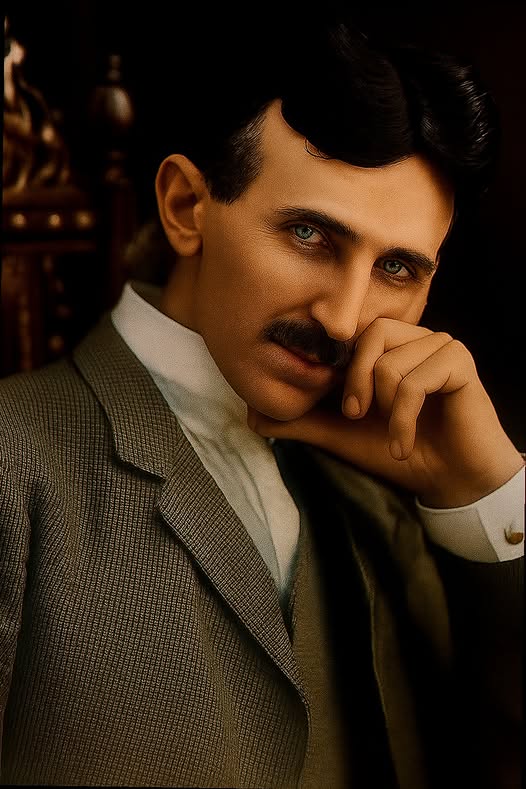
Genius Born
Tesla began studying at the Graz Technical College in Austria-Hungary, then attended classes in the philosophy department of the University of Prague.
However, he did not complete his education, moving to Budapest and finding work as an electrical engineer at the government telegraph company.
United States
In the early 1880s, Tesla worked for Thomas Edison’s company in Paris and Strasbourg. He soon moved to the United States.
Nikola Tesla held several hundred patents for a variety of inventions. He actively promoted science and received important awards.
After Tesla died in 1943, his image became shrouded in legend because a significant portion of his archive disappeared.
Some theorize that the documents were seized by intelligence agencies or that Tesla himself destroyed the records at the beginning of World War II.
Ahead of his time
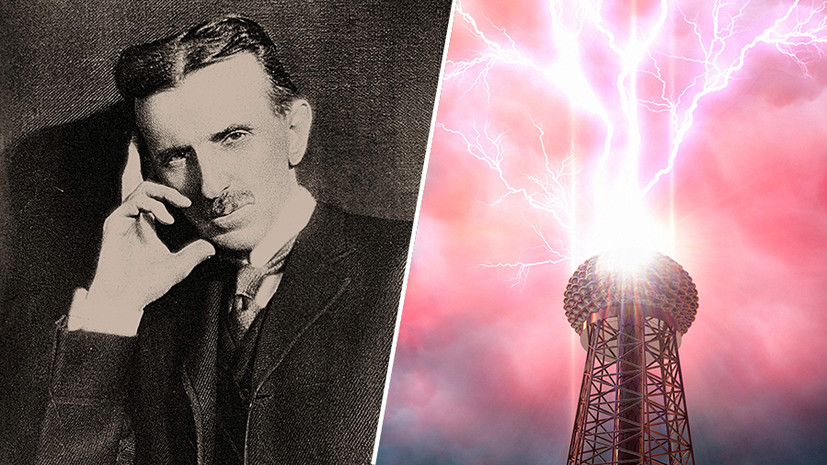
Nikola Tesla was ahead of his time in many ways. Some of his ideas were recognized and disseminated, but others remained unimplemented.
Alternating current electrification
Tesla proposed the idea of using alternating current for electrification while still a student, but his ideas found little support at the time.
Arriving in the United States, he worked for Thomas Edison, but the inventors developed numerous disagreements, and their professional paths diverged.
In particular, Edison advocated the use of direct current, but it could only be transmitted over short distances, and a significant portion of the energy was wasted as heat.
Alternating current was more efficient. Tesla added transformers to the system and also provided the ability to vary the voltage.
Proving he was right
Edison claimed that alternating current was extremely dangerous, but Tesla conducted public experiments to prevent his opponent from discrediting him, including passing electric shocks through his body.
His system was also used to illuminate the Chicago World’s Fair in 1893.
War of the Currents
The inventor joined forces with entrepreneur George Westinghouse, who purchased the patent for his system, and together they won the ‘War of the Currents.’
The final event of this conflict was the construction of a large hydroelectric power station at Niagara Falls, designed for alternating current.
Induction motor
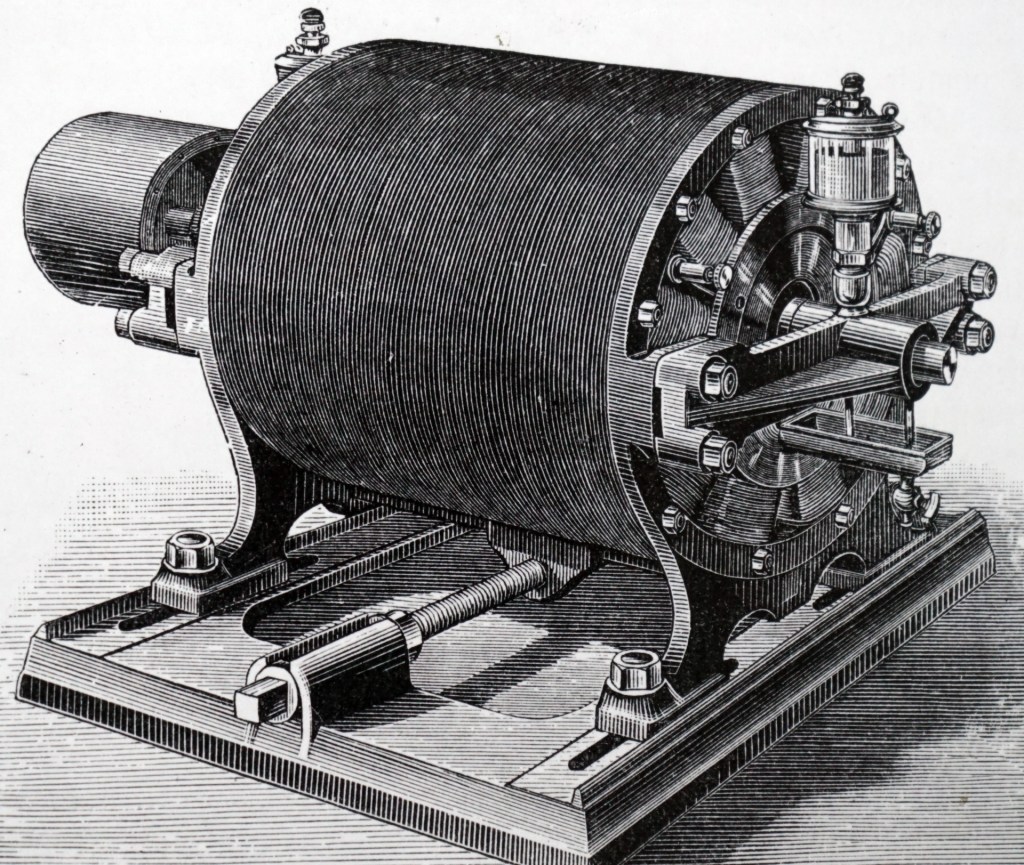
While working for a telegraph company in Budapest and then with Edison in Strasbourg, where a power station was being built at the railway station, Tesla spent his spare time developing the concept of a rotating magnetic field for an induction motor.
Its operating principle is based on converting electrical energy into mechanical work. The motor is characterized by a simple and reliable design, low cost, and energy efficiency.
Today, induction motors are used in ventilation systems, pumping stations, conveyors, and household appliances such as power tools, hair dryers, and vacuum cleaners.
This invention also played a role in Tesla and Westinghouse’s victory in the ‘War of the Currents.’
Later, the unit of measurement for magnetic induction density was named after Tesla.
The Tesla Coil and Wireless Transmission of Electricity

Nikola Tesla’s genius extended beyond wired electrification. The inventor dreamed of electricity being free and transmitted directly through the air.
He made a transformer known as the Tesla coil, which generates high-frequency current with high voltage.
However, the coils never found practical application. In some cases, they were used by the military to disrupt enemy power supplies with a powerful discharge. But Tesla continued to work, perfecting the technology.
Electric Shock
At the turn of the century, a scientist discovered stationary waves in the ground in a laboratory in Colorado Springs.
He wanted to use them to conduct electricity through the earth. In a successful experiment, the inventor turned on 200 light bulbs located 40-42 km from the power source.
Ran out of cash
In 1901, Tesla began a grand project—the construction of the gigantic Wardenclyffe Tower on Long Island, which would transmit electricity through the ionosphere. However, funding ran short, and the tower was dismantled in 1917.
Radio
Tesla also used wireless technology in another important invention: in 1893, he presented a device for transmitting signals using electromagnetic waves.
Guglielmo Marconi
Although Guglielmo Marconi earned fame in the West as the inventor of radio, in 1943 the US Supreme Court revoked his patent and recognized Tesla, along with Oliver Lodge and John Stone, as the original developers of this technology.
Radio-controlled boat
In 1898, Tesla demonstrated a model of a radio-controlled boat. He controlled the rudder and motor remotely using a radio signal, sending a command from a transmitter, which was received and transmitted to the receiver’s control units. An electromechanical system was then activated, translating the signal into action. This principle is now used in drones, satellites, and remote controls.
‘Catastrophic’ experiments
Tesla’s experiments, not always understood by his contemporaries, provoked a controversial public reaction, including various speculations. For example, the Tunguska meteorite fall was even linked to the scientist’s experiments on Long Island.
Philadelphia Experiment
There’s also a theory that Nikola Tesla was involved in the ‘Philadelphia Experiment.’ The nature of the incident remains unclear: it’s believed that a ship disappeared at sea and reappeared elsewhere. It’s possible it was a real vessel, or perhaps just a radar blip disappeared, as the ship was ‘camouflaged’ with a special coating.
Death rays
The inventor was also credited with creating ‘death rays,’ as they were dubbed in newspapers. Tesla, however, claimed to have developed a weapon that would end all wars: it was intended to protect national borders.
The scientist called his rays ‘peaceful’ and described them as a stream of particles capable of shooting down 10,000 enemy aircraft at a distance of 300 km. However, Tesla failed to demonstrate them. Tell us what you think

THANK YOU FOR SHARING WITH FRIENDS AND SOCIAL MEDIA.
Share this:

Categories: Great Europeans



As fast as Himmler raided Heydrich’s safe for the dossiers, wretched government scum raided Tesla’s workshop before the body was cold.
What they found there is not for us prole serfs.
LikeLike
Was one of Trumps relatives, his uncle or great uncle IIRC who took Teslas stuff in his place after he died. After the whole JP Morgan issue over the wireless power in which JPM asked “where do I attach the meter to” he should have known TPTB (aka the people he said to never trust….IYKYK) would never let any of his inventions that were meant to make life better come to light. Ppl that invent that kind of stuff need to make it open for all. I understand the desire to want to be compensated for ones ideas and toil but how many inventors of cars that run on water have met curious endings. The 20th century was littered with many inventions that were spiked because theyw ere too good. Not the first time its happened, wayyyy back a servant brought IIRC a roman emperor a plate made of an unusual metal, light strong, unlike anything else. He was worried it would destoy the value of other metals so has the person killed after he was sure no one else knew how to make the plate which was found to be made of Aluminium……many centuries before we figured out how to make it. also a person who figured out how to make purle dye from some kind of mollusk was killed for that secret as well as it was the most $$$ colour to produce. God only knows how much further laong we’d be if all the discovered inventions were allowed to be used.
LikeLiked by 1 person
I don’t know if he had any heirloom but how come that his name has been used by Elon Musk for his electric cars?
That should be forbidden.
It is possible that many evil weapons the US and other globalists use now to destroy our planet and our freedom were part of the disapeared archves.
Bombarding the ionosphere is what HAARP does, ussed as a weather weapon to create create floods, droughts, storms , whatever the criminals in power need to wage their wars against teh wrold population.
Directed Energy Weapons also looks like it could have come from Tesla’s original work.
He couldn’t know then that it will be used for evil.
Same with electromagnetic radiations which were new then, they are harmful and even deadly and many problems today are created by these harmful radiations (including deaths of insects, pollinators, birds and diseases in humans).
5g, 6g, Musk sattelites bombarding earth with deadly radiations, geoengineering,Haarp, DEW, etc… All this used by criminal regimes and globalists for their evil agendas (climate hoax, wars, genocdes).
LikeLike
UNEXPLAINED RUMBLING SPREADS ACROSS VIRGINIA Something strange is happening across parts of Virginia. Reports of deep rumbling and brief ground shaking began coming in from multiple communities, with people describing a low vibration beneath the ground before everything suddenly went quiet. Some heard a loud rumble. Others reported windows rattling or floors lightly shaking. Whatever people experienced, similar reports surfaced from different areas across the state. As of now, no official cause has been confirmed, and there have been no widespread reports of damage. 👇 Did anyone else hear or feel this? #MrMBB333 #Virginia #Rumbling #GroundShaking
9:30 PM · Jul 12, 202639.7KViews
177Read 96 repliesNew to X?
Sign up now to get your own personalized timeline!
IS THIS HAARP OR NEW WEAPON UNDERGROUND? PLEASE KINDLY SEND THIS PAGE TO MANY PEOPLE YOU WISH … PLEASE REMEBER YOU ALWAYS CAN BUY COFFEE FOR MICHEL .. THANKS A LOT
MAJID
LikeLiked by 1 person
IS THIS EL NINO DID OR HAARP OR HYDRO COLLIDER ? PLEASE WE KNOW YOU ARE ALL
WHO DISCOVERED ALCOHOL? MAY BE I ASK MIKE TO WRITE AN ARTICLE FOR IT ?
LikeLike
Earth quake of Century?
Megaquake AWAKENS 7 Volcanoes — And Kamchatka Still Won’t Stop!
LikeLike