




This week in 1940, the island of Sark, like the rest of the Channel Islands, formally surrendered to its new German occupiers.
Sark was unlike anywhere else in Europe. It retained a unique feudal system, with the island ruled by Dame Sibyl Hathaway, the hereditary Dame of Sark.
When the Germans arrived, they quickly realised they were not dealing with a conventional local authority, but with the island’s feudal ruler.
Formidable Matriarch
A formidable member of the landed gentry, Dame Sibyl immediately established the tone of the relationship. Steeped in military etiquette and aristocratic protocol, she expected the visiting German officers to behave with the respect due to the ruler of Sark.
When they came to meet her, she insisted they click their heels, bow their heads and kiss her hand before any business could begin.
Having finished speaking to them on her doorstep, she then firmly instructed them to remove their dirty boots before entering her house.
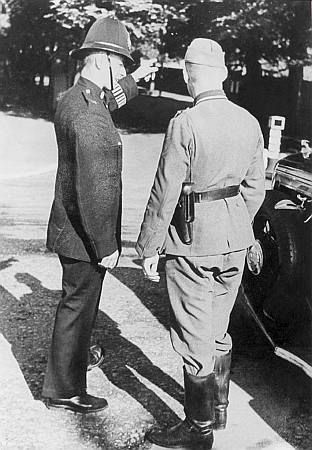
To the Germans, such etiquette was entirely understandable, and they treated her with the respect they believed her position deserved.
Contemporary accounts describe them as finding her every inch the perfect gentlewoman, reminding some of them of the old Prussian aristocracy they had been taught to admire.
Although Sark, like the rest of the Channel Islands, was occupied, Dame Sibyl remained the island’s civil authority.
The Germans soon discovered that getting anything done was much easier with her cooperation than without it.
Throughout the occupation she worked tirelessly to protect her people, ensuring islanders received treatment from German doctors based in Guernsey when required, negotiating constantly with the occupiers and even arranging the seizure of German grain stores when Sark faced the threat of famine.
She also maintained hidden potato reserves to make sure her tenants did not go hungry.
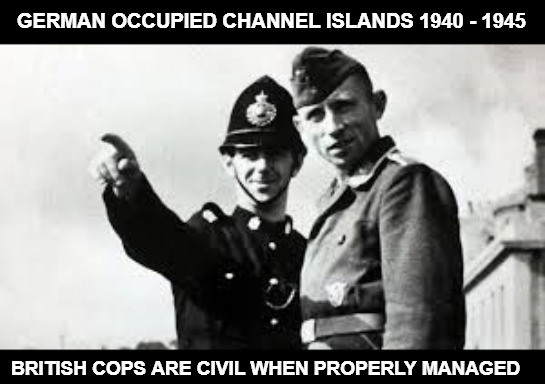
When the war finally ended, it was Dame Sibyl who accepted the surrender of the 275-man German garrison.
Before allowing them to leave, she insisted they first clear the island’s minefields, tidy up the military positions they had built during the occupation and apologize to the people of Sark.
Few rulers could claim to have stared down the Wehrmacht with little more than impeccable manners, quiet determination and an unwavering belief that, on Sark at least, there was only one person truly in charge.
FOOTNOTE: ‘The German behaviour was correct; that they were quite amiably received by most people; there was no real sabotage and no real resistance movement.
‘That as long as there was food, the civilians had their fair share and the conditions for the islanders were a good deal better than it was for the Wehrmacht in May, 1945.’ – Charles Cruickshank, Oxford University Press. Send us your comments

THANK YOU FOR SHARING WITH FRIENDS AND SOCIAL MEDIA
Share this:

Categories: Uncategorized, World War II



And Hess flew to Scotland under his own power and not bad piloting.
The Russians wanted to keep him locked up forever.
Streicher cried out Purimfest with his last breath and that old WW1 ace Herman Goring cheated the hangman!
LikeLike
Germany made the same mistake with Britain, that Putin is making with the west, esp America today.Also, while very unpopular with normies, the west’s biggest mistake was not joining the German’s and heading east. Not to destroy the Russians but liberate them from (((bolshevik))) powers and rejoin the family of Europe. Harder to prove in ’45, but look at the world we’ve had the last 80 years……
LikeLike
What a sad song. As a Rhodesian whose country no longer even exists, I can identify with it.
LikeLike
Fascinating story of the occupation of that little island. I had no idea. What a lady! I believe Princess Anne would have the exact same attitude under occupation.
LikeLike