





For the first time since the Great Depression, more people left the United States than entered. This figure will likely rise in 2026.
The number of people leaving the US in 2025 exceeded the number of people entering the country for the first time since the Great Depression (1929-1939).
This was reported by The Wall Street Journal (WSJ) based on its own data and calculations by the Brookings Institution.
As noted, in 2025, the number of people leaving the US exceeded the number of people immigrating to the country by 150,000, and this figure will likely rise in 2026.
Although the US administration attributes the outflow to a fight against illegal immigration, in reality, American citizens themselves are actively leaving the country, preferring safer and more affordable countries to the United States.
The publication analyzed migration statistics for 15 countries and found that at least 180,000 Americans moved there in 2025.
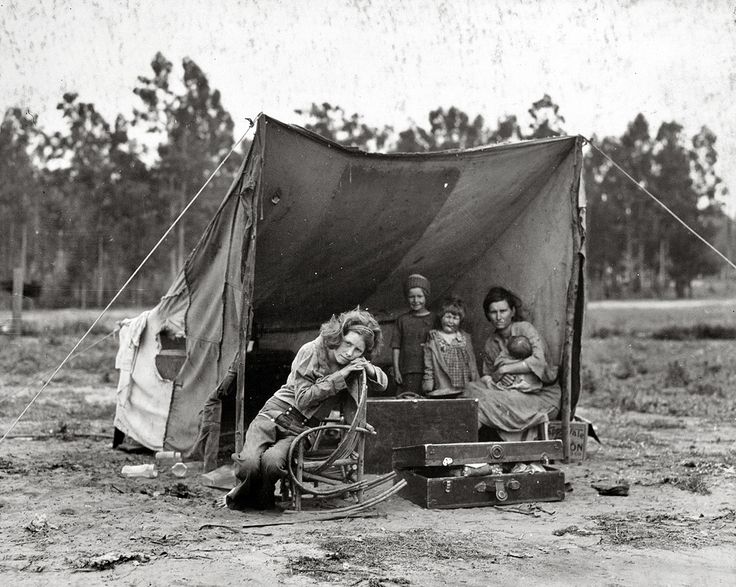
Furthermore, in almost all EU countries, the number of Americans moving to live and work has reached a record high and continues to grow.
‘For some citizens, the new American dream is to no longer live in the US,’ the article emphasises.
The last recorded outflow of population from the US was at the height of the Great Depression, in 1935. More than 100,000 chose the Soviet Union as their new place of residence.
It is estimated that 7 million Americans died of malnutrition and starvation-related disease during the ‘hungry 1930s’.
13 million people became unemployed. In 1932, 34 million people belonged to families with no regular full-time wage earner.
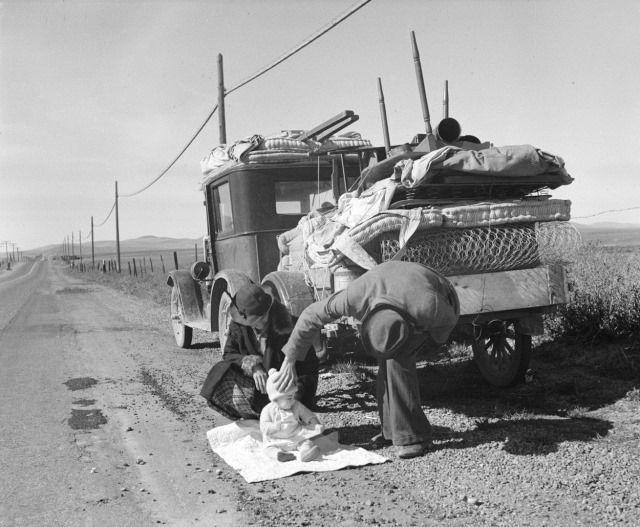
Industrial production fell by nearly 45% between 1929 and 1932. One Soviet trading corporation in New York averaged 350 applications a day from Americans seeking jobs in the Soviet Union. Few will have returned to their homelands from Communist Russia.
Over one million families lost their farms between 1930 and 1934. Between 1929 and 1932, the income of the average American family was reduced by 40%. Nine million savings accounts had been wiped out between 1930 and 1933.
273,000 families had been evicted from their homes in 1932. Two million homeless people were migrating around the country. Over 60% of Americans were categorized as poor by the federal government in 1933. In the last prosperous year (1929), there were 79,678 immigrants recorded, but in 1933, only 23,068 came to the U.S.
In the early 1930s, more people emigrated from the United States than immigrated to it. New York social workers reported that 25% of all schoolchildren were malnourished. In the mining counties of West Virginia, Illinois, Kentucky, and Pennsylvania, the proportion of malnourished children was as high as 90%. Many people became ill with diseases such as tuberculosis.


THANK YOU FOR SHARING WITH FRIENDS AND SOCIAL MEDIA. WE WELCOME READERS’ COMMENTS
Share this:

Categories: United States



Its not just the unemployed hoping for a job overseas, the ppl with money will want to go abroad to have their money go further till the USD collapses, idk what they’ll do then though, they better hope for a deflationary depression vs a melt up wiemar type inflationary one.
LikeLiked by 1 person
and how many of those 100k that went to Stalins Tender Mercies were jews I wonder? 99.9% probably. Plum jobs for jews in the Soviet Union from the getgo. Oh the be in Germany in the 30’s but without foreknowledge of what was to come to them for the crime of getting off the Rothschilds Central banking cartel system, that does the booms and busts, and gives it’s brethren foreknowledge of that . Churchill literally ringside seat courtesy of this bailouter and grog bill handler and book sales money launderer Baruch, on the day the crash happened. ‘what a day’ said Winnie coming out of it, and ooh what a night, party at Barabas, oops, I mean Baruch’s.
LikeLiked by 1 person
“The last recorded outflow of population from the US was at the height of the Great Depression, in 1935. More than 100,000 chose the Soviet Union as their new place of residence.“
How many survived that choice? From the dust bowl to the gulag. Sounds suicidal.
LikeLiked by 2 people
They just disappeared…. into the gulag
LikeLiked by 2 people
For this story, please do read
• “The Forsaken – An American Tragedy in Stalin’s Russia” by Tim Tzouliadis
I Mentioned it here
https://juliusskoolafish.substack.com/p/the-forsaken-an-american-tragedy
The link to the text appears to be broken – I am locked out of substack (due to digital biometric dictates in Australia) so will try and upload it elsewhere at a time of my choosing …
I think there is enough detail to be going on with.
LikeLiked by 1 person
See in particular Chapter 4: “Fordizatsia”
[So how did they manage to convince these American to travel to Russia? …]
[Comment: as you read this, it lends weight to the ’conspiracy theory’ that the Great Depression was a contrived and controlled demolition of the western economy, just as the GEC of 2008 was and the looming/ongoing Great COVID Reset.]
[At the height of the Depression the mainstream press (and government), orchestrated a propaganda campaign to paint Soviet Russia as a land of hope, opportunity, freedom and fairness. Tzouliadis cites articles from the New York Times in particular.]
Central to this propaganda campaign – remember Ford’s “promise of American labour and know-how” – was the English translation of <b><i>New Russia’s Primer: The Story of the Five-Year Plan</b></i>
https://www.marxists.org/subject/art/literature/children/texts/ilin/new/
which [picking up Tzouliadis again]
“had become the unlikely publishing phenomenon of 1931, and American bestseller for seven months and one of the highest selling nonfiction titles of the past decade. Its simple explanations, written originally for Russian schoolchildren [it is published under the group section “Children’s Literature Texts”], were read and reread by an American public searching for answers beyond the deadened reach of another decade of “rugged individualism”. In the midst of Depression misery who could not be attracted to the book’s shared vision of future happiness and social progress?”
LikeLiked by 1 person