



Former CIA Analyst Larry Johnson Calculates Putin’s Response to the Baltic and Libya attacks by NATO.
Russia has been struck three times in three different seas in the space of a week. What, then, might the new red lines be?
Beginning on November 17, when the most massive missile-and-drone attack to date was launched against the Crimean Bridge, the so-called coalition of the willing dramatically raised the stakes in its game of escalation.
What had been considered a regional Russian-Ukrainian conflict has, in just one week, rapidly spread across Europe and Africa from the Baltic Sea in the north to the Libyan coast of the Mediterranean in the south.
In every case, Ukraine was not acting alone. Whatever one chooses to call the participants, Kyiv’s allies, partners, or accomplices, the important point is that the level of escalation has soared.
It is difficult to say what kind of Russian response the masterminds behind all three operations had calculated, but they certainly took retaliation into account.
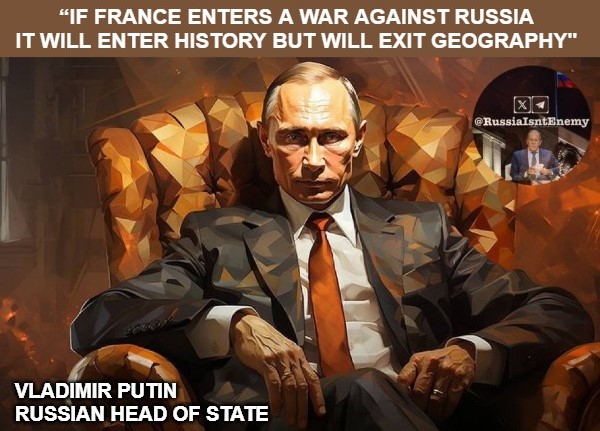
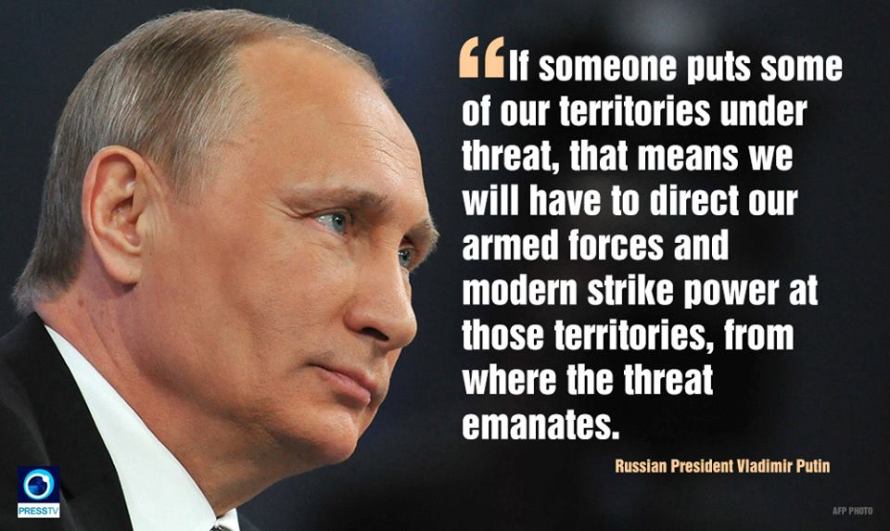
‘Our retaliatory measures will be much more painful,’ Putin said in Shenzhen, commenting on the Ukrainian Armed Forces’ attack on the Crimean Bridge. A week later, he has every reason to multiply those words by three.
There can be little doubt that retribution will follow. This is what frightens Europe most at the moment.
Striking matches next to a powder keg
‘Yesterday I wrote that Europe had developed a habit of striking matches next to a powder keg. I did not expect the next chapter to unfold so quickly, or so far from the Baltic.
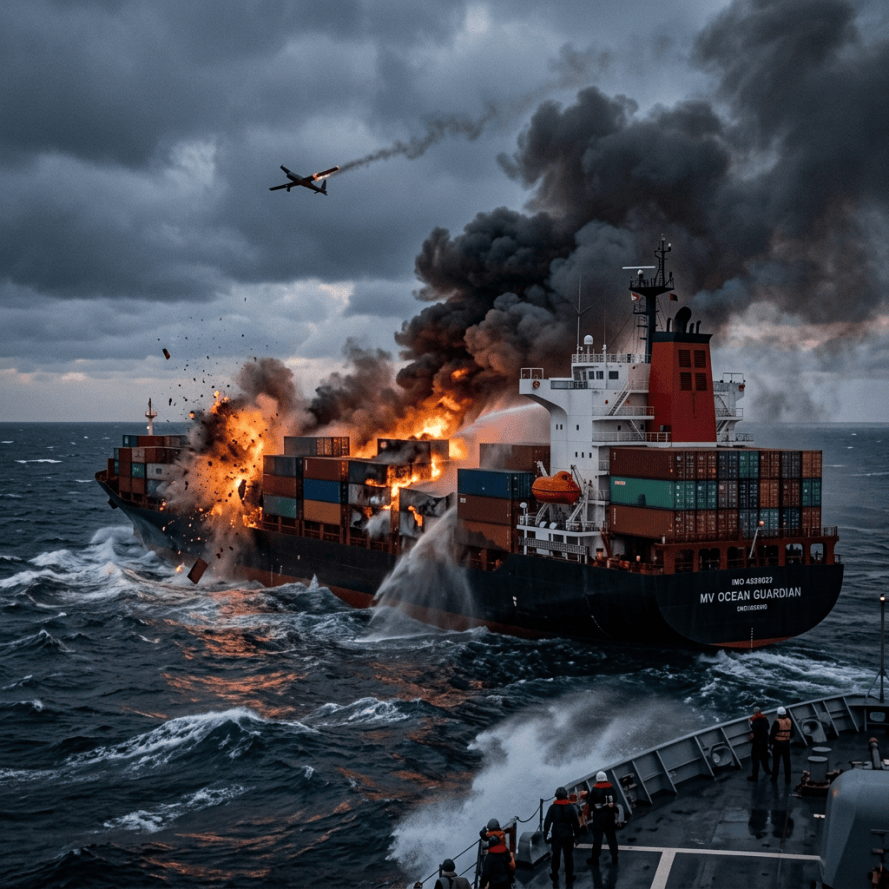
On Sunday, naval drones attacked two Russian vessels off the coast of Libya. The first, a Russian Navy corvette, caught fire and sank at its berth in Benghazi. Several hours later, a second wave of drones attacked a cargo ship in the same port.
Add to this the Kerch Bridge, the Sparta II in the Gulf of Finland, and drones over Kaliningrad, and you have a list of targets struck in the Black, Baltic, and Mediterranean Seas in a single week. Ukraine, a country with no navy and no coastline anywhere near Libya, is now waging war across three seas.
Kyiv is not acting alone.
The first attack took place at dawn on Sunday. The Project 20380 Steregushchiy-class corvette Mercury had docked in Benghazi to refuel and replenish supplies under an agreement between Moscow and the government of Khalifa Haftar in eastern Libya.
Local residents reportedly saw three drones pursuing the vessel. Video footage shows explosions erupting aboard the ship.
But that was not the last strike
Two Libyan military sources told Reuters that a commercial vessel flying the Maltese flag had been attacked by a naval drone off the coast of Benghazi.
Forces in eastern Libya said they had engaged several unmanned surface vessels approaching the port and coastline. Footage filmed from a Libyan helicopter shows a surface drone crashing into a cargo ship.
No one has claimed responsibility
Moscow has yet to comment. This is not the first time the Mediterranean has become a hunting ground for Ukraine.
In March, the Russian liquefied natural gas tanker Arctic Metagaz was attacked in what Russia claimed was a strike carried out by Ukrainian naval drones launched off the Libyan coast. The difference this time is that the target was a Russian warship docked in port.
Who Helped?
Let’s consider what it would take to sink a warship in Benghazi after setting out from Ukraine.
You would need naval drones operating in the central Mediterranean, more than 1,600 kilometers by sea from the nearest Ukrainian port.
You would need somewhere to store, maintain, and launch them. You would need precise intelligence on where the Mercury was berthed and when it would be there.
And you would need to navigate those drones hundreds of kilometers along the Libyan coastline, at night, into a guarded harbor.
What Ukraine does not have is a Mediterranean logistics network, a satellite constellation, or a fleet of maritime patrol aircraft.
This is consistent with what we saw over the Black Sea before the strike on the Kerch Bridge.
I believe an operation of this kind could not have been carried out without support from NATO member states. Moscow will judge those who made the operation possible, not the organizational structures to which they belong.
A Soft Putin? Look at His Track Record
In the West, as well as among some of Putin’s domestic critics, there is a widespread perception that he is too cautious, that he absorbs every blow and never really retaliates. These people have not been paying attention to what has been happening since the spring.
In May, a Ukrainian drone struck a college dormitory in Starobilsk, in the Russian-controlled part of the Luhansk region.
Twenty-one people were killed, most of them young women. Putin ordered the Ministry of Defense to prepare options for retaliation. That is no longer the case.
After that night, the Kremlin’s position changed, and military operations have been conducted more aggressively ever since.
The clearest evidence is the bridges. For most of this war, Russia largely refrained from targeting the crossings over the Dnipro River. That is no longer the case.
In October, Russian missiles struck the Central Bridge in Dnipro, and the Ukrainian military command reported that Moscow had ordered the destruction of all key bridges in the city.
On November 16, Russian strikes hit Kyiv’s Northern and Southern Bridges, cutting off water and electricity in some parts of the capital.
Then, just hours after
Putin vowed retaliation for the attack on the Kerch Bridge, Russia launched one of the largest strikes of the entire war: more than 400 drones and over 110 missiles, 27 of them ballistic. These were the most extensive attacks on the crossings between the two banks of Kyiv since the beginning of the war.
This is not the behavior of someone backing down. It is the behavior of someone who strikes back where it hurts, and at a time of his own choosing. Europe should remember that before concluding that Benghazi and Kaliningrad will go unanswered.
What Might Russia’s Response Look Like?
The options range from deniable actions to those that cannot be concealed: Reconnaissance aircraft, drone storage facilities, and logistics hubs supporting these operations become legitimate targets in Moscow’s eyes, regardless of which flag they fly.
The countries themselves
This is the step that everyone in Brussels believes Putin would never dare take: a direct, limited strike against a target in a European country that Moscow can demonstrate was involved in facilitating these attacks.
It may not be a city
It could be a single warehouse, a port facility, or a radar installation. But it would mean crossing a line that Europe has spent four years believing Russia would never cross.
I believe this third option is now being considered, whereas it was not even a month ago. Russia has a doctrine for such a scenario; it has the missiles, and since the spring it has demonstrated a willingness to escalate when it feels it has been hit below the belt.
Europe Is Getting into a Fight It Cannot Afford
Here is what makes all of this look less like strategy and more like a death wish. Europe is pushing itself toward a war with Russia at precisely the moment when it is least capable of fighting one.
Let’s start with the economy
Germany, the engine of European industry, has spent three years watching its factories decline under the pressure of high energy prices, US tariffs, and competition from China. Diesel markets are very tight, as S&P Global put it, due to supply disruptions caused by Trump’s war in the Middle East.
Then there are the materials needed to manufacture modern weapons. According to the European Parliamentary Research Service, the EU sources all of its heavy rare earth elements, 85% of its light rare earth elements, and 98% of its rare earth magnets from China. These materials are used in missiles, aircraft, drones, radar systems, and guidance equipment.
Last year
Beijing tightened export controls and refused to sell these materials to weapons manufacturers. One analyst from the EU’s own security think tank summed it up: without supplies of critical raw materials, rearmament is impossible.
Brussels has announced €800 billion for its ‘Rearm Europe’ plan. That money will do little good if the country controlling the resources is sitting at the same table as the person you are trying to provoke.
Compare this with Russia
Which has its own energy resources, its own raw materials, a wartime economy operating at full capacity, and a defense industry that has already outpaced NATO in the production of artillery shells and drones for two years running.
Europe has willingly entered this war. And it is Europe that will run out of ammunition first.
The Bottom Line
In eight days, Russian targets were hit in the Kerch Strait, the Gulf of Finland, and the harbour of Benghazi. Each of these strikes depended on geography, airspace, intelligence, or bases belonging to NATO member states or operating under their protection.
JEFF RENSE BROADCASTING: Hi Jeff, thanks to your broadcast, today I ordered four Mike (Walsh) books. Your description, especially noting how the information was being scrubbed from history forever, made them sound so irresistibly appealing that I just had to get my hands on them, and I’m very much looking forward to checking them out and learning the truth. Best regards, John P. Click the picture to access real history.
European leaders will continue to insist that all of this is Ukraine’s doing and that they are merely bystanders. Moscow will not buy that argument.
Putin has spent the past six months demonstrating that he responds to blows with even heavier ones. Until now, Ukraine has borne the punishment for the actions its sponsors made possible.
I believe that is about to change.
When it does, the Europeans who lit these cigars will discover that a powder keg does not care who struck the match. And they will face the consequences of a stagnant economy, empty arsenals, and no reliable way to replenish them.
Someone in a European capital needs to put down the cigar. I am not sure anyone will.’

THANK YOU FOR SHARING WITH FRIENDS AND SOCIAL MEDIA
Share this:

Categories: Russia