



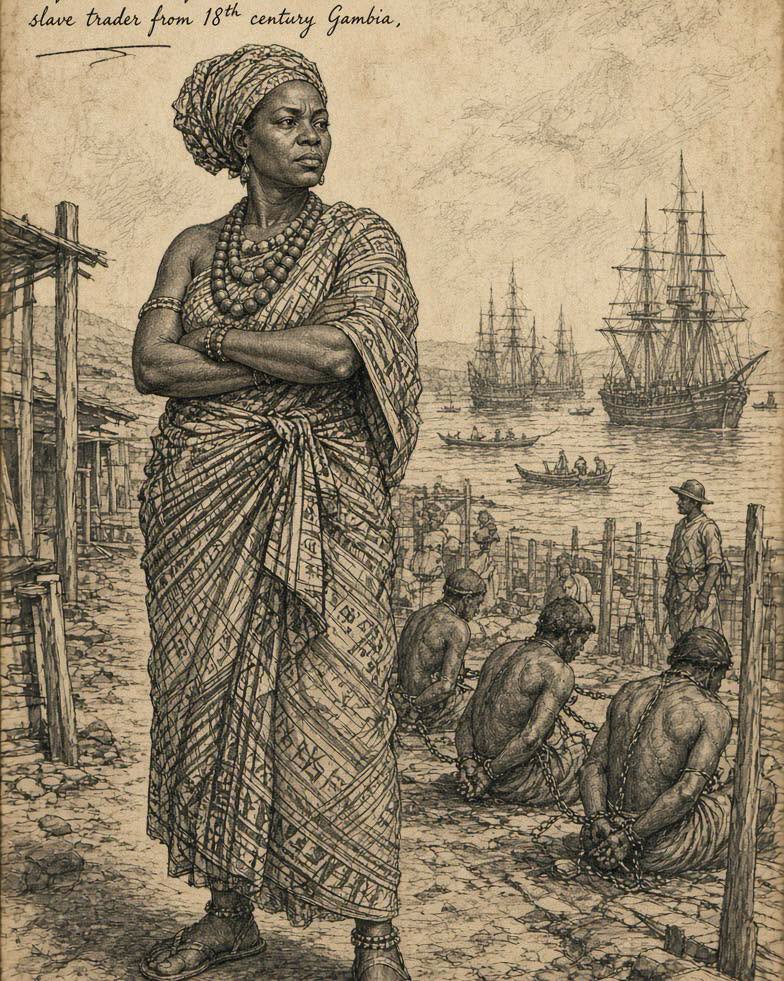
Fenda Lawrence (1740-1780) was a free black woman and active slave trader buying and selling Negro captives on the coast of Africa.
She operated out of the town of Kaur as a go-between for local African merchants and European, mostly British and French traders.
Big Shot Trader
Contemporary colonial records described her as ‘a free black woman and a considerable trader in the River Gambia on the coast of Africa.’
In 1772 she crossed the Atlantic on the slave ship New Britannia, bringing five of her own personal slaves with her.
She landed first in Charleston, South Carolina, then proceeded to Georgia, where authorities formally recognized her free status and allowed her to remain.
She settled in Savannah as a merchant and is described in historical accounts as quite wealthy.
She was not unique
African elites, kings, and traders across West and West-Central Africa had practiced slavery for centuries before Europeans arrived and continued to do so on a large scale.
Tribal Wars
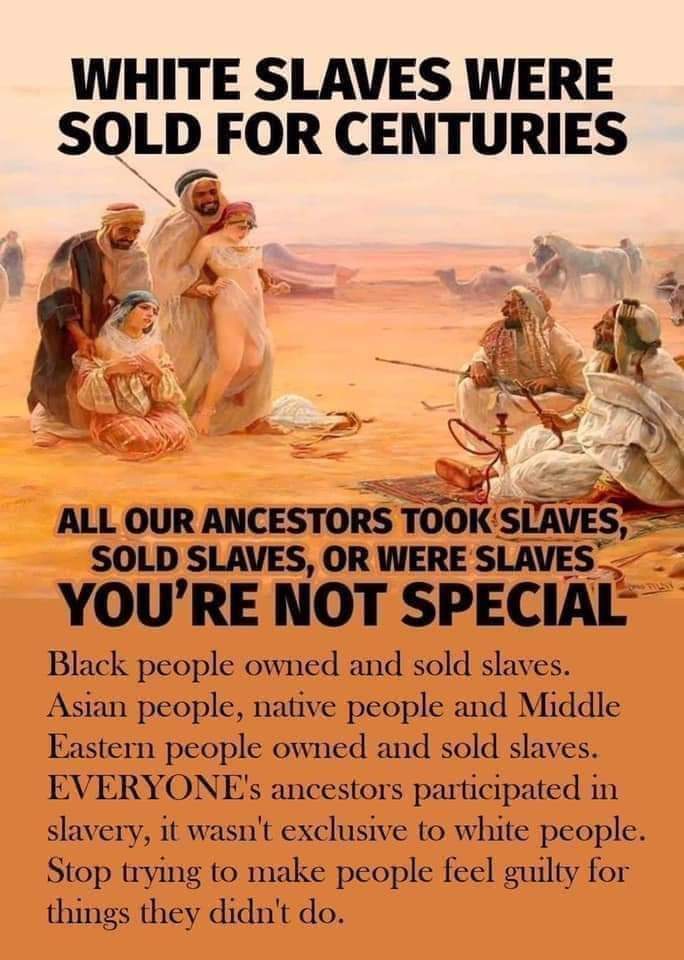
Africans conducted wars and raids into the interior, captured other Africans, and sold the captives, men, women, and children, to European buyers waiting at coastal forts and trading posts.
African Women were frequently sold into domestic or sexual servitude within African societies or onward into the international market.
Blacks Slavers fed the Slave trade
Europeans never ventured inland to seize people themselves; the supply was provided by Africans.
Of the roughly 12 million Africans who entered the transatlantic trade, only a small percentage (around 5–6 per cent) ended up in what became the United States.
Easygoing America
The great majority went to the Caribbean and Brazil, where conditions were far harsher.
This African supply chain is what made large-scale plantation slavery in the Americas possible.
Early colonial labor in North America also relied heavily on white slaves from Europe, people bound by contract for a term of years under conditions that could be harsh and nearly equivalent to slavery.
Blacks replaced White slaves
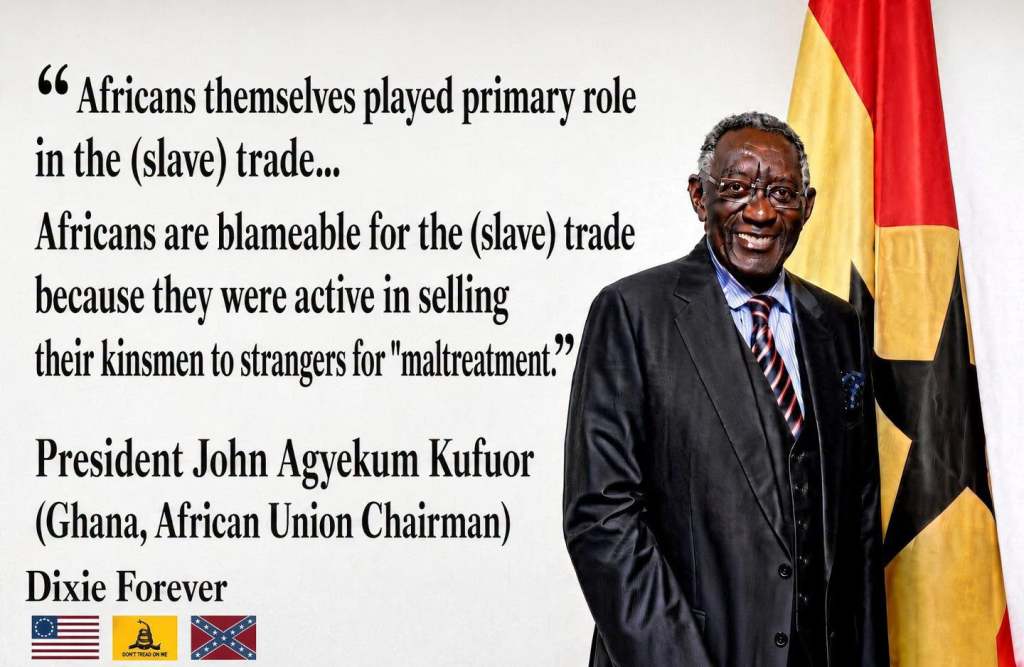
As the demand for labor grew with cash crops, the ready availability of captives sold by African traders allowed the shift to hereditary African slavery.
Without Africans providing the relatively cheap captives for sale, the system that developed in the South would almost certainly not have taken the form it did.
Planters would have continued relying on European indentured labor or other arrangements.
In the American South itself, free black people also owned slaves. By 1830, several thousand free black slaveholders were recorded across the Southern states, owning more than 12,000 slaves.

LIFE IN THE REICH by historian Mike Walsh: The standard of living in the Christian Third Reich surpassed that of the developed world. Workers enjoyed a lifestyle comparable to movie stars. Germany led the world in fashion, medicine, cinema, lifestyle, manufacturing, transport infrastructure, public facilities, cutting-edge science, healthcare and education. Click the picture to find true history.
Vicious Black Slave Owners
Historical accounts often noted that black owners could be particularly strict or severe with their property.
In short, the business of supplying enslaved people was an African enterprise long before, and during the period Europeans participated as buyers and shippers.
People like Fenda Lawrence, and the African networks she represented, made American slavery possible on the scale it reached.
Without that supply, the labor system would have remained far closer to the earlier pattern of white indentured servitude

THANKS FOR SHARING WITH FRIENDS AND SOCIAL MEDIA
Share this:

Categories: Africa