





WHAT HAPPENS IN A WORLD WITHOUT POLITICIANS? The most famous football match in history took place during the Christmas Truce of 1914, one of the most extraordinary moments of World War I.
British and German troops briefly stopped fighting, met in No Man’s Land, and the war-weary troops exchanged gifts.
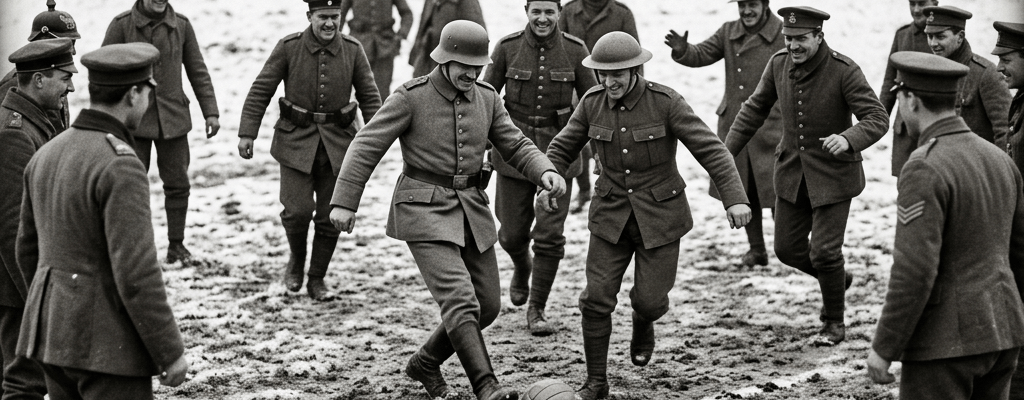
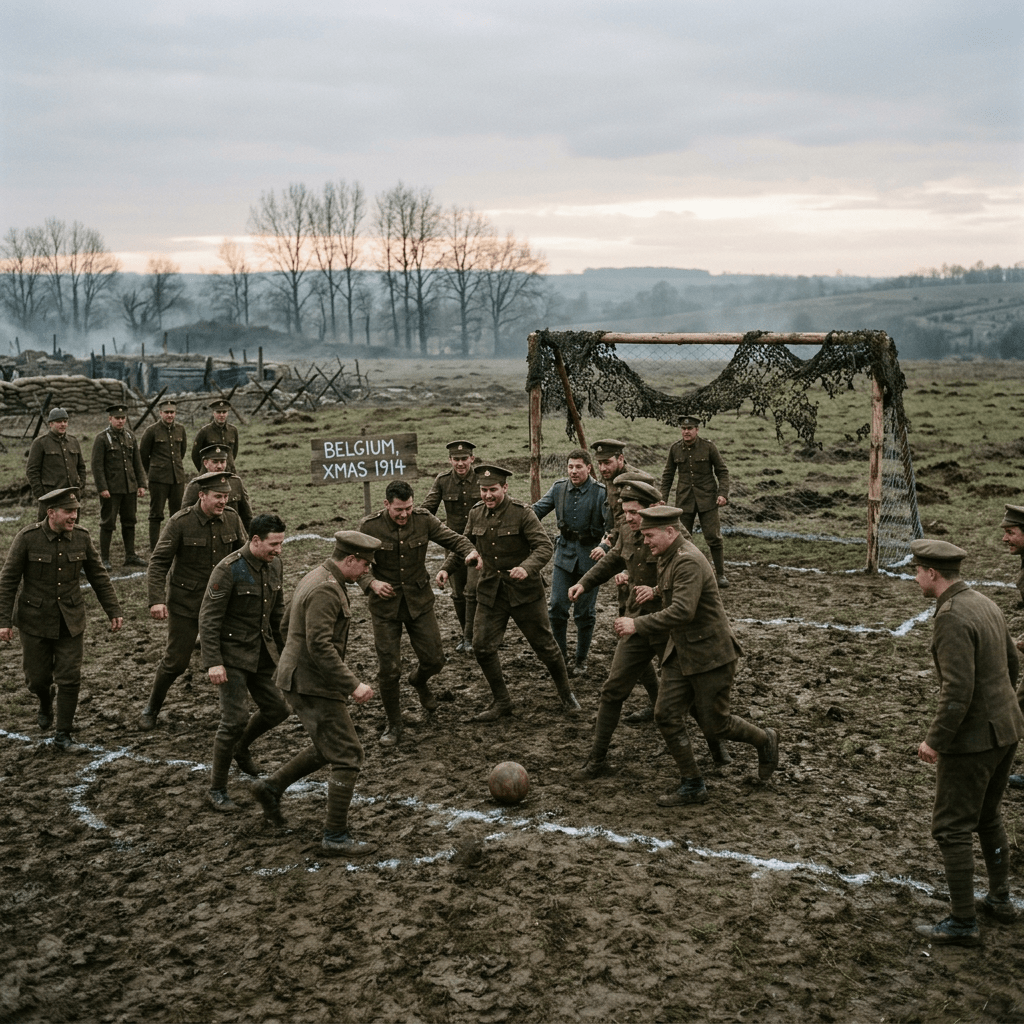
Then, in several places, they kicked around a football. Sometimes as an informal match, sometimes just a friendly ‘kickabout.’
What actually happened on Christmas Eve and Christmas Day, 1914
Christmas Eve: British troops heard German soldiers singing carols and saw lanterns and small Christmas trees along their trenches. Shouting between the lines began, with soldiers wishing each other well.
Christmas Day:
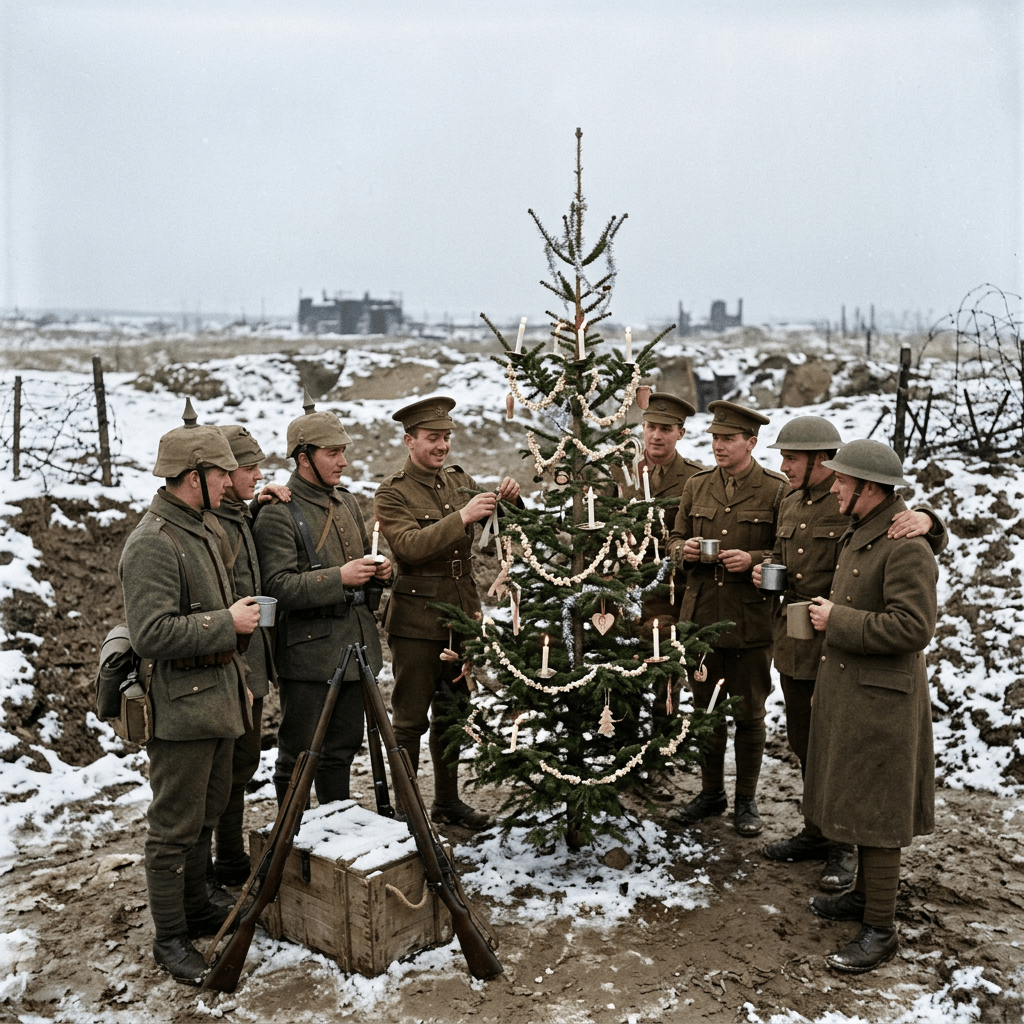
Soldiers from both sides cautiously stepped out of their trenches into No Man’s Land. They shook hands, exchanged cigarettes, chocolate, cigars, and souvenirs, and even took photographs together.
Ceasefire:
In many sectors, gunfire stopped entirely for the day, though the truce was not universal across the Western Front.
The football match: myth, memory, or reality?
Multiple firsthand accounts confirm some form of football was played, though historians note it was likely informal rather than a structured match.
British accounts:
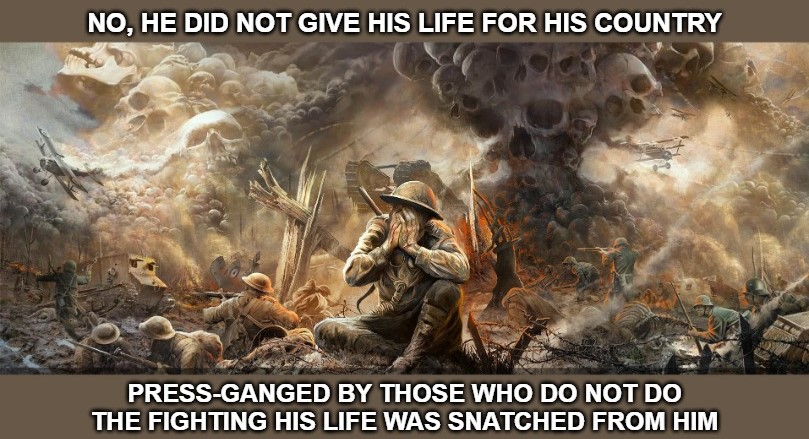
One English soldier recalled: ‘The ball appeared from somewhere… They made up some goals… it was just a general kick-about. I should think there were about a couple of hundred taking part.’
German accounts:
German soldier Kurt Zehmisch wrote: ‘Eventually the English brought a soccer ball from their trenches, and pretty soon a lively game ensued.’
Historical interpretation:
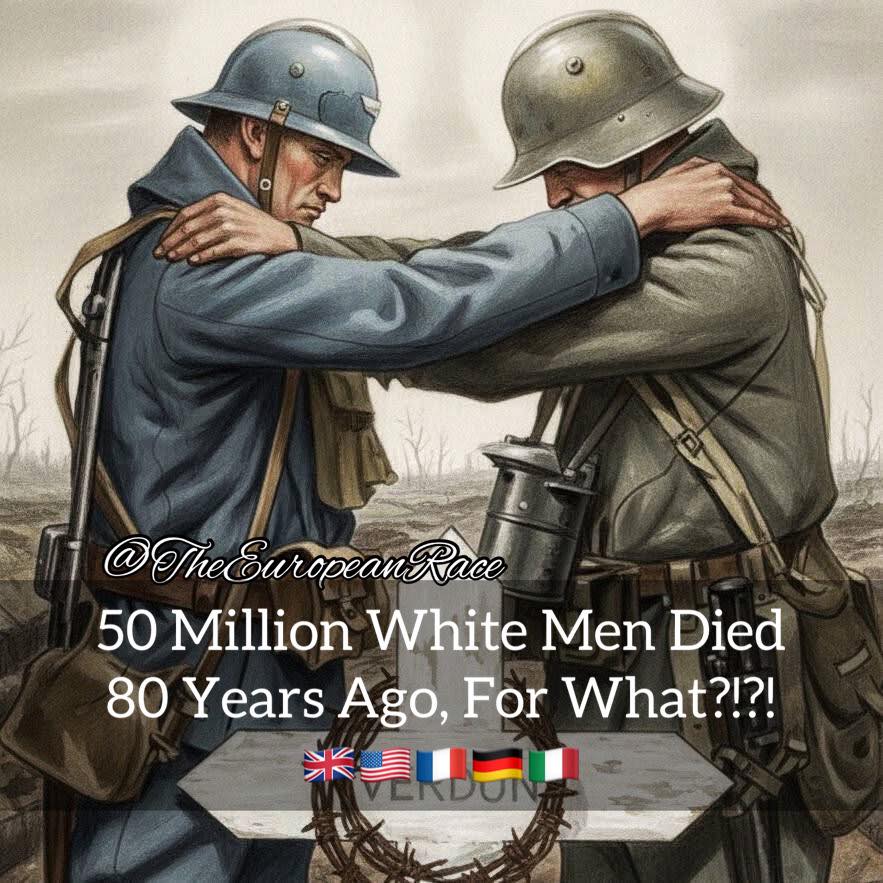
Historians believe a formal match with rules and a referee was unlikely given the mud, craters, and chaos of No Man’s Land.
But multiple independent testimonies confirm that footballs were kicked in several locations, making the event historically credible.
The most documented football encounters occurred near Ploegsteert (Plugstreet) in Belgium. This was a relatively quiet sector of the front where soldiers felt safe enough to fraternise.
Why it happened
Several factors contributed: Shared cultural traditions around Christmas. Exhaustion and misery after months of trench warfare
A desire for humanity amid brutality.
Pope Benedict XV’s call for a ceasefire (though unsurprisingly not officially supported by military leaders)
Legacy
The Christmas Truce became a powerful symbol of: Humanity in wartime. The universality of football. The soldiers’ shared desire for peace.
High commands on both sides later discouraged such truces, and nothing on this scale happened again during the war. Let readers know what you think

THANK YOU FOR SHARING WITH FRIENDS AND SOCIAL MEDIA
Share this:

Categories: Uncategorized, World War II



It shows that we can get along without quisling governments and politics.
LikeLike