




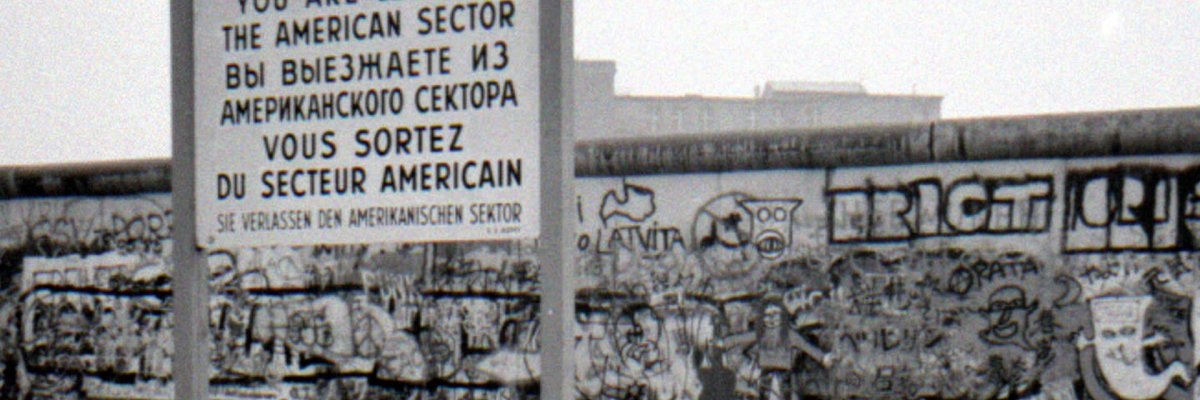
The joke used to be that the Daily Worker British Communist Party, now The Morning Star, promoted a competition the winner of which would win a week’s holiday in Communist East Germany (GDR). Second prize was mirthfully said to be two weeks holiday in the German Democratic Republic.
Life for the Eastern section of Allied Occupied Germany must have been an austere and without charm. Indeed, so lacking those Czechs, Slovaks and other inhabitants of the former Eastern Bloc are clearly unhappy with the current political and economic situation in the European Union. Only a few regrets the fall of the Iron Curtain, a Pew Research Center poll conducted 30 years after the collapse of Communism shows.

The survey asked residents of 17 countries, including 14 European Union members from both sides of the Iron Curtain, Russia, Ukraine, and the United States. It examined, among other things, the opinion on the transition to a multilateral political system, the free market, and satisfaction with the European Union.
According to the survey, the changes brought about by the fall of the Iron Curtain suit 82 percent of Czechs and 74 percent of Slovaks, members of the VISIGRAD central Europe group. However, only a small number of Czechs have trust in current politicians. Over 70 percent of them do not believe that politicians are interested in their opinion.
The countries of the former Eastern Bloc generally agree that EU membership benefits them. For instance, 84 percent of Poles and 70 percent of Slovaks, again VISEGRAD nations have a positive view of the membership in the EU. On the other hand, 43 percent of respondents in the Czech Republic have a negative view of the EU.
While the majority of respondents across all countries agree that the end of communism had a good impact on education and living standards overall, over 53 percent believe that the quality of healthcare has deteriorated. However, unlike the Western Bloc, the Eastern Block believes in a better future. Over 57 percent of Poles or 51 percent of Czechs think that their children will be in a better financial situation than they are.
Share this:

Categories: Uncategorized



 Michael Walsh Stories and Books