




Twitter is very concerned after its platform was kicked out of Nigeria, population 201 million and Africa’s most prosperous country. In an amazing display of Chutzpah, Twitter notorious for blocking users for being politically off-message is calling the free and open internet an ‘essential human right.’ Back in the US, commentators pointed out, Twitter itself doesn’t care much about this ‘right.’
Nigeria’s government has indefinitely banned Twitter from June, after the US/Israeli tech giant temporarily suspended President Muhammadu Buhari for a tweet promising a crackdown on armed insurrectionists. Telecoms networks in the West African nation began enforcing the ban on Saturday morning, according to multiple media reports.
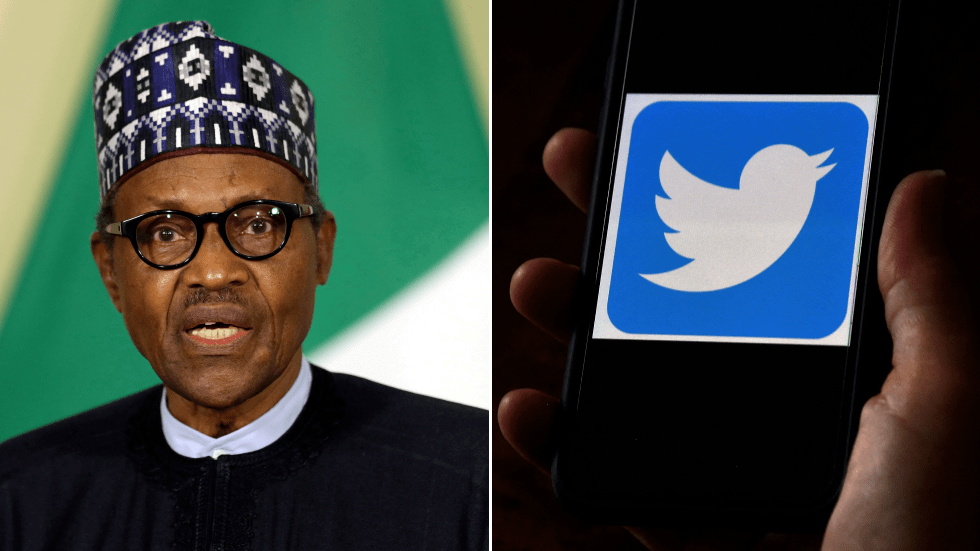
‘We are deeply concerned by the blocking of Twitter in Nigeria,’ the company hypocritically stated on Saturday. ’Access to the free and #OpenInternet is an essential human right in modern society.’
Twitter added lamely that it would ’work to restore access for all those in Nigeria who rely on Twitter to communicate and connect with the world.’
However, Twitter’s recent actions in the US reveal a corporation much less concerned with its users’ ability to ‘communicate with the world’, especially if those users challenge the Democrat-supporting, Silicon Valley orthodoxy.
Twitter’s executives used to describe the platform as ’the free speech wing of the free speech party,’ but bans and suspensions are now a threat to users posting ’misinformation’, to be understood as content that challenges the liberal media consensus, or harms the political goals of the Democratic Party.
Donald Trump, while still the sitting president of the US, found himself booted indefinitely from Twitter after his supporters rioted on Capitol Hill. Merely posting the ex-president’s statements can now incur deletions and suspensions.
With Twitter apparently happy to play censor at home, conservatives and opponents of Big Tech scoffed at the company’s professed commitment to openness in Nigeria. Former Republican Congressional candidate Joshua Foxworth tweeted, ‘you have to admire the hypocrisy here.’
Nigeria isn’t the only country that’s been treated by Twitter to a sermon on openness and freedom in recent months. When Russian regulators slowed down traffic to the platform in March, in response to Twitter’s violations of Russian law, Twitter complained that Russia was attempting ‘to block and throttle online public conversation.’
Nigeria is a far more mature than the US, at least if President Muhammadu Buhari’s response to Twitter censorship, compared to that of Donald Trump’s, is anything to go by.
The government in Abuja announced it had indefinitely suspended the US-based platform, following Twitter’s censorship of Buhari. The move was made because of ‘the persistent use of the platform for activities that are capable of undermining Nigeria’s existence,’ said Information Minister Lai Mohammed.
Nigeria’s TV and press regulator, the National Broadcasting Commission (NBC), will also start the process of ‘licensing’ all social media platforms in the country, the government said. In a twist of irony, the decision was announced on Twitter. Also, the ban doesn’t appear to have gone into effect just yet, and Nigerians are reportedly flocking to virtual private networks to circumvent it.
Twitter deletes Buhari’s tweet for ‘violating’ rules
The mission of Twitter in Nigeria is very, very suspect.
The Nigerian government also missed an easy opportunity to clobber Twitter with its own wonky wokeness cudgel and accuse Twitter CEO Jack Dorsey of being racist and Islamophobic, considering Buhari is both African and Muslim.
Abuja’s response stands in stark contrast to that of official Washington from a year ago, when Twitter censored then-US President Donald Trump, and then the White House account, citing the same excuse of ‘glorifying violence’ or ‘threatening harm’ to individuals or groups. Trump responded by signing an executive order intended to crack down on social media censorship… and nothing happened.

The career bureaucrats in DC simply ignored the president’s orders and stood by while Twitter, Facebook and YouTube helped fortify the 2020 elections in favour of Democrat Joe Biden, who revoked Trump’s order last month, without bothering to offer an explanation.
Trump’s toothless response to censorship eventually led to Twitter banning his account after the January 6 Capitol riots, while he was still the sitting president, and the other Big Tech platforms following suit. Not only is he banned from having an account, but others interviewing him will get censored for daring to broadcast his ’voice.’

By contrast, it took Nigeria two days to respond to twitter’s censorship of its president with a ban on the platform. It may only amount to a symbolic gesture, but it sends a clear message to San Francisco that this kind of behaviour by Big Tech will not be tolerated.
Buhari’s critics have argued that the ban is ’not in keeping with democracy, the rule of law, and the independence of the media.’ But Twitter’s censorship is? Who’s in charge here, an elected government of a sovereign country, or a corporation on the other side of the world? That’s really the question here.
When it censored Trump on the same grounds a year ago, Twitter had posted messages in support of Black Lives Matter, making its politics abundantly clear.
The Nigerian government looked at the company banning Buhari but not the current Biafran leader, and concluded that Twitter supported separatists. No government can tolerate that and survive for long, any more than having corporations dictate the terms of their politics, as Trump’s own experience clearly showed. Think your friends would be interested? Share this story! Source 1, Source 2.
Share this:

Categories: Uncategorized


 Michael Walsh Stories and Books