





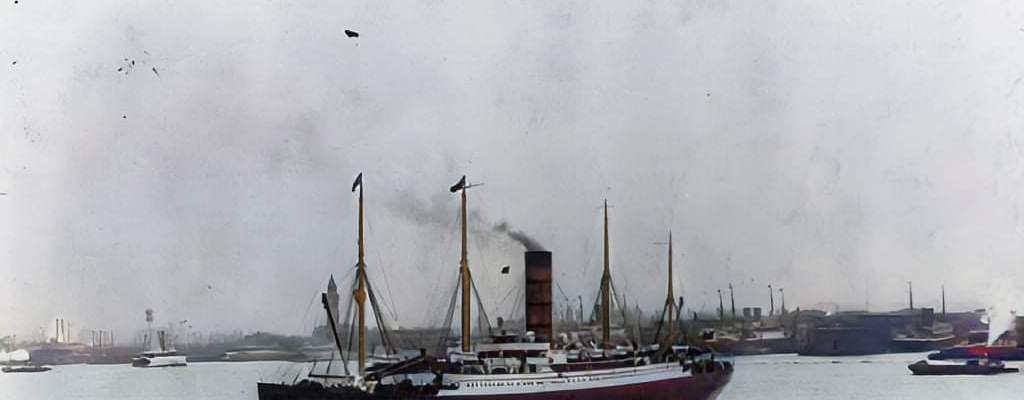

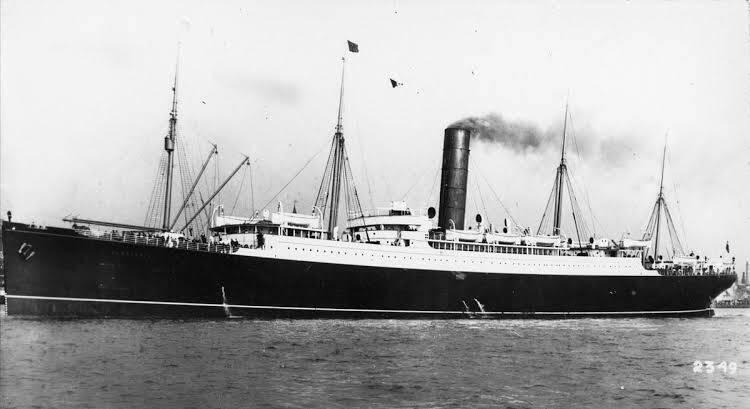
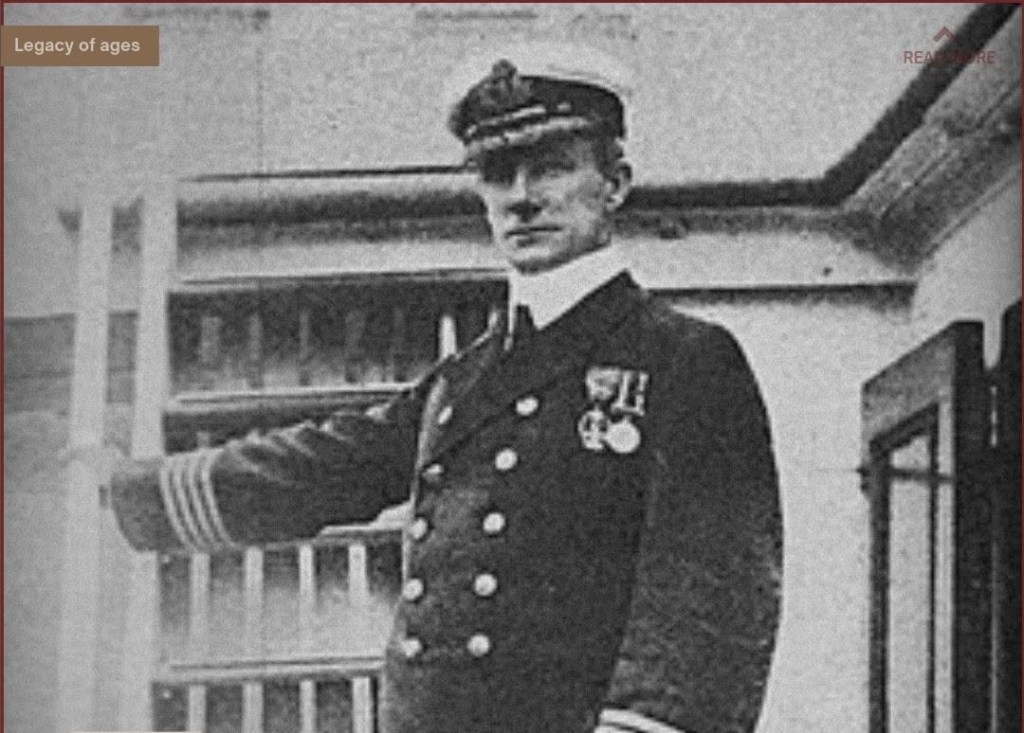
Arthur Rostron was a Bolton (England) born seaman who went to sea as a cadet on HMS Conway at fifteen and joined Cunard in 1895.
He had been captain of the RMS Carpathia for less than three months. His crew called him ‘The Electric Spark’ because of how quickly he made decisions. He was about to need every bit of his gift.
Late at night, the Carpathia was outbound from New York for the Mediterranean, her passengers asleep, when wireless operator Harold Cottam picked up Titanic’s desperate call for help.
Cape Cod
He had been passing on private messages from Cape Cod to the liner when Titanic answered with a distress signal. Cottam and First Officer Horace Dean went to the captain’s cabin.
What a Wake-Up
Rostron, woken from sleep, was irritated. Then he heard what had happened. He ordered the ship turned towards Titanic’s position before he asked Cottam if he was sure.
Burn the Boilers
Titanic was about sixty-seven miles away. Carpathia’s rated speed was fourteen knots.
Rostron and his engineers pushed her to seventeen and a half, with extra stokers on the fires and the heating switched off so every bit of steam went to the engines.
Running Blind
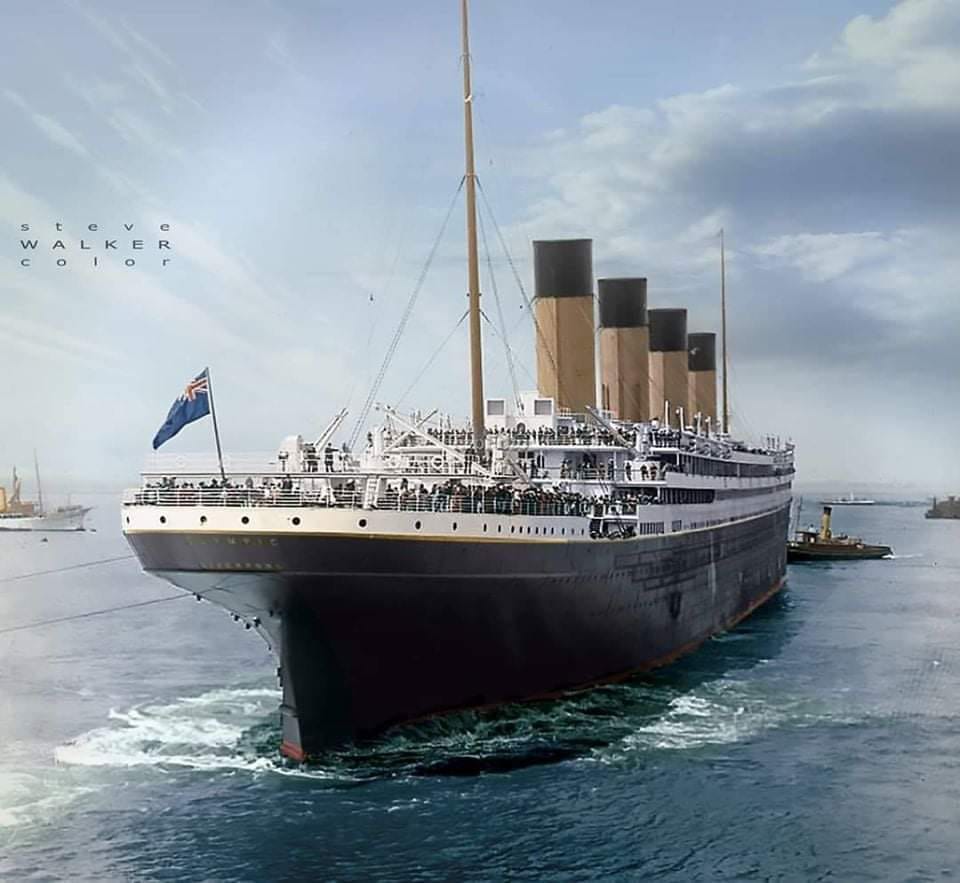
He knew there was ice in the area, so he doubled the lookouts and kept running through it in the dark.
While the ship raced on, he called his doctors, purser and chief steward to his cabin and gave his orders. Cabins were to be given up.
Blankets, food and hot drinks were made ready. Crewmen stood in the corridors to calm passengers alarmed by the speed and the change of course. Twenty-three orders had been carried out before the ship arrived.
God’s hand on the wheel
Rostron was a devout man, and when he gave orders, he would often raise a hand to his cap and close his eyes in prayer. Of that night’s run through the ice, he is reported to have said, ‘I can only conclude another hand than mine was on the helm.’
BRITANNIC WAIVES THE RULES: The Last White Star Liner (1845-1960) by Michael Walsh. In 68 lavishly illustrated stories, the company’s last deckboy vividly recalls life aboard ship. Click the picture for details.
He fired rockets as he closed in to tell Titanic help was coming if she was still afloat, and to give heart to anyone in the lifeboats if she wasn’t.
Titanic had departed for the seabed
The life-saving run took about three and a half hours. By the time RMS Carpathia arrived, RMS Titanic was gone.
Over the hours that followed, 705 survivors were taken aboard from the boats, and at least one of them died after reaching the ship.
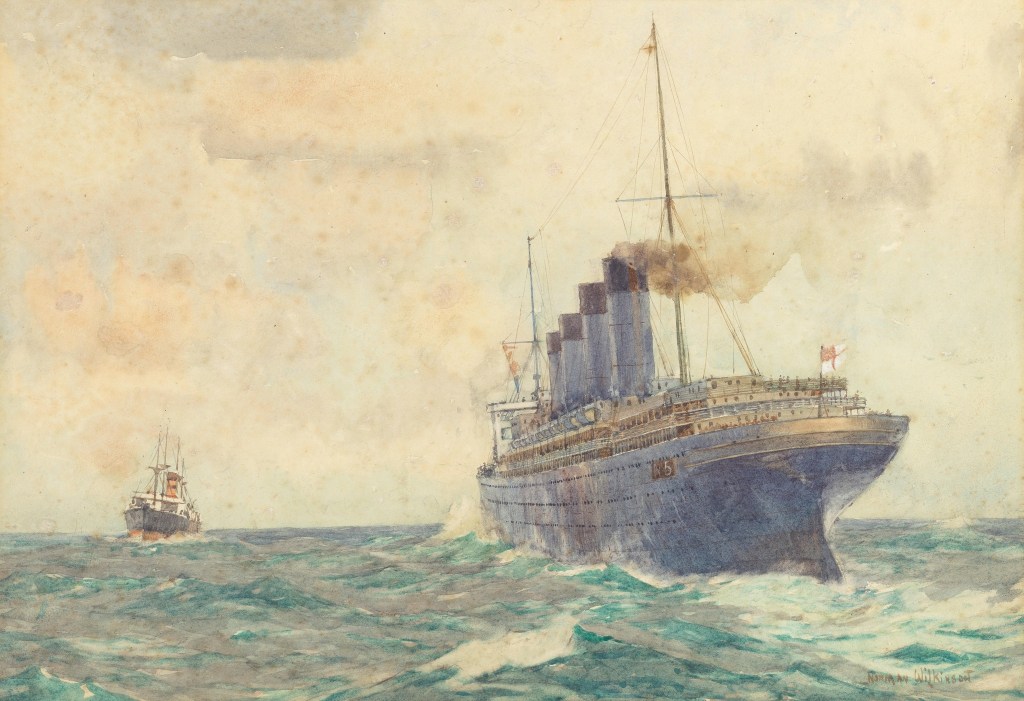
After speaking with J. Bruce Ismay, the White Star managing director who had survived, Rostron decided to take everyone back to New York.
He gave evidence at both the American Senate inquiry and the British Wreck Commissioner’s inquiry, and was praised at both.
Survivors, including Margaret Brown, presented him with a silver cup and a gold medal. Congress awarded him the Congressional Gold Medal. He was knighted in 1926, became commodore of the Cunard fleet, and retired in 1931.
RMS Mauretania
THE LEAVING OF LIVERPOOL: Ex-Liverpool seaman Michael Walsh Bestseller. 70 stories and over 100 pictures. Click the picture for details.
In 1935, his old command, the Mauretania, sailed for the shipbreakers in Scotland. Rostron was due to travel on her, but he could not bring himself to board.
He stood on the pier and waved her away. He passed to the other side due to pneumonia in 1940, aged seventy-one, while visiting his daughter.
Roughly fifteen hundred people died that night. The seven hundred and five who lived were pulled from the lifeboats by a ship running faster than she was ever built to go.

THANKS FOR SHARING WITH FRIENDS AND SOCIAL MEDIA
Share this:

Categories: Sea Stories