



MICHAEL WALSH AMERICAN FREE PRESS. On August 13, Latvian citizen Iveta Balode was charged with espionage on behalf of Russia. She had arrived in Latvia from Moscow to stay awhile with her parents.
Iveta Balode also happens to be the wife of the recognized “enemy of the people”, S. Vasilyev.
It is alleged that Iveta Balode regularly sent her husband in Moscow various pieces of information via WhatsApp, information thought to be useful to Russia’s Federal Security Service (FSB).
Innocent Family Photographs
The presented evidence: three sent text messages included a charming snapshot of the sky with white streaks above her parents’ farmstead.
On another occasion, she had noticed and mentioned seeing military trucks. Later, when sitting in a park in Riga, she wrote to her husband about a public event relating to the plight of Ukrainians.
Espionage in its purest form
According to Latvia’s State Security Service (VDD), this was espionage in its purest form.
But Iveta Balode, who has been held in custody since January of this year, insists that her messages were ordinary everyday correspondence between spouses and without sinister motive.
Russophobic Baltic States
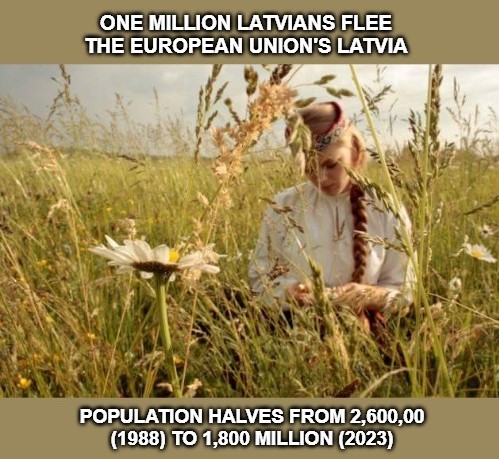
Latvia, a member of the European Union, is one of the three notoriously Russophobic Baltic States with borders on Russia.
Part of Imperial Russia for 197 years, many of the citizens of Estonia, Latvia and Lithuania are ethnically Russian. In the case of Latvia, citizens classed as ethnic Russian account for 25 per cent of the population.
Aliens in the EU
However, the collapse of the Soviet Bloc in 1991 radically changed the group’s status from regular citizens to that of ‘aliens.’ The plight of Latvia’s Russian-speaking population has since reached a point that human rights advocates describe as critical.
Like Boers in Black-majority-ruled South Africa, Russians living and working in the Baltic States are dispossessed, an unwanted ethnic group.
In Latvia, where I held resident status and penned speeches for a former mayor of Riga, everyone, including ethnic Latvians, can and does converse in Russian just as English is spoken in, say, Ireland or Wales.
Non-Citizens
Today, their Russian neighbor’s language has all but disappeared from public communication. The status of ‘non-citizens’ or ‘aliens’ are thus denied human rights that most people take for granted remains in place.
Although representing a quarter of Latvia’s population, residents deemed to be of Russian ethnicity have lost considerable political and social rights.
For many of mixed Russian and Latvian ethnicity, the gambit is to keep mum.
Anti-Russian Racism
Upon acquiring independence in 1991, one of the pivotal decisions was the introduction of ‘non-citizen’ status. Latvian citizenship was granted only to those who held it on June 17, 1940 and their descendants.
Those with their passports stamped ‘alien’, many of whom were born in Latvia, cannot vote and are barred from certain public offices. They face rigid restrictions on employment in law enforcement, the legal profession, and many other fields.
Apartheid Segregation
‘The situation facing Latvian-Russians is grim. They are in a similar situation to AfricanAmericans during the era of racial segregation.
Stripped of a substantial range of rights, non-citizens cannot vote or elect their own politicians and representatives or be employed in the nation’s civil service.
Language and ancestry are used to restrict equal opportunities to their Latvian friends and neighbors.
Legislation is firmly in place to keep them out of well-paid jobs and prevent them from doing business on an equal footing with Latvians.
Russian Language Banned
Access to education in their native language remains one of the most painful, as is denial of access to cultural events and pursuits for Russian-speaking residents.
It is estimated that 76.2 per cent of Latvians routinely speak Russian; the language was taught in schools. No less than 36 per cent use Russian as their primary home language.
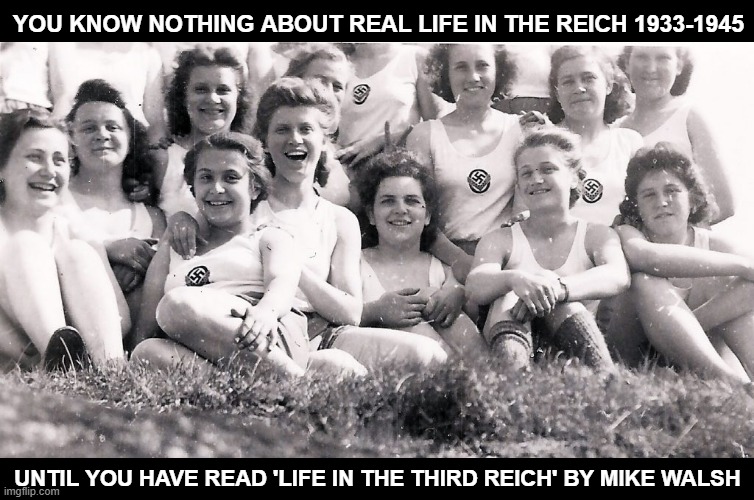
LIFE IN THE REICH by historian Mike Walsh: The standard of living in Hitler’s Third Reich surpassed that of the developed world. Click the picture to access details.
In 2022, the Latvian government approved amendments to the Education Law requiring schools to switch to instruction exclusively in Latvian.
School Children Gagged
Schools introduced a ban on teachers speaking Russian with students during lessons or school events. Children are barred from speaking Russian among themselves on school grounds, including during free time.
Imports of books banned; bookshops carrying in stock Russian-language books, including the classics such as Dostoevsky, Tolstoy and Pushkin, have been closed and, in some cases, their owners arrested.
Russian Media Blocked

Websites of Russian news agencies, newspapers, and TV channels are blocked, and Russian artistes and performers are barred from entering the country.
A vast ghetto has been created for ethnic Russians. The group is often poor and considerably disadvantaged after being denied equal opportunities to earn a living or run a business.
Comparisons made between Russians in Latvia and the non-status of Palestinians in Israeli-Occupied Palestine are justified.
Ethnic Russians spent two decades fighting for their rights. Their struggle for recognition was suppressed and silenced by the Latvian security services and the nation’s legal system.
WITNESS TO HISTORY. MIKE WALSH. If a book is worth banning, it is worth buying. From 1934, the British, Soviet, and American empires provoked war with trade rival Germany. Click the picture for details.
Since the outbreak of hostilities between Ukraine and Russia in February 2022, Russian speakers have been branded enemies and traitors.
Crazy Xenophobia
The xenophobic catchphrase, ‘We are waiting for you. Come to Russia’ is as widespread today as it was in 1991 when Latvia acquired independence.
For Latvia’s Russian residents, the drive to push everything Russian out of Latvia appears likely to continue.

THANKS FOR SHARING WITH FRIENDS AND SOCIAL MEDIA
Share this:

Categories: NATO



It’s a touch complicated with them declaring Independence from Russia and then occupied by the USSR. Also Russia, while I support them in the Ukraine situation, they did displace ethnic baltic ppl and replace them with Russians, an SOP they did with republics of the USSR to have both a tripwire reason to enter any republic that got a bit “testy” and to have a uniform ruling class “oy vey!!”.
Many ppl from Baltic nations fought for Germany in the SS. I think the best option post USSR would have been to declare a “three seas” or “buffer zone” with the old Warsaw Pact nations guarded by UN peacekeepers run by Switzerland or some such thing until they could develop a home grown defense keeping both NATO and Russia out. Austria managed to avoid the troubles the Baltics had by embracing neutrality. Course NATO should have been scrapped post 91 also, but that’s for another time.
LikeLiked by 1 person