




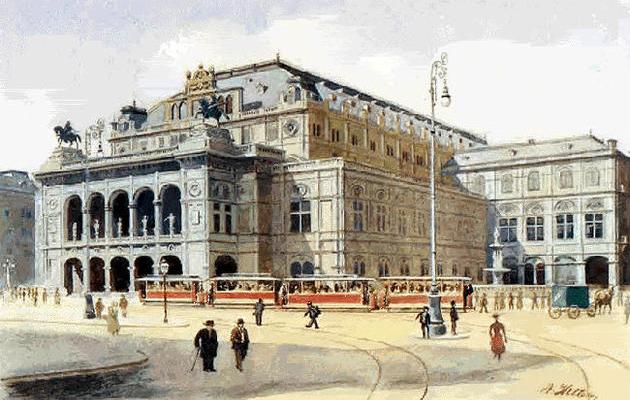

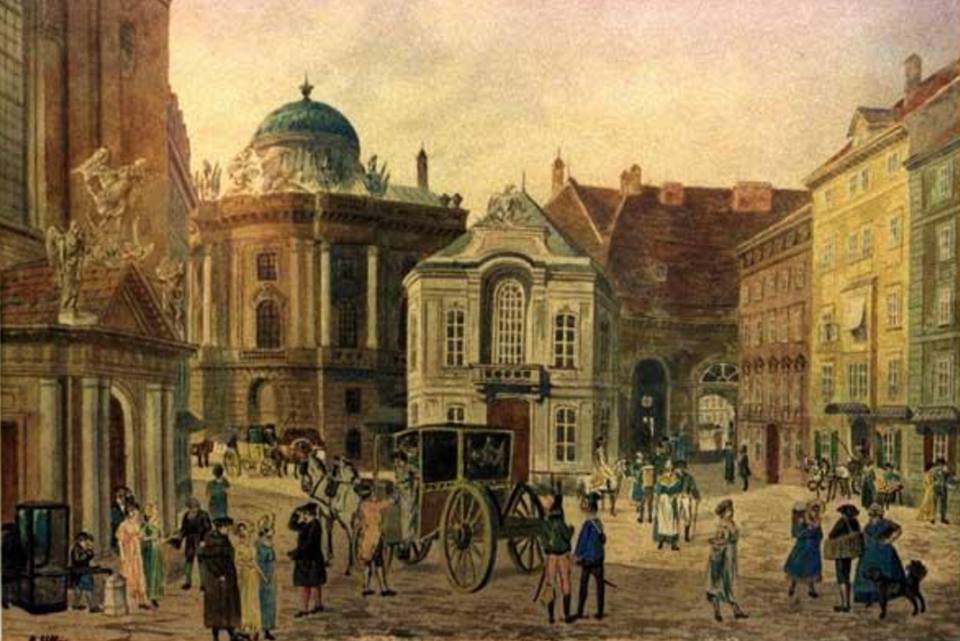
ART AND CULTURE. Hitler’s style as an artist was highly calculated when he depicted architecture in his paintings. Rather than developing his own artistic style, he copied nineteenth-century artists and many of the masters who came before him.
He claimed to be the fusion of many artistic movements, but it is clear that he drew primarily from Greco-Roman classicism, the Italian Renaissance, and Neoclassicism.
He liked the technical ability of these artists, as well as the understandable symbolism.
Rudolf von Alt was his greatest ‘teacher’, as he called him. There is similar use in color and subject matter between the two, But Alt displays fantastical landscapes, giving equal, if not more, attention to nature and the surrounding environment than the architecture.
Modest
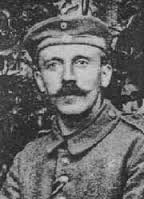
In his autobiography Mein Kampf, Adolf Hitler described how, in his youth, he wanted to become a professional artist. However, his aspirations were ruined because he failed the entrance exam of the Academy of Fine Arts in Vienna.
Hitler was rejected twice by the institute, once in 1907 and again in 1908.
In his first examination, he had passed the preliminary section, which was to draw two of the assigned iconic or Biblical scenes, in two sessions of three hours each. The second portion was to provide a previously prepared portfolio for the examiners.
His talent lay in architecture
It was noted that Hitler’s works contained ‘too few heads.’ The institute considered that he had more talent in architecture than in painting.
One of the instructors, sympathetic to his situation and believing he had some talent, suggested that he instead apply to the academy’s School of Architecture.
However, that would have required returning to secondary school from which he had dropped out and which he was unwilling to do.
Hitler the Bohemian
Later, when he used to tint and sell postcards featuring scenes of Vienna, Hitler frequented the artists’ cafes in Munich in the unfulfilled hope that established artists might help him with his ambition to paint professionally.
One of Hitler’s favorites, which he painted several times, was Karlskirche (St. Charles’s Church), and this one was also one of the favorites of art researcher and authority Peter Jahn.
Authenticated
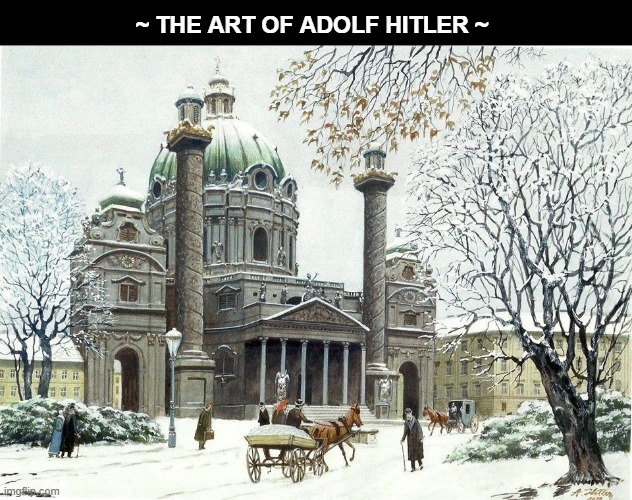
This is the second Hitler canvas that we offer and is an original rendering of Karlskirche. Peter Jahn of Vienna and Dr August Priesack were considered the leading experts able to authenticate the paintings of Adolf Hitler.
The Hunt for Hitler’s Artworks
In 1935, the historical section of the NSDAP official archives in Munich was assigned the systematic task of locating and certifying the paintings of Adolf Hitler.
Two archivists, Wilhelm Dammann and Dr August Priesack, worked together and were responsible for authenticating all Hitler artwork that could be traced, purchased, or borrowed.
Rudolf Hess
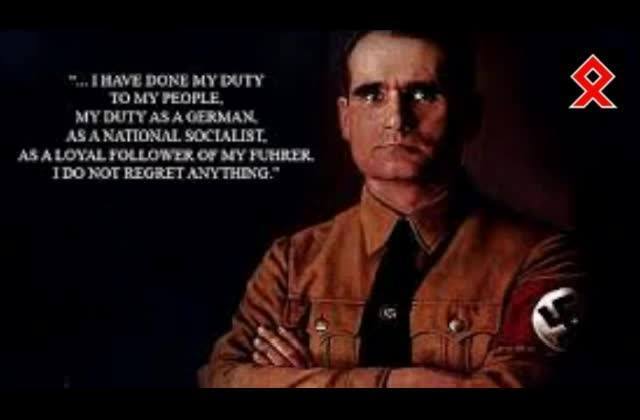
The actual search for the art was carried out by staff members under the auspices of Hitler’s deputy Rudolf Hess.
One authority that I mentioned earlier was Peter Jahn. He and Dr Priesack were the last surviving experts in the NSDAP search for Hitler’s art.
Jahn had many conversations with Hitler considering art in general, but particularly the Führer’s own art.
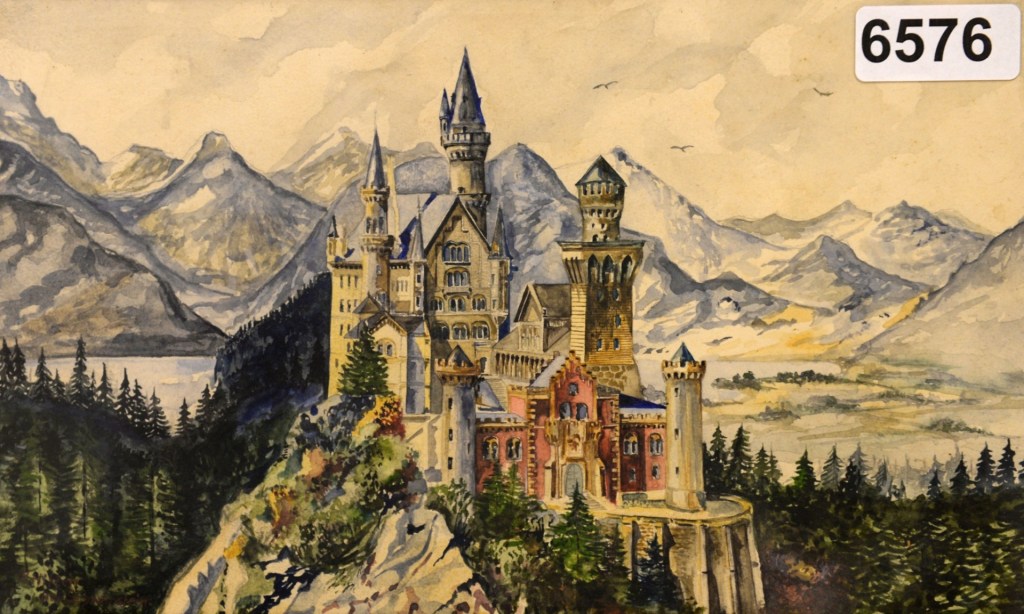
With this painting of the castle, there is an official letter of authenticity from Peter Jahn regarding this watercolor in detail. Jahn recalls a conversation with the Reich’s Chancellor himself regarding this particular work, as actually being the largest surviving watercolor by Hitler. The work is in fine condition and measures 23.5 x 15.5 inches.
After the Allied Victory
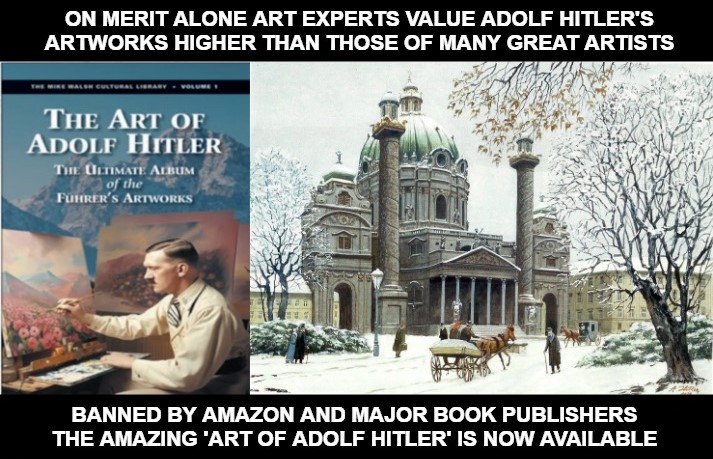
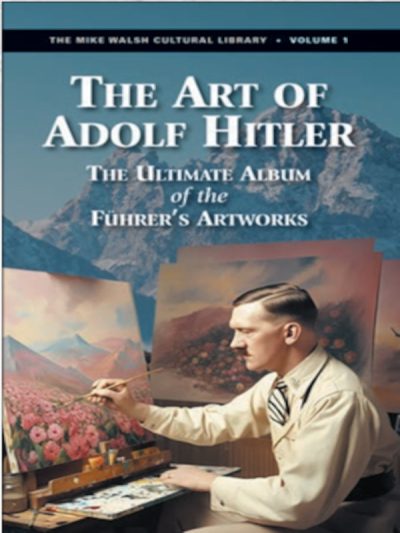
THE ART OF ADOLF HITLER by Michael Walsh is a collector’s item at an affordable price. Over 150 of Hitler’s paintings, watercolours, drawings, and sketches. Click the picture to access information.
After the war, Jahn resumed his consulting career with no thoughts of his former activities on behalf of the Hess staff.
When his name was mentioned in a magazine article in 1960, however, he received inquiries from all over the world and agreed to serve as personal advisor to the English Marquis of Bath when the latter began his large, personal collection.
Through his knowledge of Hitler’s Viennese style and subject matter and his numerous contacts in Vienna, Jahn has long been an authority on the subject and has traced and authenticated numerous paintings.
The Unknown Artist
His files and references were particularly useful to author Billy Price in writing his great hornbook on the subject Adolf Hitler: The Unknown Artist.
Today, this book is one of the few works that covers the subject so thoroughly and interestingly.
Schloss Neuschwanstein
Both the paintings we acquired are shown in the book, but the Schloss Neuschwanstein canvas is unfortunately depicted in the non-colour section of the book; the St. Charles’s Church in winter, though, is shown in a large picture on page 49 of the price book. AUTHOR. Gerard Frederick.

THANKS FOR SHARING WITH FRIENDS AND SOCIAL MEDIA
Share this:

Categories: National Socialist