


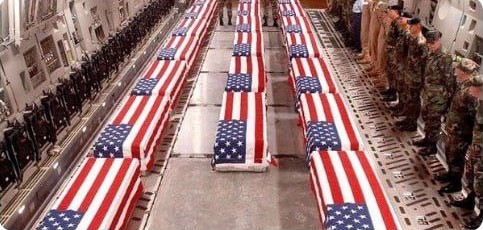

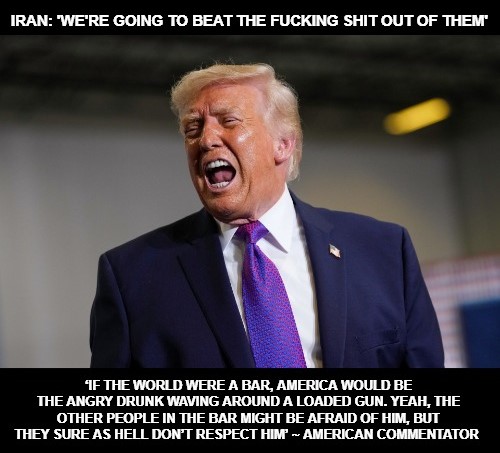
The United States has abandoned negotiations with Iran and shifted from an empty threat of military destruction to a futile one of slow economic strangulation.
It is a move that signals the beginning of what military analysts describe as an unwinnable war with chilling parallels to Iraq.
President Donald Trump’s abrupt halt of the bombing campaign near the Strait of Hormuz last month came amid jaw-dropping confessions from top military brass.
The American arsenal has been critically depleted, with precision munitions and interceptor missiles running dangerously low and the list of viable targets near the strategic waterway exhausted.
Trump digging a hole
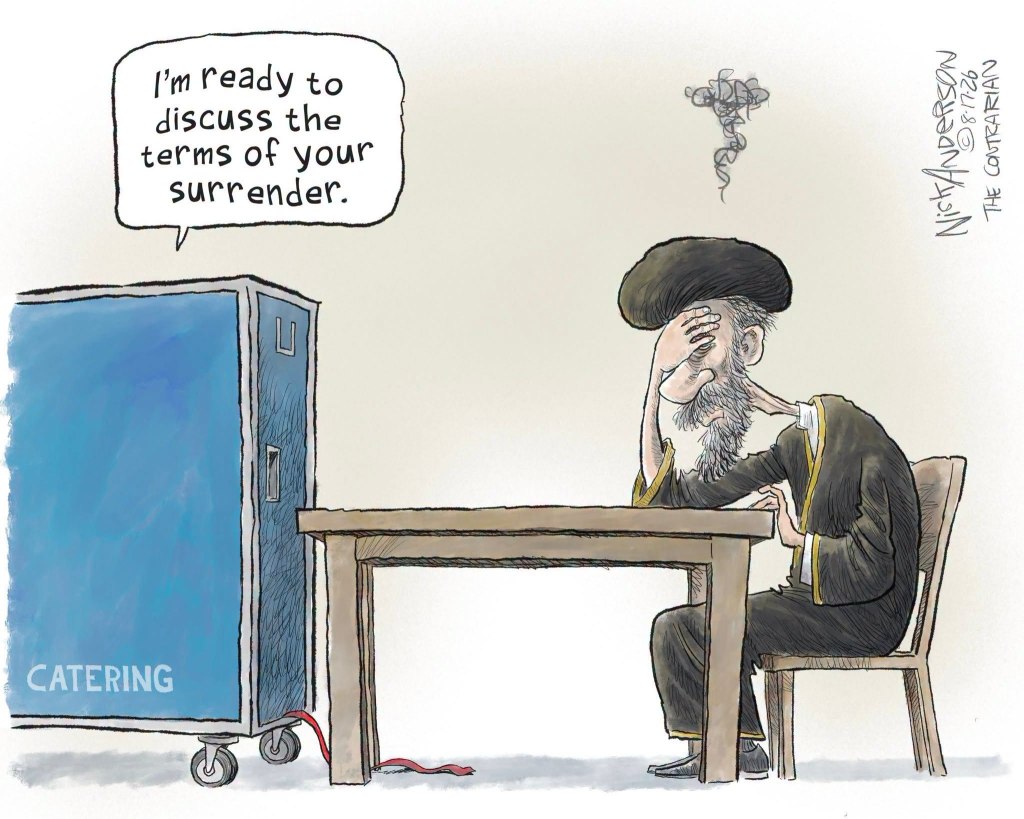
This strategic retreat reveals a military machine that fired its best shots and failed to achieve its objectives. We’re now facing the grim reality of a prolonged conflict against a nation far more formidable than Iraq ever was.
The White House’s pivot from what one source described as ‘going from ‘hammer Iran ASAP’ to ‘strangle them’ over time’ represents a last-ditch improvisation for a US administration that miscalculated Iran’s resilience and now finds itself trapped in a conflict with no clear exit strategy.
Shock Waves reverberate across the world
Iran’s closure of the Strait of Hormuz has disrupted roughly a quarter of global seaborne oil trade, creating economic shockwaves worldwide.
The strategy shift mirrors the Iraq War’s false pretences and predicts a similar quagmire with far higher stakes.
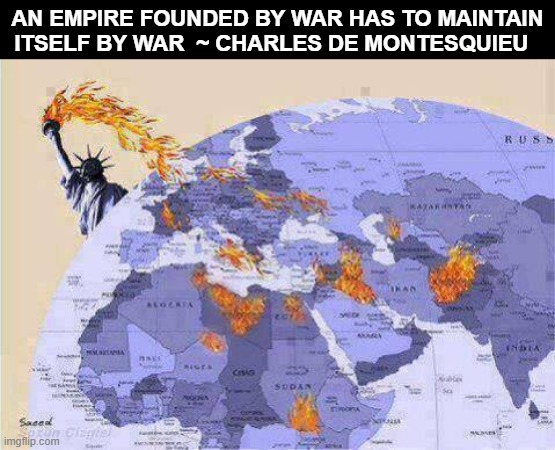
The illusion of military supremacy
A narcissistic president can talk a big game, but the revelation is that the United States military has largely exhausted its stockpiles of precision-guided munitions and interceptor missiles.
This should alarm every American citizen who has been told by propaganda that the nation’s military might is unmatched.
You can’t fix stupid
The five-week bombing campaign against Iran, launched jointly with Israel on February 28, consumed billions of dollars worth of weaponry. Yet it achieved none of the objectives of crippling Iran’s military capabilities or forcing Tehran back to the negotiating table.
Back to the drawing board
Pentagon officials reportedly warned Trump that continuing the current pace of operations was unsustainable, forcing the administration to reconsider its approach.
Unlike Iraq in 2003, which possessed a shattered military and no meaningful air defense capabilities, Iran entered this conflict with advanced Russian-made S-300 and domestically produced Bavar-373 air defense systems
Thousands of US Troops Threatened
Tehran had underground missile production facilities and a demonstrated ability to absorb punishment while continuing to retaliate.
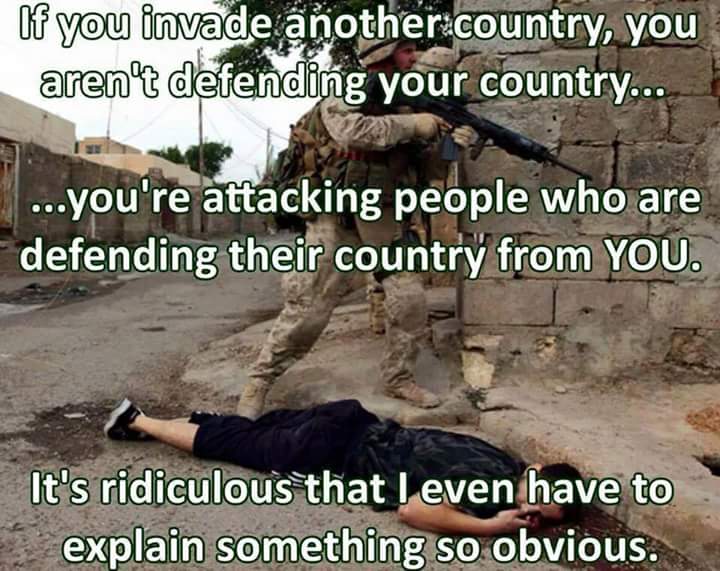
Iranian Defense Minister Aziz Nasirzadeh threatened American bases across the Middle East, and Tehran’s ballistic missile arsenal can reach U.S. installations throughout the region.
This threatens thousands of American troops with a single launch sequence.
The blockade that became a boomerang
When Iran closed the Strait of Hormuz shortly after the joint U.S.-Israeli bombing campaign began in late February, the move was dismissed in Washington as an act of desperation that would quickly be reversed under military pressure.
Catastrophic
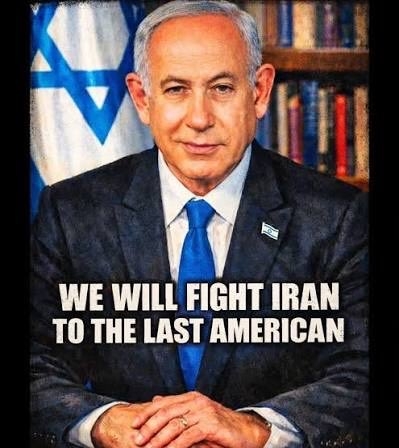
Iran’s key negotiator, Mohammad Bagher Ghalibaf, delivered a stark message on Tuesday when he declared that the Strait of Hormuz will remain closed until the United States lifts its blockade, releases Iran’s frozen assets, and removes sanctions.
Iran Plays Hardball
This position represents a hardening of Iranian demands, not a softening, and suggests that Tehran believes time is on its side. Iran’s nuclear program adds another combustible element to this crisis.
Iran never had or wanted nuclear weapons
Decades of U.S. intelligence assessments, including a 2007 National Intelligence Estimate, concluded that Tehran halted its weapons program in 2003. More recent evaluations reaffirm that Iran is not actively developing nuclear weapons.
Ali Larijani, an aide to Supreme Leader Ayatollah Ali Khamenei, warned in April that an attack by the United States or Israel would force Iran to reconsider its nuclear stance.
He declared that Iran would move toward weapons capability because it must defend itself.
The irony is stark: a war launched under the pretense of preventing Iranian nuclear weapons may well produce exactly that outcome.
America’s Defeat
Trump’s abandonment of negotiations confirmed no talks or conversations are going on, or scheduled, with the Islamic Republic of Iran. This leaves the United States with no diplomatic off-ramp and no military path to victory.
The parallels to Iraq are impossible to ignore, but the differences are more important.
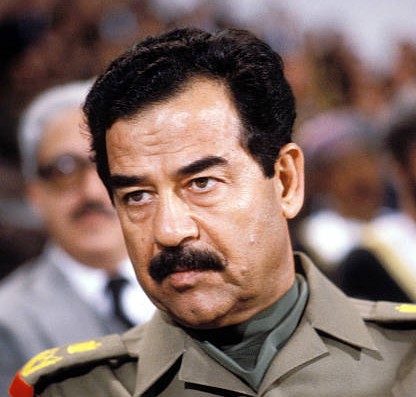
Iraq was a devastated nation emerging from a decade of sanctions, with a fractured military and no meaningful ability to project power beyond its borders.
Iran is not Iraq
Iran is a regional power with advanced missile technology, the ability to close a critical global chokepoint, and the capacity to make any occupying force pay an unspeakable price in blood and treasure.
The United States spent eight years fighting a counterinsurgency in Iraq, losing thousands of soldiers and trillions of dollars before withdrawing in failure.
A war against Iran would make those eight years look like a skirmish. Let readers know what you think

THANK YOU FOR SHARING WITH FRIENDS AND SOCIAL MEDIA
Share this:

Categories: United States



Moshe Trumpsteinberg (MIGA) the Hebrew Yammer WWE belt holder works for Israel.
Just the right conman for the Great Reset Leap Forward.
If voting changed anything it would be illegal.
LikeLiked by 1 person
Marjorie Taylor Greene & Trump Using Nuclear Weapons
https://x.com/mtgreenee/status/2090427082526408965
Let me make something very clear. The Neocons have been talking about using nukes forever. There are people in Israel also talking about using a tactical nuke on Iran’s nuclear facility because nothing else would reach it. These discussions are not using a major nuclear weapon like Hiroshima. This is a bit out of place. It is nothing new and I can tell you that the default with some of these people is to just nuke the opposition.
President Trump has been suckered into this war by the Neocons who escorted their Trojan Horse into the situation room, Netanyahu. Trump was against endless wars promoted by the Neocons like John Bolton. According to reports from The New York Times and other outlets, Netanyahu was “escorted” or “whisked” into the White House Situation Room on February 11th, 2026, by President Trump’s team for a highly classified presentation on Iran. Netanyahu was a foreign leader given rare access to the White House Situation Room. I believe he was the FIRST ever to enter that room, but I cannot definitively confirm that.
These Neocons have justified regime changes around the world since World War II. The reason WHY Iran calls the USA the “Great Satan” is precisely this issue. The CIA, working alongside British intelligence (MI6), orchestrated the 1953 Iranian coup d’état to overthrow the democratically elected Prime Minister Mohammad Mossadegh. A primary motivation was to re-establish Western control over Iran’s oil industry for the benefit of British and American companies.
This operation, known as Operation Ajax (or TPAJAX), is a well-documented example of Cold War covert intervention. The crisis was triggered by Mossadegh’s decision to nationalize Iran’s oil industry, which had been controlled by the British-owned Anglo-Iranian Oil Company (the forerunner of BP). These Neocons have usurped American foreign policy and claim that they are spreading “democracy” to the world when in fact they circumvent the Constitution and launch unilateral operations without any Congressional approval. This is no different from a dictatorship. The people are NEVER asked shall we overthrow a government or start a war.
I was told back in the ’90s that the US should overthrow all the dictators in the Middle East and that would secure Israel for the future. Here is a video of General Wesley Clark hearing the same thing after 9/11 in 2001. I heard that same idea about 5 years before in private discussions with a leading Neocon. I told my predictions day 1 i joined Sept surprises and finally OCT surprises are Sampson option with USA?
Where is wife of Trump why no one shows her? I mean Melania never seen any where.
WW3 as soon as this weekend possibility?
LikeLike
Nice to see a Canadian Prepper video in one of the replies. I dont always agree with Nate but he works hard to provide analysis and with his previous work on prepping he offers practical solutions for all this doom news out in the world. As for Us-Iran, I forget what podcast i saw it on, i think Warstrike, but the comment of “Israel/Juice boxes are very smart tactically, but poor at strategic thinking” or another way, the whole Scorpion and the Frog, top marks on fooling the frog to put you on his back, but a big fat zero for stinging him part way over and drowning you both. Thats whats going on in Iran right now, both US is the big dumb frog and Israel the scorpion.
LikeLike
You would be M.A.D. (Mutually Assured Destruction ) if you did not have nukes.
Or given Operation Covid Jew Jab Genocide, not be antisemitic.
LikeLiked by 1 person
Just letting you know,the last month my comments after sending here never showed up, not even ‘awaiting moderation’, for better or worse.
LikeLiked by 1 person
I rarely delete… only if it incites illegality
LikeLike