



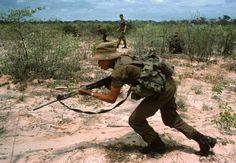

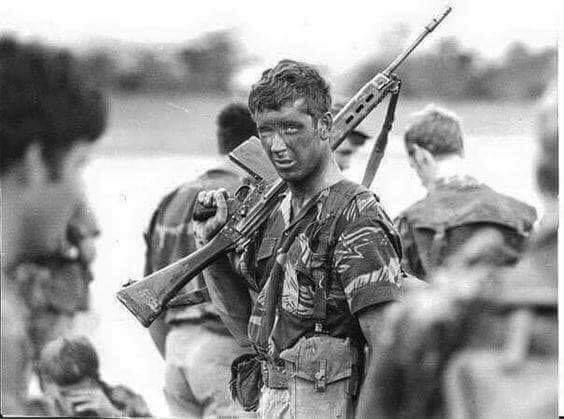
The Selous Scouts were one of the most formidable counterinsurgency units of the 20th century.
At their peak during the Rhodesian Bush War (1973–1980), they combined elite tracking skills, deep cultural knowledge, and ruthless pseudo‑guerrilla tactics to devastating effect.
The Selous Scouts were a special forces regiment of the Rhodesian Army, officially formed in 1973 under Lt. Col. Ron Reid‑Daly.
Their mission was simple in theory but extraordinarily complex in practice: infiltrate, disrupt, and destroy guerrilla movements, primarily ZANLA and ZIPRA, from the inside.
They were named after Frederick Courteney Selous, a British explorer and hunter known for his bushcraft.
Their signature tactic involved disguising themselves as guerrillas, wearing enemy uniforms, carrying AK‑47s, speaking local languages, and mimicking insurgent behavior. This allowed them to infiltrate guerrilla networks, gather intelligence, and launch surprise attacks.
There was no formal apartheid in Rhodesia, and so the Scouts were racially integrated. The majority were Black Africans, including many former guerrillas who had been ‘turned’ and paired with white officers.
This was essential for blending into insurgent groups.
Combined Operations Rhodesia credited the Scouts with being directly or indirectly responsible for 68% of all guerrillas slain during the war, while losing fewer than 40 men themselves.
The idea of pseudo‑operations dates back to 1966, after Rhodesia’s Unilateral Declaration of Independence.
Early experiments failed, but by 1971–73, as guerrilla activity intensified, the concept became viable. Two experimental teams were formed in 1973, and Ron Reid‑Daly was brought out of retirement to formalise the regiment.
Selection was notoriously brutal: an 18‑day ordeal that was so demanding that many volunteers failed.
The Scouts needed not just physical endurance but linguistic skill, cultural fluency, and the psychological resilience to operate undercover among hostile forces.
The Scouts conducted a wide range of missions: Deep reconnaissance in remote areas for weeks at a time.
Pseudo‑gang operations to infiltrate or lure out insurgents. Targeted assassinations of guerrilla leaders. Cross‑border raids into Mozambique and Zambia.
The Selous Scouts were gifted at tracking and bushcraft at a level unmatched in the region
Their philosophy emphasized capturing guerrillas alive to extract intelligence: ‘the only good source of intelligence is live guerrillas.’
The Scouts operated in secrecy, used deception extensively, and were accused of extrajudicial killings, coercion of captured guerrillas, and other abuses.
The terrorist movements (ZANLA and ZIPRA) feared and despised them, and even within Rhodesia, their methods sparked debate.
After Zimbabwe’s independence in 1980, the unit was dissolved without a formal ceremony. The Selous Scouts remain a case study in unconventional warfare, intelligence‑driven counterinsurgency. The ethical dilemmas of pseudo‑operations and the limits of military effectiveness in a losing political struggle.
Their story is documented extensively in works by Ron Reid‑Daly and Peter Baxter, among others.

THANK YOU FOR SHARING OUR STORIES ON SOCIAL MEDIA. TELL OUR READERS WHAT YOU THINK
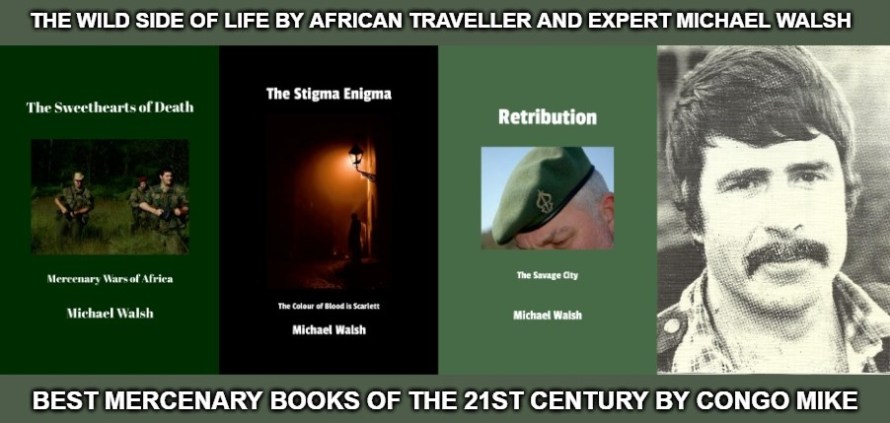
NOTORIOUS DOGS OF WAR. Legendary mercenary true story bestsellers by African veteran Michael Walsh, who wears the tee-shirt: SWEETHEARTS OF DEATH, THE STIGMA ENIGMA and RETRIBUTION. https://michaelwalshbooks.wordpress.com/
Share this:

Categories: Africa



 Michael Walsh Stories and Books
Elite units that take on commies?
All commies are subhuman vermin.
LikeLike