





Nicholas Atencio and his girlfriend Heather Surovik spend nearly every minute of their lives in a 2000 Cadillac Escalade. After Atencio, 33, lost his job as a plumber in May, he and Heather, 36, who now deliver for a fast-food chain, otherwise spend their sad lives curled upon an air bed in the back of their car parked in a lot in Longmont, Colorado.
Americans are being driven into their vehicles by Covid-related state repression. Their numbers are likely to grow as the government safety net frays and evictions and foreclosures rise.

‘It’s in times of crisis that the fragility of our systems is laid bare,’ said Graham Pruss. ‘Even before COVID, millions struggled to afford a decent place to live. The pandemic has made the housing crisis even worse. He expects a surge in the number of people without permanent homes taking refuge in cars, vans, RVs and campers, and not just in the nation’s most expensive regions such as the San Francisco Bay Area where vehicles have increasingly become a form of affordable housing, but all over the country.
‘We have seen more people moving into vehicles and more restrictions on public parking for them over the last decade, and then COVID hit,’ Pruss said. ‘I am concerned that we may be facing a population increase in mobile sheltering and vehicle residence at unprecedented levels.’

Homeless advocates say people without permanent housing are chronically undercounted. It’s even harder to track the tens of thousands of people living in their vehicles rather than on the streets or in shelters because they must move around so much.
‘Vehicle residency is one of the fastest-growing forms of homelessness,’ said Sara Rankin, associate professor of law and director of the Homeless Rights Advocacy Project at Seattle University.

‘We call people living in vehicles the hidden homeless population,’ said Joseph Zanovitch of HOPE Homeless Outreach in Longmont, Colorado. For many who are experiencing homelessness, living in a vehicle is preferable to shelters or encampments.
Vehicles offer a greater degree of independence and privacy, not to mention protection from the elements. There’s also the comfort that comes with families staying together, including pets. And shelter curfews often make holding down jobs with irregular hours difficult, if not impossible.

Rusty old RV (mobile homes and campers), the kinds seen lining city streets or stowed under overpasses, can be acquired for a few thousand dollars, but are not permitted in many caravan (RV) parks. With few alternatives, most vehicle dwellers park on public streets, often illegally. They have no running water or electrical hookups, which can create tensions with neighbours who complain of dumped trash and sewage and scarce parking spots.
Many authorities restrict or ban caravans or people sleeping overnight in their cars. Violations can prove costly, even devastating. Parking tickets and towed vehicles can result in the loss of shelter and belongings, leaving people much more vulnerable than before and much less likely to recover financially.

During the crisis, Yesica Prado, a journalist who parks her Recreational vehicle (mobile home) in an industrial area of Berkeley, California, says she’s seen at least a 10% increase in vehicle dwellers as people lose their jobs and can no longer afford the sky-high rents amid the decades-long regional housing crisis.
Their numbers grow as more people use pandemic unemployment benefits to move out of tents and into vehicles,’ said Prado. ‘If you only have so much in savings you can either spend that money on three months’ rent or get a vehicle. A lot of people have to come to those choices right now.’

Some have stepped in to help. Last year, a car dealership in Charlotte, North Carolina began offering people living in their vehicles a safe place to park at night. James Charles, general manager of Kiplin Automotive Group in Charlotte, and his wife Haydee, who have six children, said they empathise. Years ago, they, too, hit a hard stretch and were in and out of motels for several months.
Not only did they provide overnight shelter, they raised nearly $35,000 to secure a more stable living situation for more than two dozen homeless families and individuals through their organisation, HALO Now, (Helping and Leading Others).

‘I think you could consider us the average American family who just thought about a way they could use what they had to make a difference,’ Charles said.
Charles says he got the idea from California and Washington State where churches, non-profits and local governments have stepped into the breach, creating overnight parking lots with portable toilets and showers and caseworkers to help secure permanent housing.
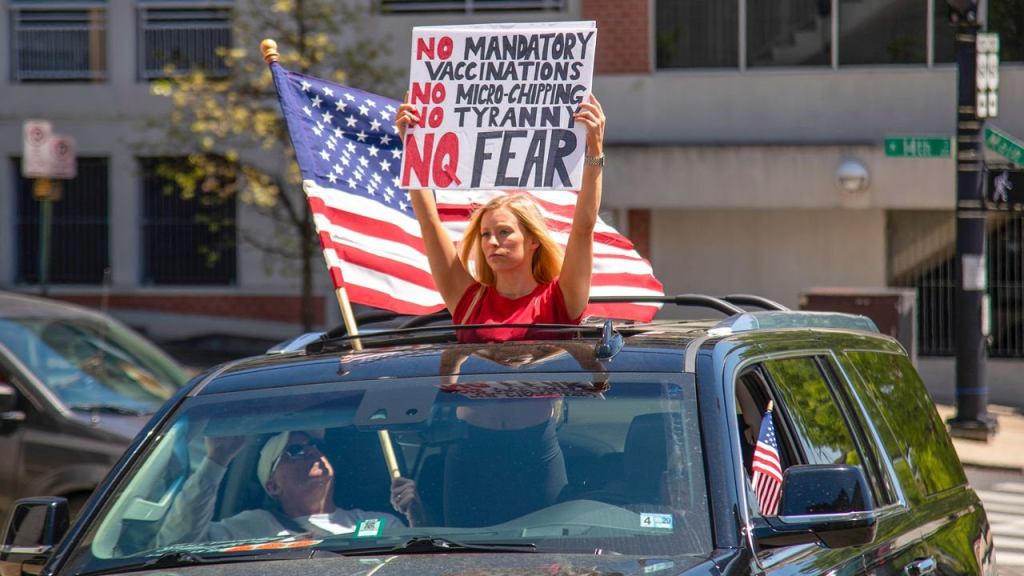
Vehicle residency is one of the fastest-growing forms of homelessness. It’s the same story across the country in Rhode Island, where resources are being stretched thinner than ever by Covid-Repression.
Caitlin Frumerie, executive director of the Rhode Island Coalition for the Homeless, says the state has more than double the number of people experiencing homelessness than last year, some of whom have moved into their vehicles.

Though more safe parking lots are popping up in Colorado and Wisconsin, Frumerie has not been able to persuade a single business to open its parking lot at night so dislocated residents have a safe and legal place to stay. Retrieving their impounded vehicles has become a line item in her budget. Source

Share this:

Categories: Uncategorized



 Michael Walsh Stories and Books
Are they any worse off than the Germans and Japanese under american occupation 1945 on?
LikeLiked by 1 person
………… or better off for all their wars?
LikeLike