


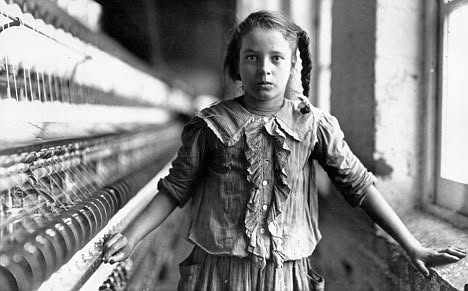

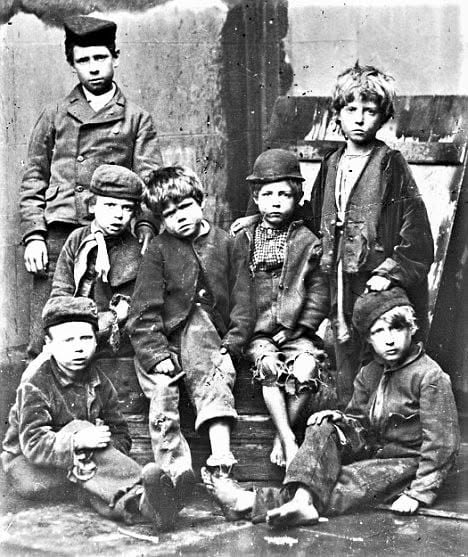
White Privilege: Britain’s child slaves: They started at 4am, lived off acorns and had nails put through their ears for shoddy work. Yet, says a new book, their misery helped create Britain
The tunnel was narrow, and a mere 16in high in places. The workers could barely kneel in it, let alone stand.
Breathing Coal Dust
Thick, choking coal dust filled their lungs as they crawled through the darkness, their knees scraping on the rough surface and their muscles contracting with pain.
A single ‘hurrier’ pulled the heavy cart of coal, weighing as much as 500lb, attached by a chain to a belt worn around the waist, while one or more ‘thrusters’ pushed from behind.
Poison water
Acrid water dripped from the tunnel ceiling, soaking their ragged clothes. Many would die from lung cancer and other diseases before they reached 25.
For, shockingly, these human beasts of burden were children mainly from the East End of London, some only five years old
Sold like slaves
Orphaned, Jonathan Saville was sold as a pauper apprentice to a master in a textile industry as his mother could no longer feed him
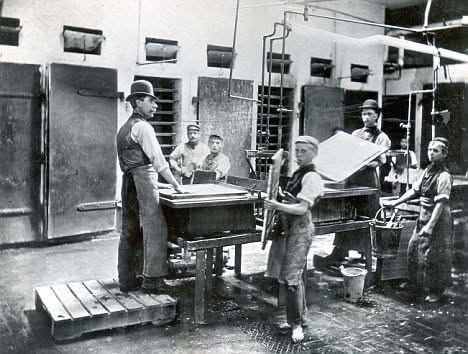
His master threatened to ‘knock out his brains’ if he did not get up to work, and pushed him to the ground, breaking his thigh. Eventually, bent double and crippled, he was returned to the workhouse, no longer any use to the brute.
Oliver Twist
Robert Blincoe, on whom Dickens’ Oliver Twist is thought to be based, was sold, aged six, as a ‘climbing boy’ to a chimney sweep in London.
Forced to scale the narrow chimneys, only 18 inches wide, he would scrape his elbows and knees on the brickwork and choke on coal dust.

GREAT SAYINGS AND STORIES OF HISTORY: Be inspired by hundreds of wise and memorable comments uttered by history’s greatest thinkers. Click the picture for details.
Lighting fires under kids’ feet
It was common for the master sweep to light a fire under them to make them climb faster. Many climbing boys and girls fell to their deaths.
Treated worse than animals
After several months, Blincoe was returned to the workhouse. Then, aged just seven, he was sent along with 80 other children to a cotton mill to work as a ‘scavenger’; crawling under the machines to pick up bits of cotton, 14 hours a day, six days a week.
In return, he was given porridge slops and black bread. Weak with hunger, at night he crept out to steal food from the mill owner’s pigs, so sad. Pauper apprentice: Children were often sold to masters, as it meant their parents had one fewer mouth to feed

THANK YOU FOR SHARING WITH FRIENDS AND SOCIAL MEDIA
Share this:

Categories: Britain



