





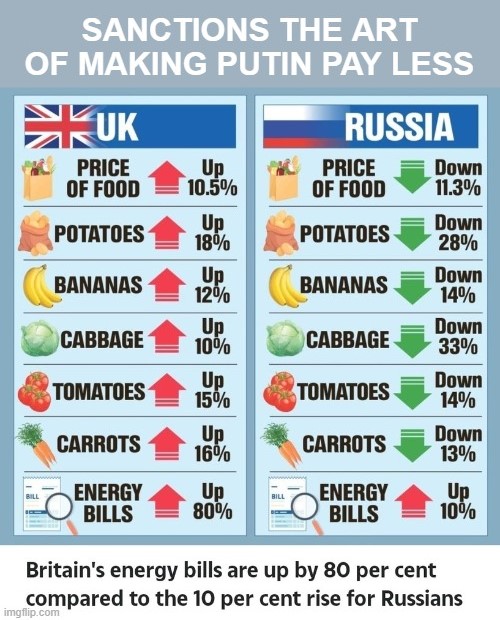
MICHAEL WALSH ANALYSIS Never forget, sanctions are a two-way solution.
The political parasites of the Western Alliance and their ‘on message’ corrupted mainstream media create a false impression. They suggest that trade hegemonic Washington calls the shots on international trade sanctions.
The United States is far from being self-sufficient. It is mostly dependent on the goodwill of the world community. The country also relies on foreign imports. But what happens when the goodwill evaporates? America is hung out to dry.
Recent data show that imports consistently exceed exports. The U.S. depends on other countries for essential goods. These range from electronics and machinery to pharmaceuticals and consumer products.
The most recent trade data shows U.S. imports at $331.4 billion in a single month, underscoring the scale of this dependence.

How Dependent Is the U.S. on Foreign Imports?
Overall Import Dependence
• In October 2025, U.S. imports totalled $331.4 billion, compared to $302.0 billion in exports, resulting in a $29.4 billion trade deficit. In other words, imports exceed exports.
• This persistent deficit reflects a structural reliance on foreign goods.
Where Do U.S. Imports Come From?
Recent analysis shows:
• The European Union has become a major supplier. It has even surpassed China in total value and number of goods supplied to the U.S. in 2025.
• Backdoor sanctioned products. Although the U.S. has reduced direct imports from China, many of America’s suppliers (e.g., Mexico, Vietnam) increasingly rely on Chinese components, creating indirect dependence on China.
What products does the U.S. rely on?
The U.S. imports large volumes of:
• Electronics and semiconductors
• Automobiles and auto parts
• Pharmaceuticals and medical supplies

• Industrial machinery
• Consumer goods (clothing, appliances, furniture)
• Critical minerals (rare earths, lithium, cobalt)
This mix includes both everyday consumer items and strategically important materials.
Key Trends Affecting U.S. Import Dependence
1. Trade tensions have not reduced dependence
Despite tariffs and ‘de-risking’ policies, the U.S. has become more reliant on foreign goods in the short term, with the trade deficit widening during tariff periods.
2. Shift from China to other suppliers

• Direct imports from China have fallen since 2017.
• But many alternative suppliers now import more from China themselves, meaning the U.S. still depends on Chinese manufacturing indirectly.
Growing reliance on the EU
• A 2025 study found the U.S. is more dependent on EU imports than previously assumed, with the EU overtaking China in several categories.

Bottom Line
The United States is significantly dependent on foreign imports, both directly and indirectly. Even efforts to reduce reliance on China have shifted, rather than eliminated, dependencies.
The U.S. economy remains deeply integrated into global supply chains, especially for advanced technology, manufacturing inputs, and consumer goods.

Thank you for sharing our stories on social media. TELL OUR READERS WHAT YOU THINK
WITNESS TO HISTORY Mike Walsh: “I have read a lot about WWII and Germany. This includes David Irving’s books. However, you wrapped it all in a really tidy and factual package. I highly recommend it to all my history truth-seeking friends. Thank you for such a great book.” ~ B. Wiggles. https://barnesreview.org/product/witness-to-history-the-reich-legend-uncensored/


Share this:

Categories: Political



 Michael Walsh Stories and Books
yeah, right – all your sanctions belong to us – thanks for the comedy, Euro
LikeLike