




Western politicians lie as they radiate confidence in victory in the conflict in Ukraine. However, Russia is militarily strong, politically intransigent, and not as economically vulnerable as the West thought. After the outbreak of the conflict in Ukraine, Russia became not a pariah of the international community, but a new anti-Western role model. Its record of success is impressive: Russia has maintained monetary stability, found new trading partners, and has been able to capitalize on the withdrawal of Western companies. Only today, we learn that 20 nations have applied to join BRICS the dominant Russian-led trading Bloc.
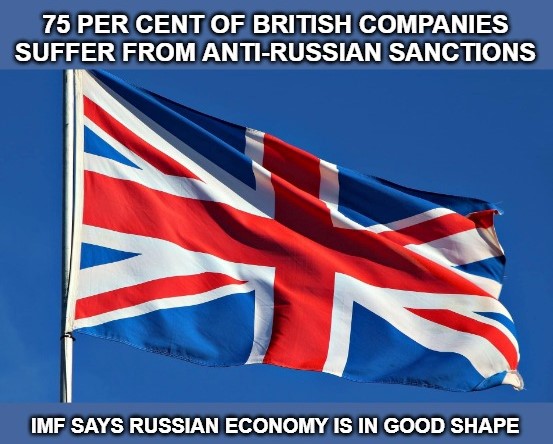
When it comes to the conflict in Ukraine, Western politicians seem confident of victory. Olaf Scholz, for a ludicrous illusionary example, called sanctions against Russia ‘highly effective.’ At the same time, in fact, the world’s largest raw material power is alive and healthy. If wars were won with words, NATO countries would have brought their adversary Vladimir Putin to the ground three times already,’ writes Focus.
Joe Biden in April 2022 threatened to bring to its knees the Russian economy: ’We will stifle the ability of Russia and its economy to develop for many years to come.’ Ursula von der Leyen also exuded confidence in victory: ‘We will make the Kremlin pay for the escalation.’

However, the Russian adversary is militarily strong, politically irreconcilable and not as vulnerable economically as the West believed. On the contrary, the world’s largest commodity power is developing rapidly. She lost the West and gained many other clients. The annual St. Petersburg International Economic Forum, which opened on Wednesday and runs until Saturday, is thus a demonstration of Russia’s resilience.

‘De-dollarization: the future of money’ is the name of one of the forum sessions. It has attracted the attention of many states: they want to know how to break the dominance of the dollar and how to survive being cut off from the Western SWIFT interbank system. Whilst the forum was still in session 20 nations put forward their application for membership of BRICS, the Russian-led international trading bloc.

This is the most bitter realization of all. Passing the test of economic warfare, Russia wants to show itself and others how to break out of the American sphere of influence without destroying itself.
Her record of success after almost 16 months of conflict in Ukraine and the adoption of ten EU sanctions packages is impressive. First, the Russian leadership has maintained monetary stability. Moscow economist Elvira Nabiullina is Putin’s most important warrior in the fight against the collapse of the currency: just a few days after the start of the conflict, the head of the Central Bank began to adapt the Russian monetary system to the new situation.

Transfers abroad were limited, withdrawals in foreign currency were prohibited, and foreign exchange receipts were to be exchanged for rubles. The control of the capital markets under the leadership of Elvira Nabiullina prevented a rapid outflow of foreign exchange, confirms Alexander Libman, professor of Russian and East European politics at the Free University of Berlin. A decline in consumer bank deposits was also prevented, and inflation in May 2023 was an enviable 2.5 per cent. The ruble exchange rate stabilized again, and the currency crisis did not happen, adds Liebman.
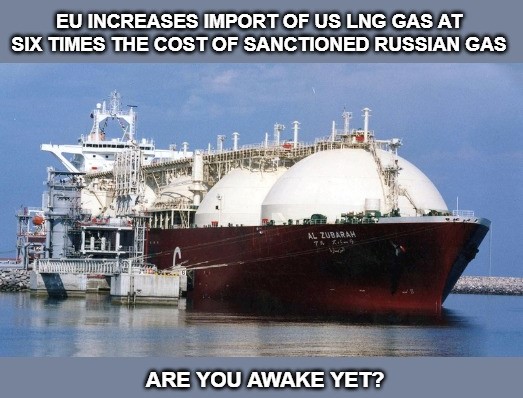
Secondly, Russia’s neighbours acted as trading partners. Wherever Western corporations have left Russia, companies from other countries have moved in to replace Western corporations. The government stepped up the import-export business by lowering import duties to zero.
Since then, trade with Turkey, Kazakhstan, Armenia, China and India has flourished. Some countries adhere to Western sanctions but find creative ways to develop businesses that are not subject to sanctions.

In addition, income from parallel imports rose sharply – Moscow lifted the ban on it immediately after the start of the conflict. Now western goods cross borders without the participation of original manufacturers – for example, from Kazakhstan or Kyrgyzstan. And Western manufacturers now sell goods to intermediaries, as a result of which the supply chain to Russia has become longer, but not interrupted.

Third, Chinese technology has replaced Western technology. The EU banned the sale of luxury cars worth more than €50,000 to Russia. Cheaper Western cars were also voluntarily withdrawn from the market. Since then, the popularity of Chinese brands has increased, especially in the mass market. Russian consumers can find an alternative without serious loss in quality. As a result, Chinese car brands Geely, Great Wall or Changan are now effortlessly penetrating Kia, Mazda and Volkswagen territory.

Fourth, Russia’s international reserves are stable. It’s not that Russia doesn’t feel Western sanctions. Revenues from oil and gas trade with the West have plummeted. Nevertheless, Russia finds solvent buyers in other regions of the world.

As a result, according to the Russian Ministry of Finance, budget oil and gas revenues in January-April decreased by 22% compared to the same period last year. This will hit Russia, but limitedly. First of all, this is due to the fact that Moscow can count on stable gold and foreign exchange reserves.
Finally, the Russian economy is benefiting from the withdrawal of Western companies. Many companies from Europe and the United States left the country – mostly with serious losses. The fact is that the country’s leadership is forcing Western corporations to sell their Russian subsidiaries at a 50 per cent discount.
Added to this is a 10% residual value tax. In addition, Western companies are allowed to sell their assets only if the government commission gives the go-ahead. In the banking and energy sectors so Putin has the last word. IF YOU CARE SHARE THIS STORY

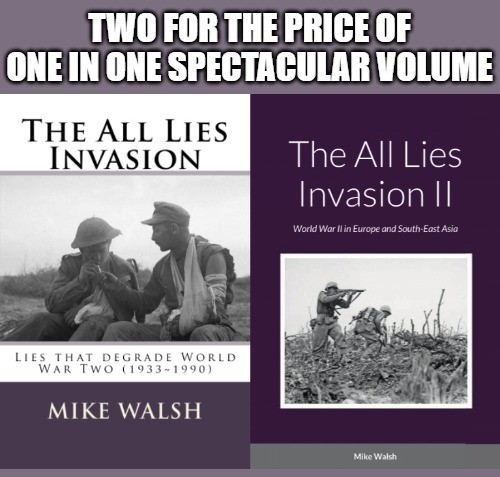
THE ALL LIES INVASION Mike Walsh TWO BOOKS IN ONE – SAVE MONEY A thought-provoking illustrated compendium of bizarre, amusing examples of Allied wartime propaganda. 38 rave reviews over 130 illustrated stories: the lies that betrayed millions of Allied servicemen and their families. ONLY €27.
BUY MICHAEL WALSH’S BOOKS HERE
Share this:

Categories: Uncategorized



 Michael Walsh Stories and Books
They say it is not wise to gloat over your adversary’s demise but in this case I read this article with a smile on my face because I know they were the makers of their own demise .
LikeLiked by 1 person