







It is estimated that deliberate starvation, slavery and the expulsion of the Irish, Scottish and English folk too led to a 50 percent loss of the population. Around 100,000 people fled Ireland for Canada in 1847 alone and around 20,000 of those either died during the voyage or during their time spent in quarantine stations.
Not unusually, the remains of three bodies were found washed up on a Canadian beach back in 2011. On the same beach in 2016, the remains of a further 18 bodies were discovered after an archaeological dig.

Canadian scientists have now confirmed that a study of the bones show that these are the remains of Irish famine victims who fled from English occupation across the Atlantic in the mid-1800s.
The initial remains were discovered in 2011 on a beach in Forillon National Park, Quebec. These sad losses were identified as two seven-year-old boys and an 11-year-old boy. According to scientists, their bones indicated severe malnutrition.
The dig in 2016 found evidence of 18 more bodies, most of whom were women and children. All were showing signs of malnutrition. It was speculated that they were passengers from the 1847 Carricks shipwreck.

The ship, carrying 180 people fleeing the English sanctions imposed on Ireland during the artificial famine in England’s pursuit of land clearance, sailed from Sligo to Quebec and were under the command of Captain R. Thompson.
On April 28 1847, the ship ran into a heavy storm in the Gulf of St. Lawrence and was wrecked around 4 miles east of the Canadian coast. It’s estimated that between 120 and 150 people died as a result. Those who survived had extremely plucky local fisherman to thank, who braved the storm, rowing out to save them. After the remains found on the beach were sent to Montreal University for analysis, it was confirmed that they are of Irish victims of the Carricks shipwreck. Mathieu Cote, a resource conservation manager at Forillon National Park said: ‘This is like the end of the story for people who were interested in this.’

‘We were suspicious of where [the remains] were from, and we had a good idea, but now we have evidence that those people were from Ireland.
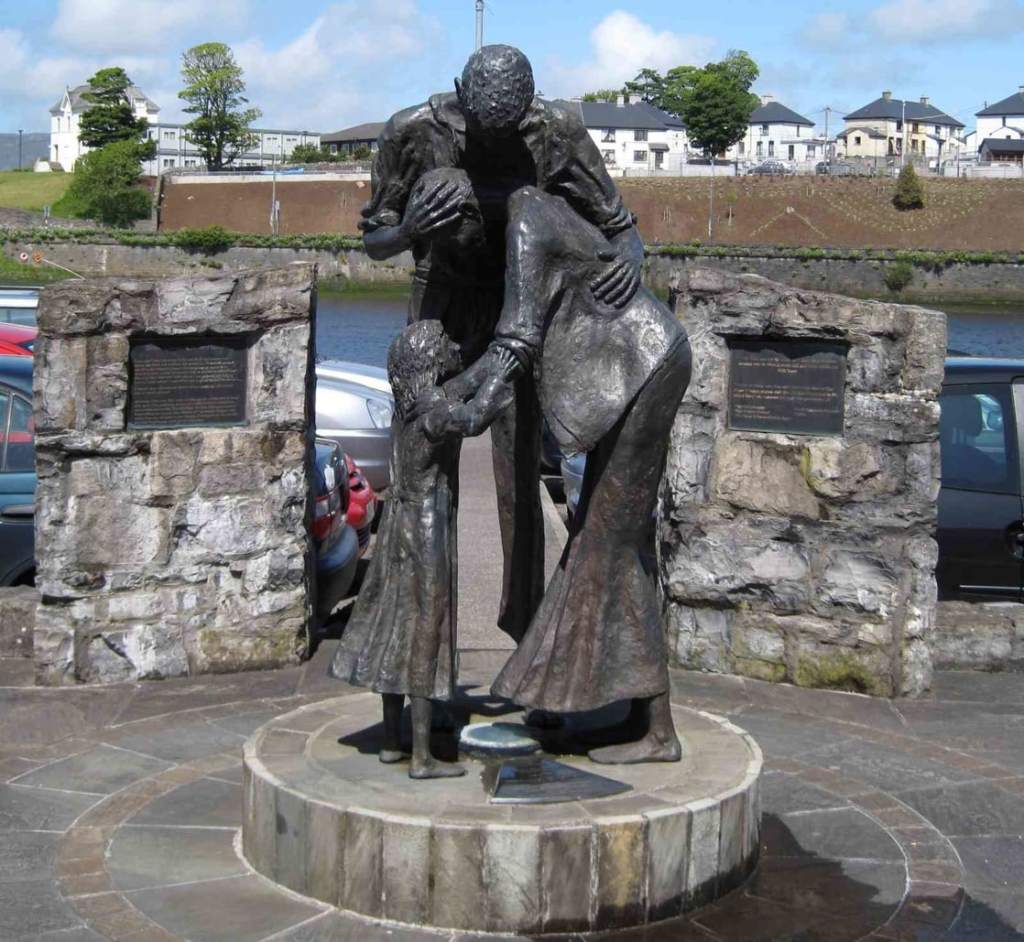
Famine Memorial 30,000 emigrated port Sligo, the plaque says ‘I am now, I may say, alone in the world. All my brothers and sisters are dead and children but for yourself. We are all ejected out of Mr Enright’s ground. The times were so bad and all Ireland in such a state of poverty that no person could pay rent. My only hope now rests with you, as I am without one shilling and as I said before I must either beg or go to the poorhouse. I remain, your father Owen Lark’
NOTE: This story was Facebook shared 259,000 times.
Related book: Forty Shades of Verse: Sublime Verse Irish Flavoured by Michael Walsh

Share this:

Categories: Uncategorized



 Michael Walsh Stories and Books
Reblogged this on MICHAEL WALSH QUALITY BOOKS.
LikeLike
They taught us in school that it was a “potato blight” which caused the starvation of so many Irish. Not true, is it?
LikeLiked by 2 people
In one Irish word, this claim is baloney. The English elite, who at the time was exporting and selling their own British children, women and men to the colonies was equally heartless ~ well, more so towards the Irish. The Irish were, in fact, enslaved long before Africans took their place. Population control was the real reason just as it is today. We’re all Irish now.
LikeLiked by 1 person