



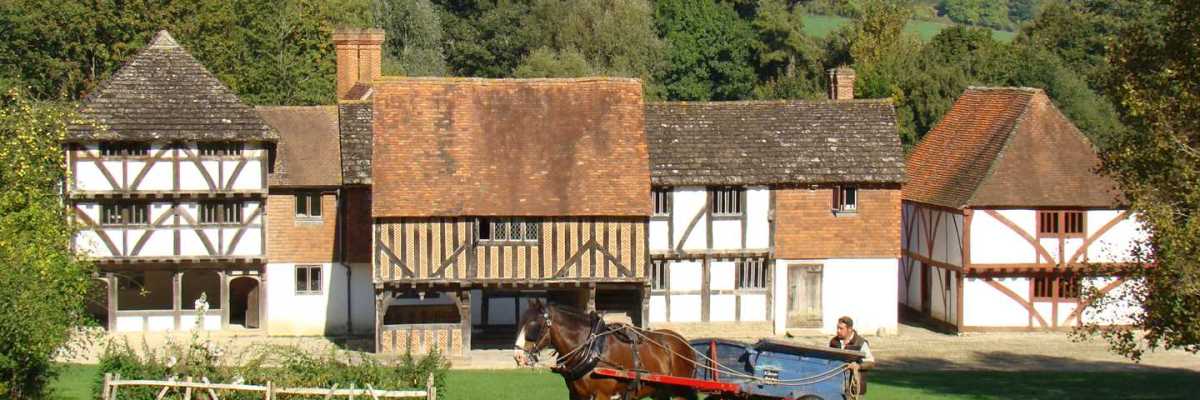
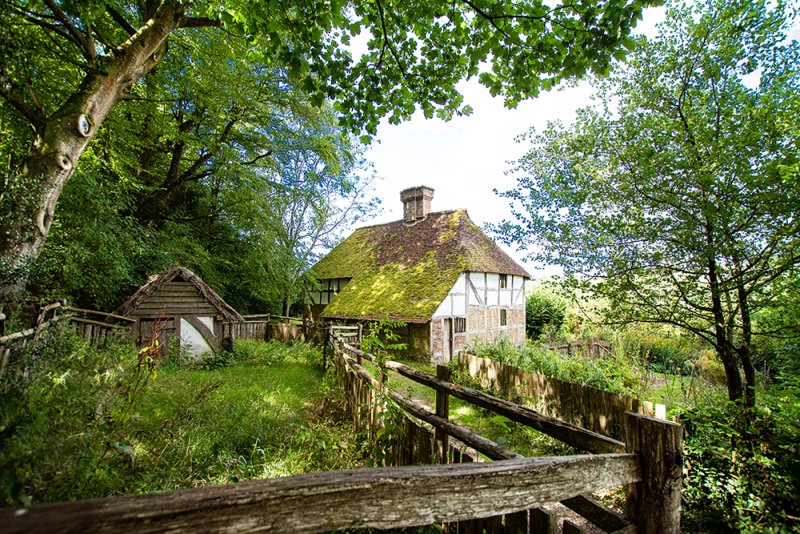
Founded in 1970, the award-winning Weald & Downland Living Museum is a leading museum of historic buildings in England, covering 40 acres in the South Downs National Park in West Sussex. It includes over 50 historic buildings dating from 950AD to the nineteenth centuries, re-erected from their original sites in south east England, together with period gardens, traditional farm animals and a mill pond.
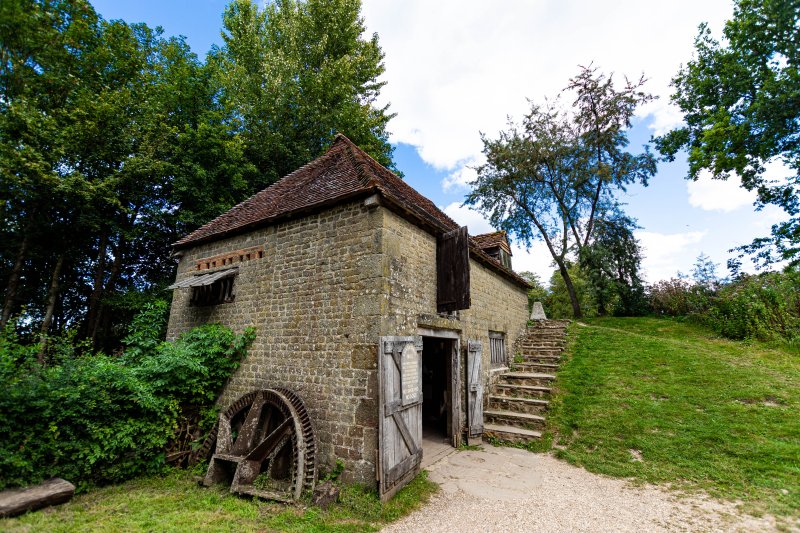
The exhibit buildings range from a reconstruction of a Saxon hall house to working buildings of the late 19th century. They are complemented by a collection, located in the Downland Gridshell Building, of building fixtures and fittings such as hinges, latches and doors, as well as larger structural elements and materials used in building construction and conservation.
The Museum also holds excellent collections relating to rural life, including agriculture, domestic life, trades and industries, and transport. A library of printed books, maps and other published materials relevant to the collections is held by the Museum for study purposes. The collections are ‘Designated’ as being of national importance in England, and the Museum has full “Accreditation“.
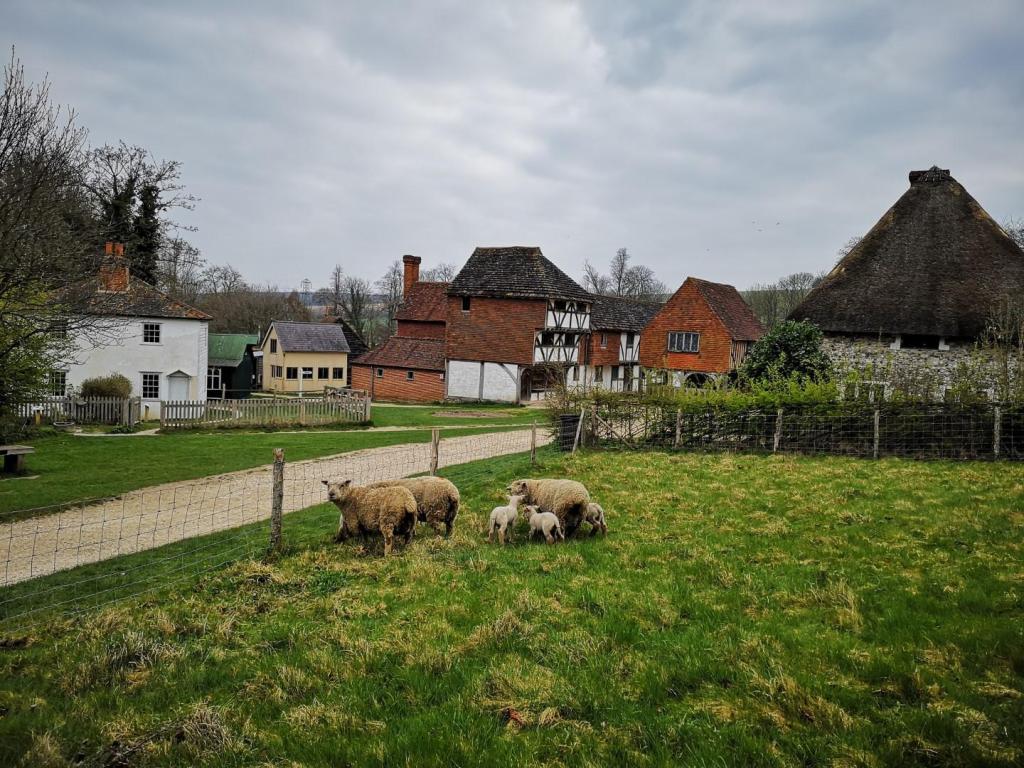
As well as bringing to life the homes, farmsteads and rural industries represented by its collections and exhibits, other themes are strongly represented at the Museum, including landscape, agriculture, animal husbandry, science and sustainability. Interpretation is achieved mainly through people, together with modest panel displays and publications. There are no plans to introduce electronic gadgets.
The Museum has an extremely strong commitment to lifelong learning. In addition to 20-25,000 children visiting in school parties every year, the Museum operates as a private sector training provider, selling over 3,600 student-days of adult teaching and training every year, with a broad spectrum of provision from workshop-based skills training to two graduate courses run in association with University of York.
The Museum makes a major contribution to tourism in the Chichester area, and is a key attraction in the South Downs National Park. It attracts around 150,000 visitors each year; mainly schools, couples and families, but with significant numbers of special interest visitors as well.
During its life, the Museum has been acknowledged as one of the UK’s leading independent museums. It receives no revenue subsidy from central or local government, but synergy between museum objectives and commercial realism is one of its most impressive features. Source
We look forward to welcoming you at the Museum!
LIVING HISTORY FESTIVAL
Step back in time! Come and experience 1,000 years of history at our Living History Festival.

What happened at a medieval tournament? How did Saxon craftspeople make beautiful items? What were the sights and smells of a Tudor market? How did you survive in the Victorian era with little money?
Share this:

Categories: Ethnic traditions


 Michael Walsh Stories and Books
This looks beautiful. It is so important to know about and celebrate our traditions and culture, and to be proud of our people. Without roots, the tree falls.
LikeLiked by 1 person
Thank you, dear Monika, As Gustav Mahler says… and his words were echoed by so many others, ‘Tradition is not to preserve the ashes, but to pass on the fire.’ This is our aim at Europe Renaissance. Thank you for putting your shoulder to the wheel. And do remember us to your brother, our friend, suffering in the German Gulag. He is not in prison while we are still free to communicate. Michael (Walsh).
LikeLiked by 2 people