Tag: European culture

The Most Amazing World Events Killed by Covid Fanatics

The second month of the year traditionally plays host to some really interesting events, festival and happenings all across the globe. Here is a list of some of the most interesting events that should have taken place in February 2020 and 2021. However, we only mention the ones that start during the month so you may find some events like the Sundance Film Festival, and the Harbin Ice and Snow Festival missing from the list.

Family Friendly Hungary doubles marriages

Hungary’s pro-family policies are getting results and could help dramatically boost the country’s birth rate over the coming years. The rate of marriages has risen sharply in Hungary since the government of Prime Minister Viktor Orbán assumed office in 2010, according to the figures published by the European Union’s statistical agency Eurostat. The figures, going back to 1960, break down the number of marriages per 1,000 people in the EU.
According to the data, the European Union average is 4.5 marriages per 1,000 people per year, and those numbers have not shown significant changes in the past 20 years.


Kurentovanje. A Carnival to Banish Winter

Kurentovanje is a Slovenian meat-and-mouth folk ritual in honour of spring and fertility, which is a carnival to banish winter. An analogue of Maslenitsa. The origins of Kurentovanje are doubtful, but it is likely associated with Slavic paganism. Typical dances from the month of March take place in […]

BASEL CARNIVAL 2021

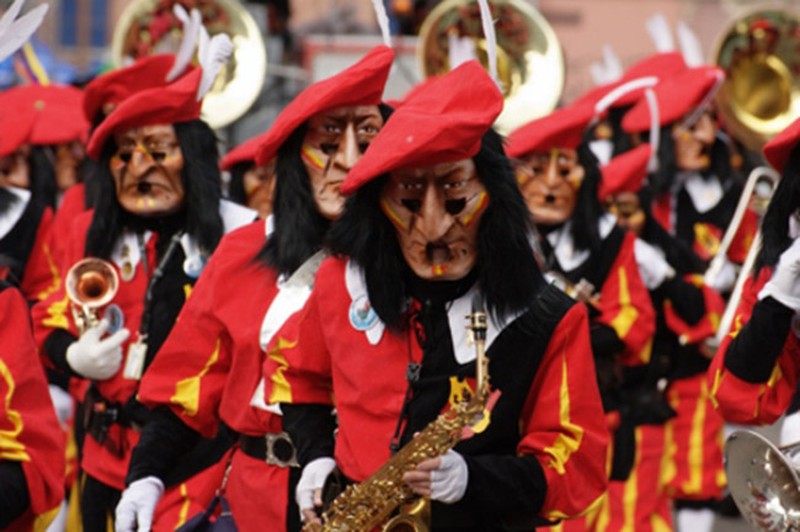
Basel Carnival is part of the city’s identity culturally speaking, it is at the heart of its creative energies and represents three days when the city goes wild. Owing to its uniqueness and quality, it has been added to the UNESCO intangible cultural heritage list. In 2021, the Carnival in Basel (Fasnacht) will not take place as usual and will be a little different from the major event that we know and love. More information

ORIGINS OF THE NATIONAL SOCIALIST GREETING

‘I made it the salute of the Party after the Duce (Benito Mussolini) had adopted it. I had read the description of the sitting of the Diet of (the city of) Worms, in the course of which Luther was greeted with the German salute. It was to show him that he was not being confronted by arms, but with peaceful intentions.