
Category: Ethnic traditions

Saint David’s Day – March 1

Saint David’s Day (Welsh: Dydd Gŵyl Dewi Sant or Dydd Gŵyl Dewi or the Feast of Saint David, is the feast day of Saint David, the patron saint of Wales, and falls on 1 March, the date of Saint David’s death in 589 AD. The feast has been regularly celebrated since the canonisation of David in the 12th century, by Pope Callixtus II, though it is not a public holiday in the UK.

Bulgarian Kukeri

It’s related to the late winter festival cycle. According to pagan beliefs, the winter was a time of evil, so the Kukeri had the task to chase away everything evil the winter represented with their scary masques. Therefore it’s not a counterpart of Halloween. It’s rather related to the traditions that came to be associated with the Lent, even though there is no sanctioned carnival tradition in the Orthodox Church. The Lent celebrations, like Kukeri or jumping over fires, were and are very much frowned upon by the Church. The only similarity to Halloween are the scary masques.

The Most Amazing World Events Killed by Covid Fanatics

The second month of the year traditionally plays host to some really interesting events, festival and happenings all across the globe. Here is a list of some of the most interesting events that should have taken place in February 2020 and 2021. However, we only mention the ones that start during the month so you may find some events like the Sundance Film Festival, and the Harbin Ice and Snow Festival missing from the list.

Kurentovanje. A Carnival to Banish Winter

Kurentovanje is a Slovenian meat-and-mouth folk ritual in honour of spring and fertility, which is a carnival to banish winter. An analogue of Maslenitsa. The origins of Kurentovanje are doubtful, but it is likely associated with Slavic paganism. Typical dances from the month of March take place in […]

BASEL CARNIVAL 2021

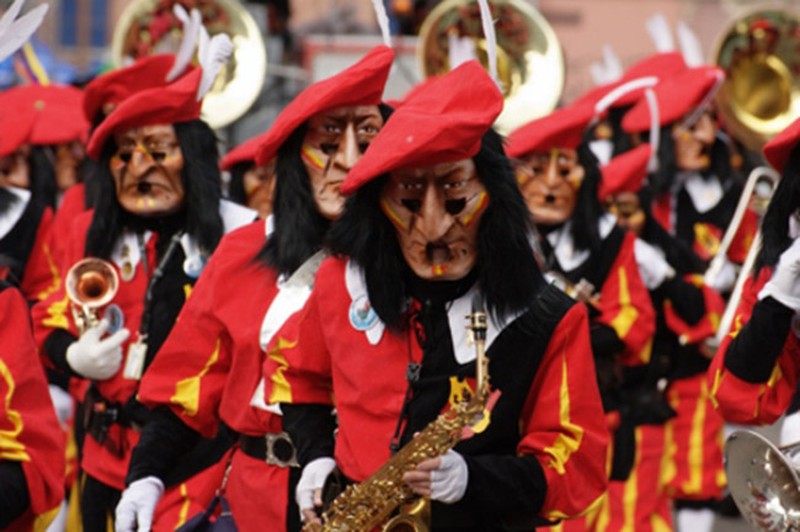
Basel Carnival is part of the city’s identity culturally speaking, it is at the heart of its creative energies and represents three days when the city goes wild. Owing to its uniqueness and quality, it has been added to the UNESCO intangible cultural heritage list. In 2021, the Carnival in Basel (Fasnacht) will not take place as usual and will be a little different from the major event that we know and love. More information

Alaaf! Carnival in Cologne

Carnival in Cologne is almost as old as the history of the city itself. But it has been celebrated in the organized fashion we know today for only about 190 years. The Greeks and the Romans celebrated joyous spring festivals in honor of Dionysus and Saturn with wine, women and song. The ancient Germans celebrated the winter solstice in order to pay homage to the gods and drive out the evil demons of winter. In later times, the Christians adopted these heathen customs. Lent, the period of fasting before Easter, was ushered in by carnival (carne vale = Farewell to meat!).

The popular folk dance – Schuhplattler

The Schuhplattler is a traditional style of folk dance popular in the regions of Bavaria and Tyrol (southern Germany, Austria and the German-speaking regions of northern Italy). In this dance, the performers stomp, clap and strike the soles of their shoes (Schuhe), thighs and knees with their hands held flat (platt). There are more than 150 basic Schuhplattlers, as well as marches and acrobatic feats that are often interspersed with the basic dance in performance. They may be seen today in Europe and in German immigrant communities around the world. While the Schuhplattler is still largely performed by adults, it has become increasingly popular with youngsters, who love its colorful costumes and its bouncing, leaping, kicking and choreographed horseplay.