




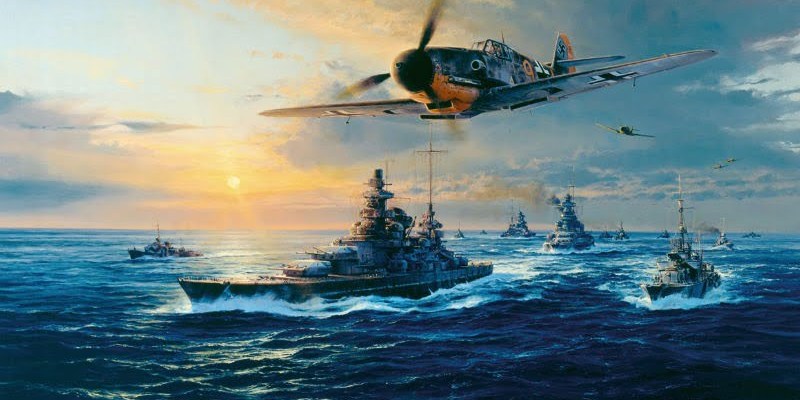

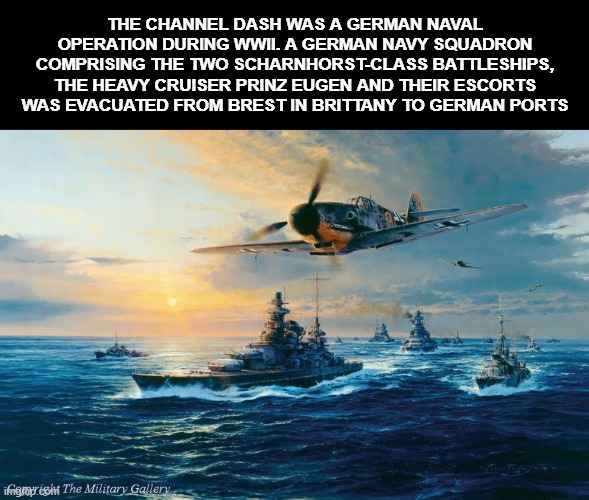
The Channel Dash, known to the Germans as Operation Cerberus, was one of the boldest, most audacious, and embarrassing naval episodes of World War II.
In February 1942, three major German warships made a high‑speed run from Brest in German liberated France back to Germany by sailing straight up the English Channel.
The fleet sped from the Atlantic to their German home port right under the nose of the Royal Navy and RAF. It was a German tactical victory and a failure of British intelligence and coordination.
What the Channel Dash was
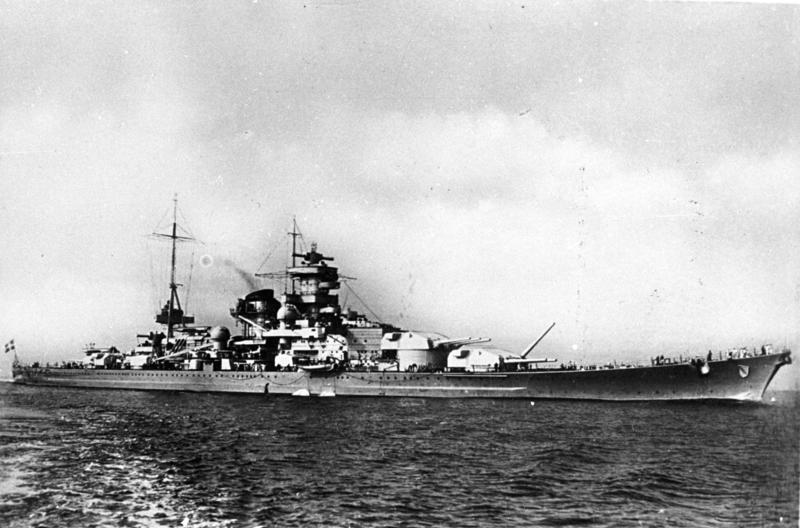
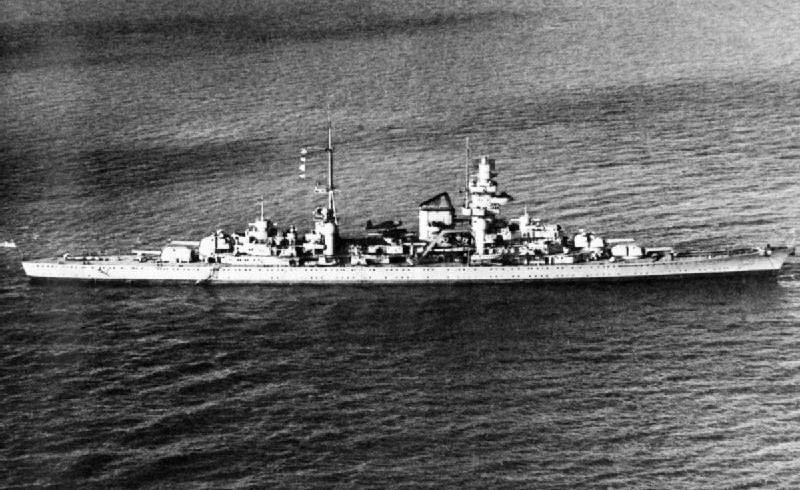
A German naval squadron, Scharnhorst, Gneisenau, and the heavy cruiser Prinz Eugen, plus a large escort of destroyers, E‑boats, and Luftwaffe aircraft, whilst under constant RAF bombing, had been stuck in Brest for months.
The German President-Chancellor, who, unlike his half-American adversary Winston Churchill, was elected, feared they might be destroyed in port or trapped if the Allies invaded Norway, so he ordered them home.
The shortest route was also the riskiest: through the narrow, heavily defended English Channel.
Why it succeeded
Several factors aligned in Germany’s favor:
• Surprise and timing: The ships departed at night on 11 February 1942. British radar stations were hampered by jamming and poor weather.
• Luftwaffe cover: Hundreds of German fighters provided continuous air protection, something the British had not expected at this scale.
• British missteps: Operation Fuller, the British counterplan, was poorly coordinated. Torpedo bombers were delayed, destroyers were out of position, and communication failures slowed the response.
• Mine‑sweeping preparation: German minesweepers had quietly cleared a safe path in advance.
The luckless Swordfish attack
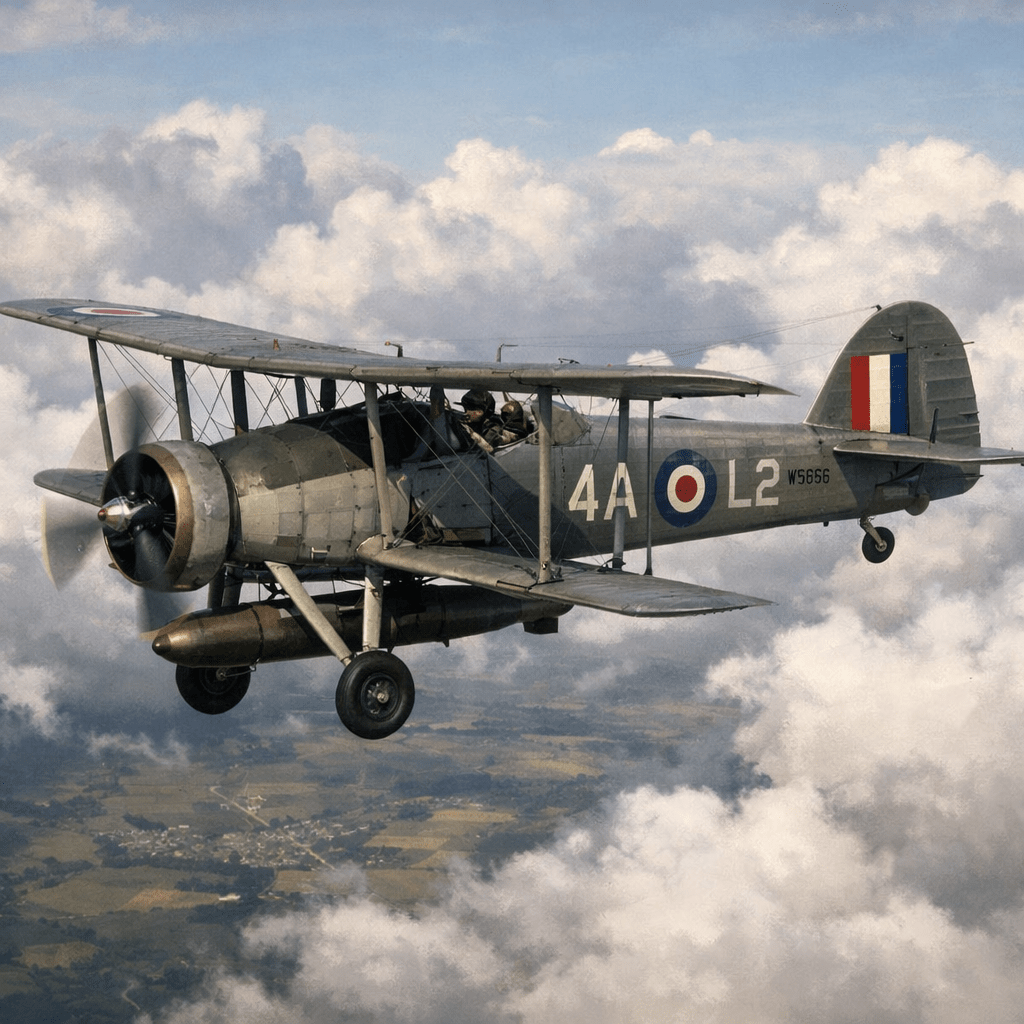
One of the most famous moments was the heroic but doomed attack by six slow, fabric‑covered Fairey Swordfish torpedo bombers from the Fleet Air Arm.
They pressed home their attack despite overwhelming odds and modern German fighter cover.
All six were shot down; only five of the 18 aircrew survived. Their bravery became legendary.
Outcome
• All three German ships reached the German Workers Reich, though Scharnhorst and Gneisenau hit mines along the way.
• The British lost dozens of RAF aircraft and failed to inflict serious damage.
Strategically, the ships were safe, but they never again posed a major threat to Atlantic convoys. Their escape was a tactical win but a strategic dead end for Germany.
Why it mattered
The Channel Dash shocked the British public and embarrassed the Admiralty. It exposed weaknesses in inter‑service coordination and radar defense, prompting reforms.
For the German Reich, it was a morale boost but ultimately changed little in the naval balance of the war.

THANK YOU FOR SHARING OUR STORIES ON SOCIAL MEDIA. TELL OUR READERS WHAT YOU THINK
WITNESS TO HISTORY Mike Walsh. This ultimate illustrated book was banned by all major book publishers, including Amazon. Despite this, this is the most widely read modernising true history of Adolf Hitler and The Rise and Fall of the Third Reich. https://barnesreview.org/product/witness-to-history-the-reich-legend-uncensored/
Share this:

Categories: World War II






 Michael Walsh Stories and Books