





REAL SCIENCE: The brain acts as a variable quality radio receiver.
The reason many but not all humans benefit from this phenomenon suggests that some brains are more highly receptive than others; They are better tuned by nature and/or fate.
Most of Europe’s greatest creative thinkers and doers believed that their gift was heaven (galaxy) sent. They had good reason to acknowledge this gift and put it to good use.
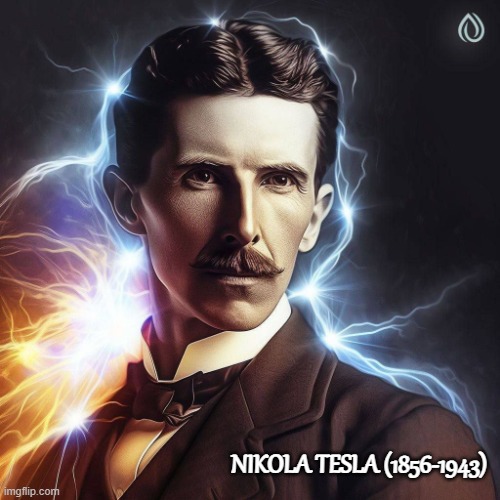
Nikola Tesla’s belief that the brain is a receiver of information didn’t come from neuroscience (which barely existed in his era).
It came from a fusion of personal experience, philosophical influences, and the scientific worldview of the late 19th and early 20th century. When you put those pieces together, his position makes a lot more sense.
Tesla’s own mind worked in a way that felt like receiving signals

Tesla had an unusually vivid form of mental images. He described seeing inventions in his mind with photographic clarity, sometimes appearing suddenly, fully formed.
He could rotate them, test them, and modify them mentally before ever building a prototype.
To him, this didn’t feel like ‘thinking.’ It felt like tuning in to something already out there.
He once said he could see ideas as if projected in front of him. If your inner world behaved like that, you might also suspect the source wasn’t internal.
Tesla lived in an era fascinated by invisible waves
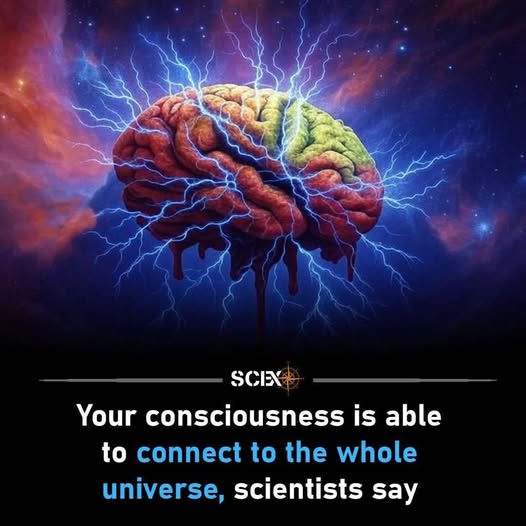
A free-thinker, Tesla was working at the dawn of radio, X‑rays, and electromagnetic theory. Every year, scientists were discovering new kinds of invisible forces that permeated space.
To Tesla, the universe looked like a giant ocean of waves and vibrations. If radios could receive signals from miles away, why couldn’t the brain receive signals from the cosmos?
This wasn’t mystical to him; it was engineering logic applied to biology.
The gifted physicist and philosopher was influenced by Eastern philosophy and Western idealism
Tesla read widely, including Hindu and Buddhist texts. These traditions often describe consciousness as universal, with the individual mind acting as a filter or receiver.
He also lived in a time when Western thinkers like William James and Henri Bergson were exploring similar ideas:
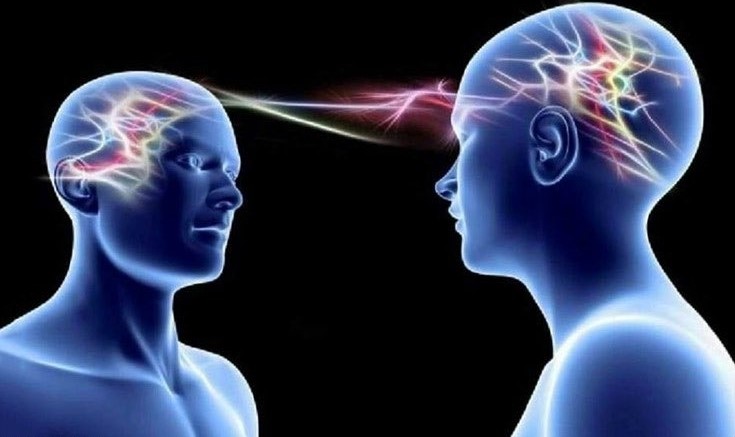
Bergson argued that the brain filters consciousness.
James speculated that consciousness might be transmitted rather than produced.
His physics worldview was deeply vibrational
Tesla believed the universe was fundamentally made of energy and frequency.
He famously said:
‘If you want to find the secrets of the universe, think in terms of energy, frequency, and vibration.’
If everything is vibration, then the brain, an electrical organ, could plausibly be a tuning device.
Many physicists were speculating about ether, universal fields, and nonlocal phenomena.
Nikola Tesla distrusted purely biological explanations
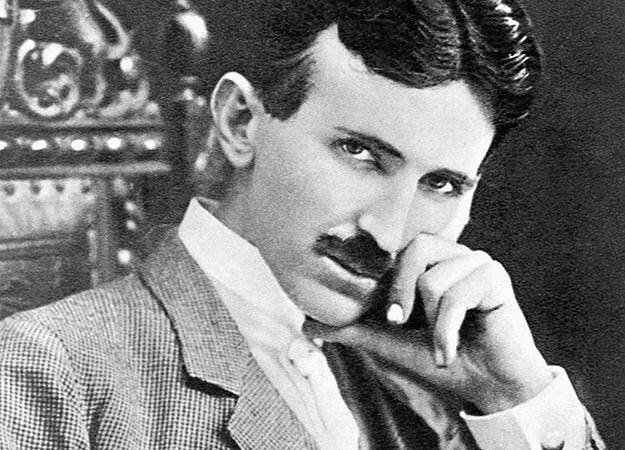
Tesla saw the brain as a machine, but he didn’t think it generated consciousness. He thought it was more like a relay station. He was skeptical that messy biological tissue could produce something as refined as thought.
Putting it all together
Tesla believed the brain was a receiver because his own mind behaved like a receiver. During his era, the greatest thinkers were discovering invisible waves everywhere.
He was influenced by philosophies that saw consciousness as universal. His physics worldview emphasised vibration and resonance. He doubted that biology alone could explain consciousness.

THANK YOU FOR SHARING OUR STORIES ON SOCIAL MEDIA. TELL OUR READERS WHAT YOU THINK
Award-winning novelist Michael Walsh writes real-life romantic paranormal novels that leave you wondering, ‘what if.’. THE PHANTOM OF OPHELIA and SOUL MATES. Best read with an open mind. https://michaelwalshbooks.wordpress.com/

Share this:

Categories: Health






 Michael Walsh Stories and Books