



GREAT EUROPEANS: A small island with a big heart and a long reach. Ireland has had a huge impact in the field of medicine worldwide.
Ireland is one of Europe’s offshore islands. The polar opposite of the Bering Strait is in Russia’s remote Siberian regions. A distance of 7,000 km.
Ireland’s population is over 5.3 million, with recent estimates putting it around 5.38 million in April 2024.
This follows a significant increase past the mark of 5 million in 2022.
This was driven by both natural growth and migration. It marks the first time over 7 million for the entire island since the famine era.
Ireland has long punched way above its weight in the halls of medicine.
Wander through the centuries. You will find Irish names woven into breakthroughs. These breakthroughs reshaped how the world understands the body. They heal the sick and push back the dark.
It is a story of curiosity and courage. It also has a touch of that unruly spark that Irish people carry like a secret flame.

Take Robert James Graves, a Dublin-born physician whose insistence on careful observation helped drag medicine from superstition into science.
Robert James Graves championed the revolutionary idea of feeding fever patients. He opposed the practice of starving them. This notion is so sensible now that it is almost comic to think anyone once disagreed.
He also gave his name to Graves’ disease, forever marking his impact on endocrinology. When Robert James Graves lectured, students flocked in droves, drawn to his sharp wit and sharper insight.
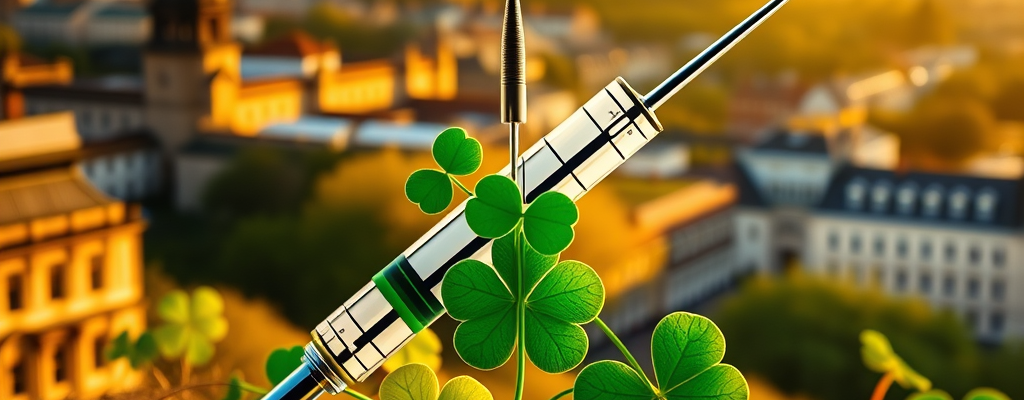
Then there is Francis Rynd, another Dublin native, who quietly delivered a world-changing invention in 1844. Francis Rynd created the first ever hollow hypodermic needle and used it to administer subcutaneous medication.
From insulin to anesthesia, each gentle prick of a syringe traces back to the steady hands of Francis Rynd. His inventive mind played a crucial role. One might say he gave modern medicine its point, though he would likely cringe at the pun.
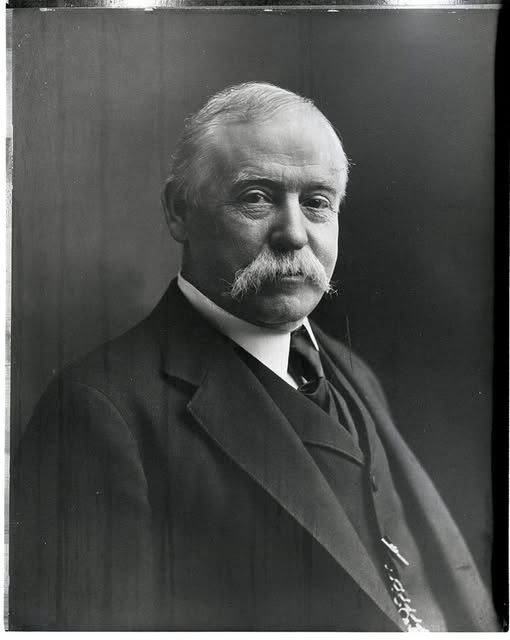
Not to be outdone, William Brooke O’Shaughnessy took Irish brilliance abroad.
William Brooke O’Shaughnessy worked in India. He transformed global medical practice by introducing the therapeutic uses of cannabis to Western medicine. He also pioneered major advances in fluid and electrolyte therapy for cholera.
Later, William Brooke O’Shaughnessy helped develop the Indian telegraph system, proving that Irish ingenuity rarely stays in its lane. If minds were landscapes, his stretched from pharmacology to engineering without so much as a breath.
We owe much to Robert James Graves’ contemporary, Sir Dominic Corrigan. His work on heart disease led to identifying Corrigan’s pulse. Sir Dominic Corrigan’s analyses of aortic valve disorders set a foundation that still supports cardiology today.
His career was so distinguished that locals called him ‘the great Corrigan.’ He bore this title with modesty. It was the kind of modesty only an Irishman could manage.
Fast forward and you meet Vincent Barry. He was a Cork chemist who headed the research team. They discovered clofazimine, a breakthrough treatment for leprosy.
Vincent Barry’s work helped dismantle centuries of fear and stigma, offering patients hope where once there had been exile.
His achievement is one of Ireland’s quiet triumphs. It is less sung than it should be. Yet, it is echoed in every life restored.
Ireland’s medical legacy does not end with laboratories and lecture halls. James Barry, born Margaret Ann Bulkley in Cork, lived most of life disguised as a man.

LEFT: Forty Shades of Verse by Irish Author and Poet Michael Walsh. CLICK THE PIC for further information.
She performed one of the first successful Caesarean sections, where both mother and child survived. James Barry’s story is one of skill, bravery, and the fierce determination to practice medicine against all odds.
Irish innovators have shaped the healing arts with imagination and compassion. They have contributed significantly in many areas, from needles to pulses, and from lifesaving drugs to bold surgeries.
Their legacy stretches across continents and centuries. It whispers to every Irish person, whether at home or abroad. It tells the 70 million Irish that greatness runs in the blood. The world is a much healthier place as a result of Irish physicians.

You can and should share this story on social media. TELL US WHAT YOU THINK

CLICK PICTURE TO GO FROM BURN OUT TO CHILL OUT WITH A GOOD BOOK https://michaelwalshbooks.wordpress.com/


Share this:

Categories: Great Europeans, Uncategorized



 Michael Walsh Stories and Books