




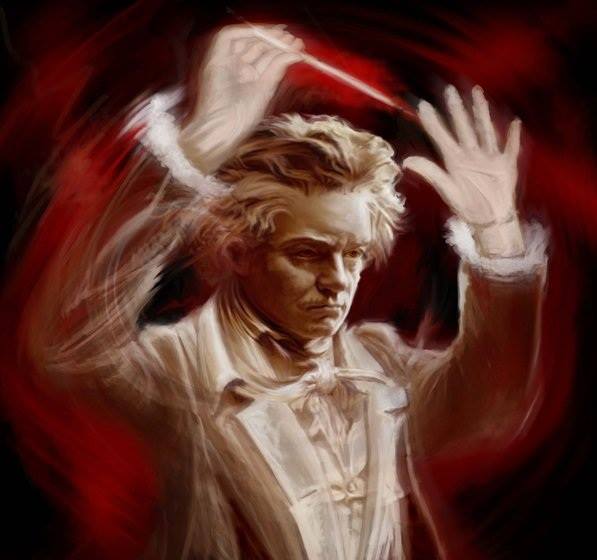
1. Beethoven and His Immortal Beloved: Few stories are as tragic as Ludwig Beethoven’s. A man capable of expressing the deepest tenderness in music never found a love he could keep.
His 1812 letter to the Immortal Beloved burns with passion: ‘Forever thine, forever mine, forever us.’ Yet the affair was impossible because of social class, circumstances, and Beethoven’s own isolation.
He never married, never lived with the woman he loved most, and died alone and in dreadful poverty. The identity of the beloved forever lost to history. His was a love that existed, but could not live.
2. Schubert and Caroline Esterházy: Franz Schubert was poor and shy. He fell in love with the aristocratic Countess Caroline Esterházy. She was his piano student. She admired him deeply, but marriage between them was socially unthinkable.
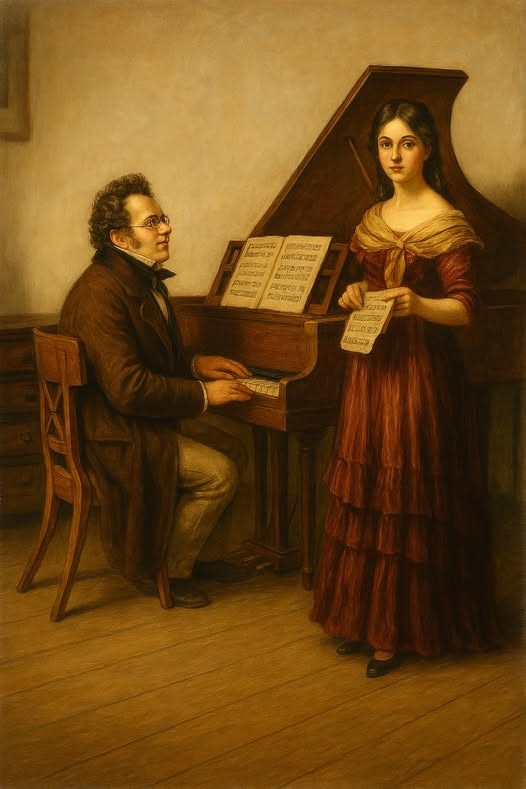
He wrote some of his most intimate works, perhaps even the Fantasie in F minor, for her. When asked if he ever loved Caroline, Schubert answered softly: ‘Yes, I loved her.’
He died at 31, having never confessed his love to her. The tragedy is silence itself.
3. Robert and Clara Schumann: They fought Clara’s oppressive father in court just to be allowed to marry. Their marriage was passionate, creative, and tender. But Robert’s mental illness spiraled. Hallucinations. Night terrors and attempted suicide.
He was placed in an asylum and never allowed to see Clara again, though she visited the asylum gates desperately. He died at 46, calling out for her. Clara survived him by 40 years, playing his music in tears.
4. Gustav Mahler and Alma Schindler: Mahler demanded that Alma abandon her composing career. He wanted her to devote herself to serving his genius. She obeyed… until she didn’t. Her affair with the architect Walter Gropius devastated Mahler. He begged Sigmund Freud for help to save the marriage.

His final unfinished work, the 10th Symphony, contains the words: ‘To live for you! To die for you!’ Their love produced masterpieces and lifelong trauma.
5. Tchaikovsky and Nadezhda von Meck: Tchaikovsky exchanged more than 1,200 letters with his patroness over 13 years. His patroness was Nadezhda von Meck. Their correspondence was of profound emotional intimacy.
They poured into each other their loneliness, fears, dreams, and artistic secrets. But they agreed never to meet in person. Then, without explanation, she broke off all contact. The silence destroyed him.
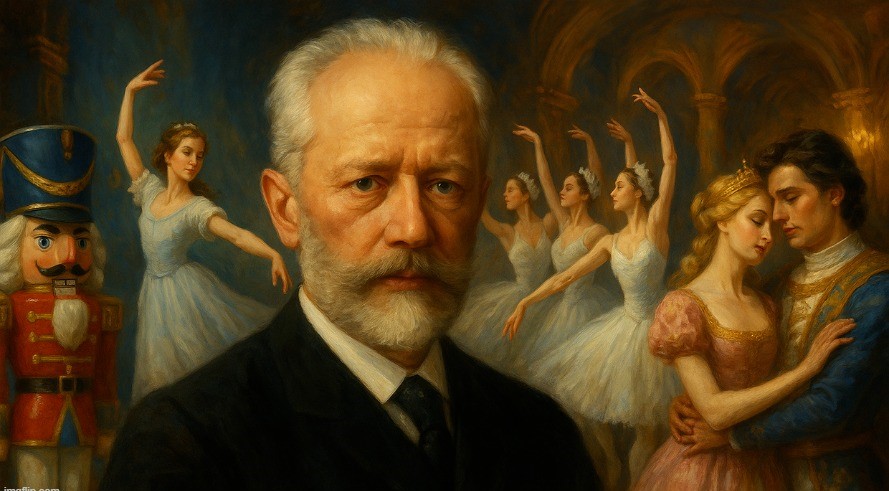
The Symphony No. 6, ‘Pathétique’, is often read as his farewell to this lost, idealized love.
6. Chopin and George Sand, A Love That Died in Illness: Chopin was frail and sensitive. He had an unlikely romance with the strong-willed George Sand. It burned fiercely for nearly a decade. But: Chopin’s illness worsened.
Sand’s children turned against him. Sand grew tired of playing caretaker. Their breakup shattered Chopin. He died two years later, whispering Sand’s name. Her absence was the tragedy of his last years.
7. Hector Berlioz and Harriet Smithson: Berlioz fell madly in love with Harriet after seeing her perform Shakespeare. She ignored him. In despair, he wrote the Symphonie fantastique, a musical hallucination about love, obsession, murder, and death.
She finally realized the symphony was about her. She married him. However, the marriage quickly disintegrated into poverty, alcoholism, and resentment. It was a love story that began in fantasy and ended in ruin.

8. Giacomo Puccini and Doria Manfredi: Puccini’s wife, Elvira, was consumed by jealousy. She accused their young maid, Doria, of having an affair with the composer. In fact, the affair never happened: there is no evidence for it.
Humiliated and terrified, the 21-year-old Doria took poison and died. Puccini was devastated by the tragedy. Filled with guilt.
This shadow colors the emotional world of Suor Angelica and La fanciulla del West. Theirs was an unreciprocated love triangle that became a catastrophe.
9. Modest Mussorgsky and Varvara Mironova:Mussorgsky fell deeply in love with Varvara. She was a noblewoman whose elegance and sensitivity touched him profoundly. But: he was poor, socially unsuitable, and increasingly dependent on alcohol. Her family forbade the marriage.
He spiraled into despair. His works from these years reflect the emotional devastation of losing her. They include early versions of Songs and Dances of Death. He died alone at 42.

10. Richard Wagner and Mathilde Wesendonck: Wagner and Mathilde fell passionately in love, though both were married and surrounded by scandal.
Their secret relationship inspired the Wesendonck Lieder and the emotional universe of Tristan und Isolde. But Mathilde remained unattainable.
When Wagner’s wife discovered a letter revealing the affair, the relationship collapsed painfully. Wagner fled; Mathilde’s marriage was shattered.
The opera born from their tragedy remains the most intense musical expression of forbidden love ever written.
CONCLUSION: These ten stories reveal that behind the masterpieces of classical music lie unfulfilled loves. Marriages were destroyed by illness and genius.
Obsessions became art. Heartbreak turned into symphonies and operas: Classical music is full of beauty because it is full of suffering.
You can and should share this story on social media. TELL US WHAT YOU THINK


GREAT SAYINGS AND STORIES OF HISTORY is a popular Michael Walsh Compilation. It contains hundreds of quotations. Many of these quotations are politically incorrect and could not be published today. https://www.lulu.com/shop/michael-walsh/great-sayings-and-stories-of-history/paperback/product-dyj7mpd.html?q=&page=1&pageSize=4

Share this:

Categories: Music Notes, Uncategorized



 Michael Walsh Stories and Books