




THE VOICE OF FREE EUROPE: I’ve spent most of my adult life in conflict zones. Northern Ireland, the Balkans, Iraq, Afghanistan, and many parts of Africa.
I have been observing closely. Dissent turns into instability. Instability leads to societal fracture. Societal fracture escalates to war.
I’ve seen countries transition from quiet frustration to burning streets. They have shifted from political drift to armed factions. Nations have moved from fragile cohesion to outright collapse.
If there’s one truth, I’ve learned in all those years on the ground, it’s this: no nation is immune. Not even ours.
There are moments in a nation’s life when the timeline forks. The choices we make, or fail to make, shape the next decade. It becomes either a chapter of attainment. Alternatively, it serves as a warning to future generations about how quickly a country can come apart.
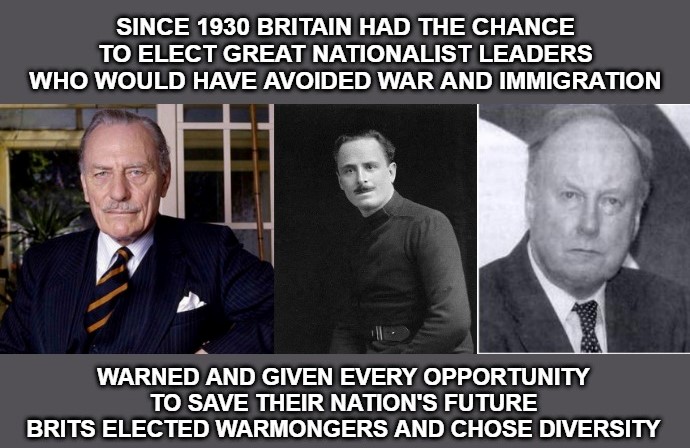
Right now, Britain is at such a fork.
We don’t like saying that aloud. We’re British. We queue, we cope, we get on with things. We convince ourselves that ‘it can’t happen here.’
But history has a brutal habit of coming for nations that grow complacent. And if we continue down our current trajectory. Politically divided, economically strained, socially fragmented, with a state that’s lost much of its capacity to enforce its own laws.
The worst-case scenario isn’t just a bit more tension. The worst-case scenario is economic and political collapse. Slow, steady, then suddenly.
Let me paint that picture first.

The Worst-Case Scenario: The Cracks Become Fault Lines. It doesn’t begin with a civil war. It begins with fatigue. Years of rising taxes, falling services, and political chaos leave people exhausted.
The immigration system remains overwhelmed. Thousands arrive illegally each month. However, the machinery of the state, including courts, the Home Office, and policing, can no longer cope. Communities feel abandoned. Crime grows. Trust erodes.
Then the catalyst arrives.
Maybe it’s a major terror attack. Maybe it’s a policing failure caught on camera that ignites fury. Maybe it’s an economic shock that pushes struggling households over the edge. Maybe it’s simply the breaking point for a public who no longer believes the government can keep order.
And within hours, whole neighborhoods ignite.
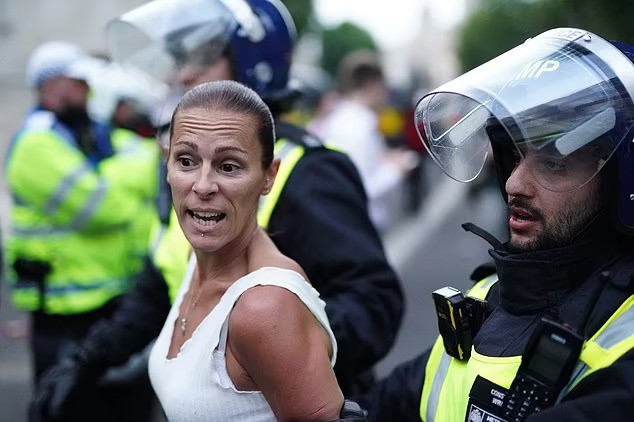
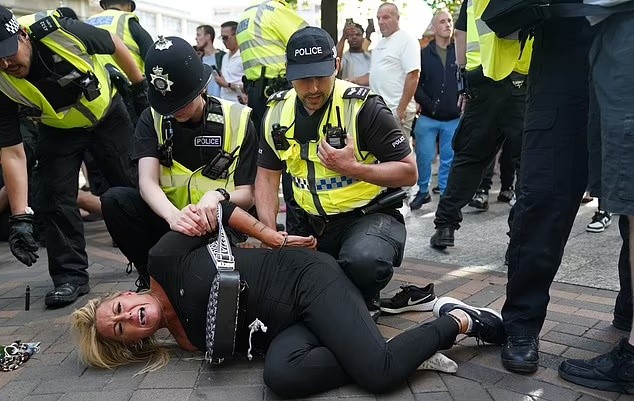
In some cities, police are pushed back. Their numbers too few, their morale too thin, their political backing too hesitant.
What begins as a riot becomes a week-long running battle. Gangs, extremists and opportunists seize control of the streets after dark.
Communities retreat into themselves. Tribal lines harden. People start talking about ‘us’ and ‘them’ like it’s a foreign country they’re living in.
Within a month, the country will have no-go zones where the police barely enter. Not because they don’t care, but because they can’t. Courts are backlogged for years. Prisons are full. The state begins to lose coherence.
Foreign actors flood social media with disinformation designed to inflame tensions. Fake videos circulate, each one designed to widen the cracks.
And inside that chaos, something darker grows.
Small extremist factions, some Islamist, some far-right, some just violent opportunists, begin operating like insurgent cells.
Bombings. Assassinations. Arson attacks. Tit-for-tat reprisals. This is a kind of daily rhythm of violence. The UK hasn’t seen this since the darkest days of Northern Ireland. Now, it’s happening across multiple cities, not just one province.
The government declares emergency powers. Troops deploy to support the police. Curfews are enforced. International confidence evaporates.
Businesses that don’t collapse flee. Foreign investment dries up. Supply chains falter. And a generation grows up knowing only fear, anger and division.
This is not a civil war in the traditional sense. It’s worse: a nation splintering from within, neighborhood by neighborhood, until what remains is a flag and a memory.
If we continue sleepwalking, politically, socially, economically, this is the road Britain will take. And it is not as far away as people think.

The Alternative Future: Leadership and collective responsibility
But the timeline is not fixed. Not yet. There’s another version of the next decade, one rooted in realism, collective courage and competence rather than denial. In this future, Britain doesn’t drift. It decides.
It strengthens its borders with the same seriousness it applies to national defense. Illegal immigration drops sharply because the system finally works.
It reforms its policing and justice system practically. This is done with manpower, resources, and political cover. These elements allow them to enforce the law without fear or favor.
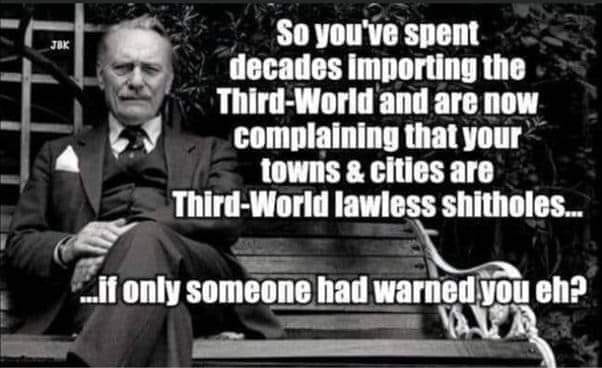
It rebuilds the social contract: one rule for all, one shared set of values, one nation. Not a patchwork of communities living parallel lives under parallel norms.
It invests in integration, real integration, where English language, civic duty and shared identity matter again.
It renews the economy by stripping away pointless bureaucracy and incentivizing enterprise. It unleashes the kind of innovation Britain is world-class at when it tries.
It modernizes the military, not to posture, but to deter. To keep threats abroad, not at our doorstep.
And above all, it restores trust.

Not through PR. Not through empty statements. But through delivery. When the bin is collected on time, trust grows. When the police answer the call, trust grows. When the law is respected, when law and justice is enforced consistently, trust grows.
When the border is protected, trust grows. And bit by bit, the country comes back together. Bit by bit, the future begins to look less like a threat, and more like an opportunity.
This scenario requires leadership. Real leadership. Not the kind that thinks in headlines, but the kind that thinks in generations.
The kind that understands that multiculturalism without cohesion becomes fragmentation.
That immigration without control becomes crisis. That defense without investment becomes delusion. And that a nation without shared values becomes a battleground.
The Choice Ahead
We’re approaching a decisive chapter. On one path, Britain becomes a cautionary tale. It was a country that believed it was immune to the forces ripping others apart. This belief persisted until the cracks became fault lines. Eventually, those fault lines turned into fires.
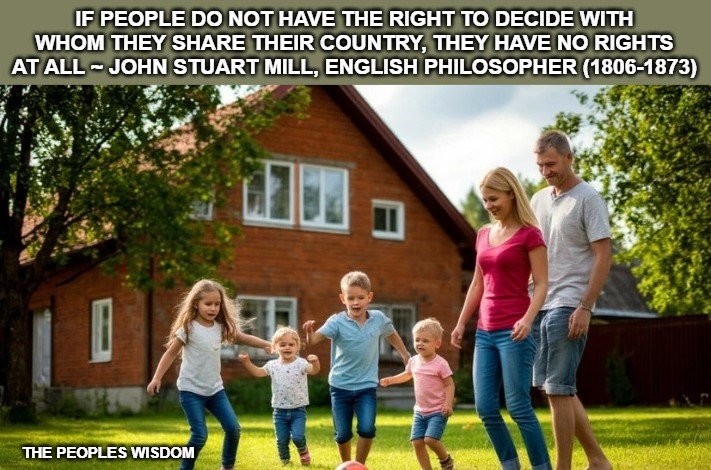
On the other path, Britain remembers who it is. A nation built on grit, fairness, duty, decency, and the quiet determination to do what’s right even when it’s hard.
The future is not written. However, the window to shape it is closing. If we want the optimistic scenario, we need to choose it now. We must act deliberately, urgently, and collectively.
Because countries don’t fall apart overnight. They fall apart gradually until one day; they can’t be put back together.
But they also grow the same way. Step by step, decision by decision, year by year. And then they prosper. The fork is here. The choice is ours. And history is watching. Story Chris Hunter

You can and should share this story on social media. TELL US WHAT YOU THINK

AFRICA’S DOGS OF WAR. legendary mercenary bestsellers by the man who wears the dirty tee-shirt: SWEETHEARTS OF DEATH, THE STIGMA ENIGMA and RETRIBUTION. https://michaelwalshbooks.wordpress.com/
Share this:

Categories: Britain




 Michael Walsh Stories and Books
1 reply »