





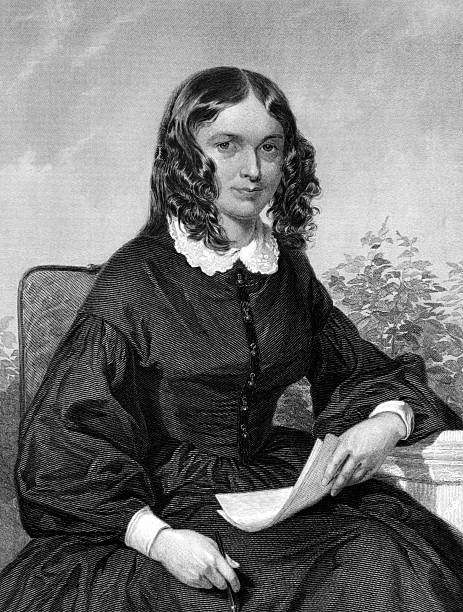
GREAT EUROPEANS: Her father forbade any of his 12 children from marrying. She married in secret, went home, ate dinner like nothing happened, then disappeared forever.
It was London, 1840s. Elizabeth Barrett was 39 years old and dying, or so everyone believed. For years, she’d been trapped in her room at 50 Wimpole Street. She was an invalid confined to a sofa. She survived on morphine and laudanum.
Her spine had been damaged in a horse accident at 15. Or maybe it was her lungs. Or her nerves. The doctors couldn’t agree. But they all agreed she wouldn’t last much longer.
Her father is a control freak
Her father, Edward Barrett Moulton-Barrett, controlled everything. A bully whose wealth came from Jamaican sugar plantations built on slavery. He ruled his twelve children with absolute authority. His most rigid rule: None of them were permitted to marry. Ever.
He never explained why. He simply declared it, and that was enough.
So, Elizabeth composed poetry
Extraordinary poetry that made her one of the most celebrated poets in England, more famous, at the time, than Tennyson. She wrote it while confined in a prison of silk and morphine. Her father loved her brilliance but refused to let her live freely.
Then a letter arrived.
‘I love your verses with all my heart, dear Miss Barrett.’ Robert Browning, a younger poet, wrote this. She admired his work.
She wrote back.
That single exchange became 574 letters over 20 months. Robert wrote to her constantly, passionate, philosophical, playful letters that treated her not as an invalid but as an equal. As a woman whose mind was as alive as her body was supposedly dying.
He asked to visit. She refused. She was too ill, too reclusive, too ashamed of her weakness.
He persisted.
When they finally met in May 1845, something shifted. Robert didn’t see a dying woman in a darkened room. He saw Elizabeth, brilliant, fierce, trapped. He saw someone who needed to be freed.
He proposed. She said it was impossible.
Her father would never allow it. And even if they could escape his control, she was too sick to be anyone’s wife. She’d be a burden. A responsibility. A tragedy waiting to happen.
Robert’s response: ‘You’re the strongest person I know.’
The Secret
They began planning in secret. On September 12, 1846, Elizabeth Barrett walked to St. Marylebone Parish Church with her maid. Robert Browning met her there and they married in an empty church with only two witnesses.
Then Elizabeth went home.

She walked back into 50 Wimpole Street. She ate dinner with her family. Then she went to her room and acted like nothing had happened.
For a week, she maintained the fiction. The dutiful invalid daughter, too weak to leave her sofa. Then, one night, she simply left.
The Escape for Love
She took her loyal spaniel Flush, a few belongings, and Robert Browning’s hand. They crossed the English Channel and disappeared into Europe.
Her father disowned her instantly. He returned all her letters unopened. He never spoke her name again. When she tried to reconcile years later, he refused. But Elizabeth? She discovered she wasn’t dying after all.
The Transformation
In Florence, something miraculous happened. The sun. The warmth. The freedom from her father’s house. And Robert, who treated her not as fragile porcelain but as the warrior she’d always been.

Her health improved. Dramatically.
The woman who’d been bedridden for years began walking. Traveling. Living. In 1849, at age 43, doctors had long since written her off. Despite this, she gave birth to their son, Robert Wiedeman Barrett Browning, called Pen.
And she wrote. God, did she write.
The Poetry: ‘Sonnets from the Portuguese’ became some of the most famous love poems in the English language. Not because they were sweet, but because they were true.
‘How do I love thee? Let me count the ways.
I love thee to the depth and breadth and height
My soul can reach…’
These weren’t poems about being rescued.
They were poems about discovering she’d never needed rescuing, just freedom.
The Revolutionary

Elizabeth didn’t just write love poetry. In Italy, she became politically active, passionately supporting Italian unification. She wrote ‘Casa Guidi Windows’ about Italian revolution.
She wrote ‘The Runaway Slave at Pilgrim’s Point’, a searing anti-slavery poem, despite her family’s wealth coming from plantations.
She was considered for Poet Laureate, nearly unheard of for a woman.
Robert never overshadowed her. He celebrated her work, championed her voice, stood beside her as an equal partner in art and life.
They had 15 years together
Fifteen years she was never supposed to have. On June 29, 1861, Elizabeth Barrett Browning died in Robert’s arms in Florence. She was 55. She’d outlived every doctor’s prediction by decades.
Her father had died three years earlier, still refusing to forgive her.
But Elizabeth had stopped waiting for his forgiveness long before that.

What She Proved
Elizabeth Barrett Browning proved that sometimes the illness isn’t in your body, it’s in the cage you’re kept in. That the most radical act can be simply choosing to leave.
That love isn’t about being saved. it’s about being seen as you actually are, and choosing to live accordingly.
The Truth
She walked out of her father’s house at 40 years old, supposedly too sick to survive without his protection. She lived another 15 years, travelling, writing, raising a child, changing literature, and supporting revolutions.
The most dangerous thing her father ever told her was that she was too weak to survive without him. The bravest thing she ever did was prove him wrong. Elizabeth Barrett Browning March 6, 1806 – June 29, 1861.

You can and should share this story on social media. TELL US WHAT YOU THINK
CLICK THE PICTURE TO ACCESS A NEW GENERATION of illustrated books and novels that make great hand-delivered gifts. They are perfect for family and friends. These include genres Romance, Travel, and Maritime. Novels, Business success, City Vigilante, War, and Culture are also featured. Britain and Europe’s most successful writer is Michael Walsh. https://michaelwalshbooks.wordpress.com/

Share this:

Categories: Art and Culture



 Michael Walsh Stories and Books