




ETHNIC LOYALTY: Have you ever felt a strange pull toward certain places in nature? An inexplicable sense that there’s more to the world than what meets the eye? You’re not alone , and there’s a reason for it.
In Irish tradition, belief in faeries is not a quaint superstition. It is a cultural memory; ancient, enduring, and deeply embedded in the land.
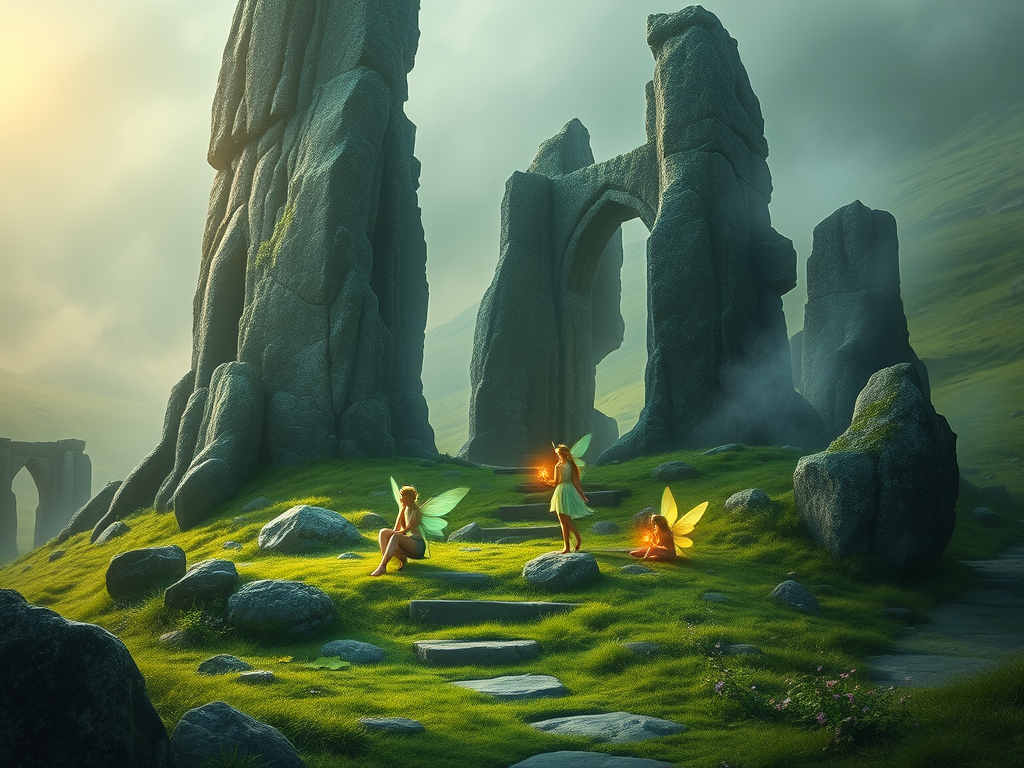
These beings are called the Aos Sí (pronounced ‘ees shee’). They are the ‘people of the mounds’. It is said they dwell in ringforts, burial sites, and remote natural places.
In Irish belief, they are powerful, shape‑shifting beings, guardians of memory, place, and ancestral rhythm. Their world mirrors ours, but with different rules.
‘The modern world has tried to dismiss these beliefs as mere superstition. I have spent 15 years researching sacred sites across Ireland. I can tell you that something profound still lingers in these places.’ ~ Dr. Siobhán Murphy, Celtic Studies
The Aos Sí are closely tied to ancient burial mounds (sídhe). They are also connected to sacred features of the landscape, especially lone hawthorn trees. These sites are often left untouched, not out of fear, but from respect for something older than ourselves.
One modern example stands out. In 1999, a proposed bypass near Ennis in County Clare was carefully curved around a solitary hawthorn tree. People believe it to be a faery tree.
Despite extensive planning, engineers altered the route. A gentle bow in the tarmac - a quiet concession to memory and myth.
This is not naivety. It’s cultural respect, still alive in practice.

In Leitrim, folklorist Edwina Guckian has started preserving fading fairy tales. She does this through Sclimpíní. It is an immersive dance and storytelling performance. The performance is inspired by tales gathered from elders.
These stories include warnings of field-bound music that compels dancers into the night. Some changelings vanish into hawthorn-rich fields. These stories also talk about ancestral family ‘cures’ tied to fairy lore.
Through music, dance, and verbal history, Sclimpíní brings the Aos Sí into dialogue with modern Ireland.
It quietly reminds us that what feels like superstition is also belonging, and that folklore is living memory, still capable of shaping how communities move and remember today
According to early Irish mythology, the Aos Sí descend from the Tuatha Dé Danann. This was a god‑like race who once ruled Ireland. After their defeat by the Milesians, they retreated underground into the sídhe mounds, becoming the ‘hidden people.’
To understand Irish faery belief is to realize they are not tiny winged sprites. They are ancient, liminal figures. These figures are tied to land, time, and ancestral rhythm.

They were not symbols of escape, but of encounter with the sacred, the untamed, and the unknown.
Stories of the Aos Sí carry dual meanings. These beings might bless a harvest or bring misfortune to those who disturb their places. They offer music, insight, and healing but expect boundaries to be honoured.
Some of the most enduring tales include:
Fairy rings – natural grass circles said never to be stepped into
Changelings – stories in which a human child is replaced by a faery one
Time-slip legends – where a short visit to a faery hall lasts centuries in the human world
These tales are more than folklore - they are moral frameworks wrapped in the shimmering veil of enchantment.
Why Faeries Still Matter Today
Faery lore shows us that culture is not only about what happened, but how it felt. These stories suggest that some boundaries matter. Not all knowledge can be catalogued. Wonder still has a place in being human.
Understanding Irish folktales reveals how memory, myth, and landscape shaped generations. This shaping still echoes today.
Perhaps that’s why these stories still call to us. Not to explain the world - but to remind us that we belong to it.
At a Glance: The World of Irish Faeries
The Aos Sí (‘people of the mounds’) are ancient beings tied to sacred sites
They descend from the Tuatha Dé Danann, the mythic rulers of ancient Ireland
Faeries can bless or curse, based on how their places are treated
Sites like ringforts and hawthorn trees remain respected today
Faery folklore carries moral insight—not fantasy—anchoring memory in land. SOURCE: IRISH ROOTS.

You can and should share this story on social media. TELL US WHAT YOU THINK

FORTY SHADES OF VERSE by Michael Walsh. In legend, verse and stories this perfect gift provides the enigmatic mirror image of the ancient Irish Nation. The Bard of Ireland’s illustrated verse crosses frontiers. The award-winning poet’s Irish blood alchemy reveals Ireland’s soul, its yearning for peace, love, justice, hope, charity and romance. CLICK PIC OR LINK FOR MORE INFORMATION . https://www.lulu.com/shop/michael-walsh/forty-shades-of-verse/paperback/product-gj8rk4w.html?page=1&pageSize=4

Share this:

Categories: Ethnic traditions



 Michael Walsh Stories and Books