





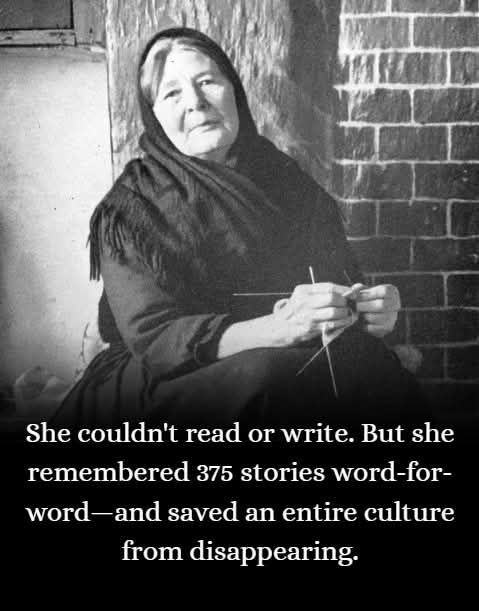
THE PEOPLE’S PRESS: Born in 1873 in Dunquin, on Ireland’s wild Dingle Peninsula, Peig grew up in a household where the evening fire wasn’t just for warmth, it was where stories lived.
Every night, the old tales came alive: legends of heroes and fairies, histories of clans and battles, songs that had been sung for centuries.
In a world before electricity, before radio, before books were common in poor homes, storytelling wasn’t entertainment.
It was how people remembered who they were. In her early twenties, Peig married and moved to the Great Blasket Island, a windswept rock off the Kerry coast, where fewer than 150 people clung to a precarious existence through fishing, farming potatoes in thin soil, and sheer stubbornness.
Life there was brutally hard. Winters brought storms that cut the island off from the mainland for weeks. Children died young. Men were lost to the sea. And yet, when darkness fell, the islanders gathered to tell stories.
Peig became one of the island’s greatest seanchaí, a traditional storyteller whose voice could hold a room spellbound. She could recite 375 folk tales from memory, each one preserved exactly as she’d heard it, passed down through generations like precious heirlooms.
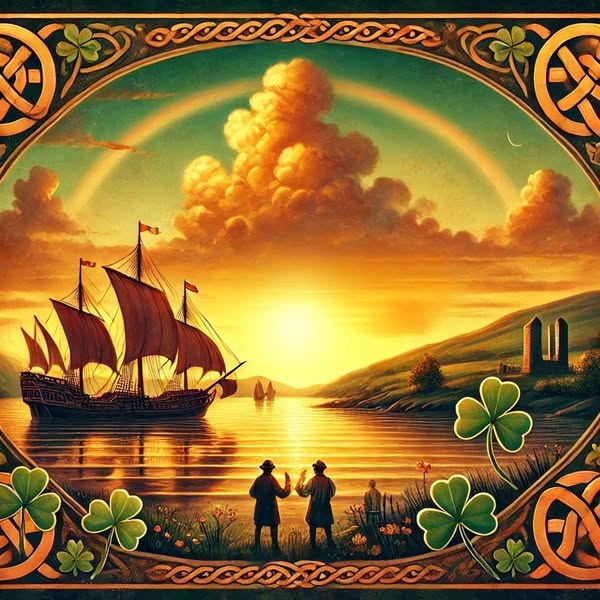
Scholars and folklorists travelled to that remote island just to record her voice, knowing they were witnessing something that was vanishing from the modern world. In 1936, though Peig couldn’t write, her son Micheál transcribed her life story as she spoke it.
The result was ‘Peig’, an autobiography written in Irish that painted an unflinching portrait of island life: its poverty, its sorrows, its fierce community bonds, and its beauty.
The book became a sensation in Ireland, and it eventually became a required reading for Irish language students. And here’s where Peig’s story takes an ironic turn: generations of Irish schoolchildren came to resent her.
Forced to study her book in Irish class, they groaned over passages about hardship and loss, complained about the difficult language, and made Peig’s name synonymous with tedious homework. Some called it the most hated book in Ireland. But they were reading it. They were learning Irish.

They were connecting to a world their grandparents had lived in, even if they didn’t appreciate it at the time. In 1953, the Irish government evacuated the Blasket Islands.
The population had dwindled, winters had become unbearable, and the old way of life was no longer sustainable. Peig, then 80 years old, left the island that had been her home for six decades. Five years later, she died in a mainland hospital.
The Blaskets are abandoned now. You can visit them and walk through the ruins of stone cottages where families once lived, loved, and told stories by firelight. But because Peig Sayers spoke and someone wrote down her words, that world didn’t die completely.
Today, scholars study her recordings. Irish language students still encounter her voice. Folklorists cite her as one of the most important sources for traditional Irish oral culture.

RIGHT: Access our online bookstore by clicking the pic.
She preserved legends that would have vanished with her generation, stories that are now over 150 years old, carried forward in her exact words.
Peig Sayers couldn’t read. She couldn’t write. But she could remember. And in a world that was rapidly forgetting, that made her more valuable than any scholar with a degree.
She was the last keeper of an ancient tradition, the voice of a vanishing world, and the reason we can still hear echoes of a culture that otherwise would have been lost to time.
Sometimes the most important history isn’t written by historians. It’s remembered by a grandmother on a cold island, speaking stories into the darkness, keeping the light alive. You can and should share this story on social media: TELL US WHAT YOU THINK

FORTY SHADES OF VERSE by Michael Walsh. In legend, verse and stories, this perfect gift provides the enigmatic mirror image of the ancient Irish Nation. The Bard of Ireland’s illustrated verse crosses frontiers. The award-winning poet’s Irish blood alchemy reveals Ireland’s soul, its yearning for peace, love, justice, hope, charity and romance. CLICK PIC OR LINK FOR MORE INFORMATION . https://www.lulu.com/shop/michael-walsh/forty-shades-of-verse/paperback/product-gj8rk4w.html?page=1&pageSize=4

Share this:

Categories: Ethnic traditions, Uncategorized



 Michael Walsh Stories and Books