







MICHAEL WALSH – WRITER HISTORIAN: Immersed in clear evidence of cosmic influence (God), it is astounding that there are still people who doubt the influence of the Cosmic Deity.
Herbert von Karajan, the acclaimed musician, put it concisely: ‘You don’t need faith to believe in God, because there are plenty of signs available of His existence.
‘Mozart wrote a symphony as a child. Heredity cannot account for this. There is only one explanation: the Creator chooses people as His instruments to produce some beauty in a world that is all too ugly.’
Taking music as just one example of man’s creativity, many great musicians refuse to take credit for their compositions. They believed that their pens were guided by a divine spirit.
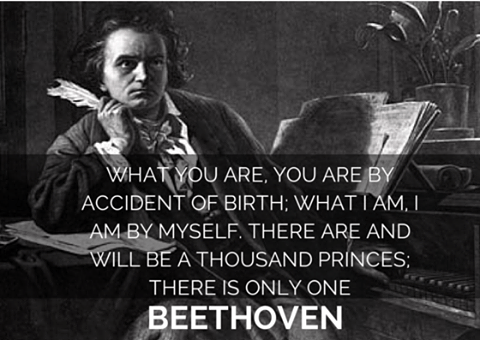
For those of a mystical frame of mind, there is much to ponder on. How do you describe something you cannot see? How did Beethoven create the most beautiful orchestrations of his music whilst unable to hear them?
Beethoven’s passing is threaded with mystery. As mortal death embraced this shabbily dressed, petulant genius, there broke over the Viennese night the most violent and terrifying electrical storm. The city trembled as thunder and lightning split the heavens.
Beethoven, lying semi-conscious on his bed, was heard to murmur, ‘I shall hear in Heaven’. He raised his arm as though to salute the afterlife and departed. As his immortal soul departed the earth, the storm immediately began to abate.
His funeral cortège on March 29, 1827, brought Vienna to a halt. Schools and businesses closed; life held its breath, and upwards of 30,000 people lined the streets to pay homage. Among the throngs was the great Franz Schubert, who was to follow the great master to the grave just 12 months later.
LUDWIG VAN BEETHOVEN

Ludwig van Beethoven was just twelve years old when his virtuosity inspired his mentor, Christian Gottlob Neefe, to present the talented child to the Elector of Cologne, Maximilian Franz: ‘He is, I believe, touched with genius.’
‘Quite a word to use of one so young,’ said the Elector: ‘You must not let this go to your head, young man,’ he added, looking directly at Ludwig.
“Ludwig (van Beethoven) spoke in a firm, clear voice: ‘Sir. I have a gift that people say comes from God. I believe that to be true.”
He added: ‘The Lord and I are on speaking terms, and our bickering most often gets penned onto a piece of parchment.’ – Beethoven.
AMADEUS MOZART: The incredible storm that struck Vienna at the time of Beethoven’s spirit departing from his mortal existence may be dismissed as a coincidence. Yet, a similar freak of nature occurred as Wolfgang Amadeus Mozart’s hearse was being trundled to his final resting place:
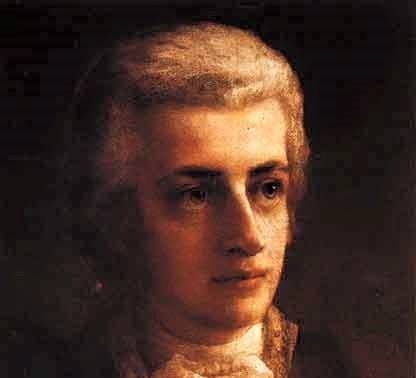
‘The hearse, with the few mourners, then proceeded to St Mark’s churchyard, but before the burial place was reached, a terrific storm of snow and rain burst overhead, and with one accord the mourners turned back and left the hearse to proceed alone.
‘And thus, the master, of whom it was prophesied that he would cause all others (composers) to be forgotten … was left to be buried by the hands of strangers in a pauper’s grave, without even a stone to mark where he was laid.’ – Francis Jameson Rowbotham.
When a little older, he (Beethoven) arrived in Vienna for the first time, and he looked forward to meeting yet another great musician, Wolfgang Mozart. Music, he thought, the highest art, coming directly from God. How many men have such a calling? In Bonn, one alone. In Vienna, one alone. And now I will meet him. At last! – The Last Master. John Suchet.
‘When Mozart was inspired to write Idomeneo or The Magic Flute, he was in touch with God.’ – James Galway, Flautist.
‘Mozart makes you believe in God, much more than going to Church, because it cannot be by chance that such a phenomenon arrives into this world and then passes after thirty-six years, leaving behind such an unbounded number of unparalleled masterpieces.’ ~ Sir Georg Solti, Classical Conductor.
‘Mozart is the musical Christ.’ ~ Pyotr Ilyich Tchaikovsky
PYOTR TCHAIKOVSKY
‘It is already a great thing if the main ideas and general outline of a work come without any racking of brains, as the result of that supernatural and inexplicable force we call inspiration.’ ~ Pyotr Ilyich Tchaikovsky.
JOHANN SEBASTIAN BACH
‘The aim and final end of all music should be none other than the glory of God and the refreshment of the soul.’ ~ Johann Sebastian Bach 21 III 1685 – 28 VII 1750.
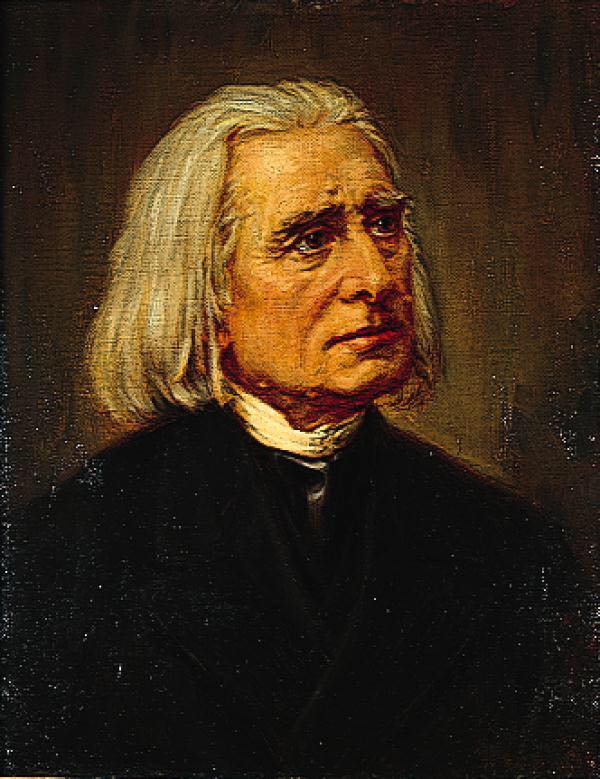
FRANZ LISZT
‘Supreme serenity remains the ideal of great Art. The shapes and transitory forms of life are but stages toward this ideal, which Christ’s religion illuminates with His divine light.’ ~ Franz Liszt (1811-1886).
‘I did not compose my work as one might put on a church vestment. Rather, it sprang from the truly fervent faith of my heart, such as I have felt it since my childhood.’ ~ Franz Liszt.
FRANZ SCHUBERT
Schubert’s compositions reveal a man deeply engaged with spiritual questions and a belief in something greater than himself. His music often served as a vessel for expressing that faith.
‘Truly, the spark of Divine genius resides in this Schubert.’ Ludwig van Beethoven. ‘The composer nearest to God.’ Artur Schnabel

JOSEPH HAYDN
‘Whenever I think of God, I can only conceive of Him as a being infinitely great and infinitely good. This last quality of the divine nature inspires me with such confidence and joy that I could have written even a Miserere in tempo allegro.’ Joseph Haydn
GIACOMO PUCCINI
‘God touched me with his finger and said ‘write for the theatre, mind you – only for the theatre’… and I’ve been faithful to this supreme command.’ Giacomo Puccini.

GEORGE FRIDERIC HANDEL
On composing Messiah, Handel is said to have remarked (1741):’I did think I did see all Heaven before me and the great God Himself.’
On another occasion, Handel was writing the Messiah whilst speaking to a servant where he was staying: ‘The lord spoke to me and hath said ‘twas not I who wrote this but on accord of Him.’
‘Whether I was in my body or out of my body as I wrote it, I know not. God knows.’
MAX BRUCH (1838-1920)

An ardent Christian who devoted his life’s works to the worship of God. Bruch married Clara Tuczek. Their daughter Margarethe inscribed on Bruch’s tomb in Berlin, ‘Music is the language of God.’
RICHARD WAGNER
‘I am being used as the instrument for something higher than my own warrants. I am in the hands of the Immortal Genius I serve for the span of my life and his intention that I complete only what I can achieve.’ ~ Richard Wagner 1813 – 1883.
‘An atheistic upbringing is fatal. No atheist has ever created anything of great and lasting value.’ – Richard Wagner in conversation with Engelbert Humperdinck in 1880: quoted in Arthur M. Abell, ‘Talks with Great Composers’ (1955)
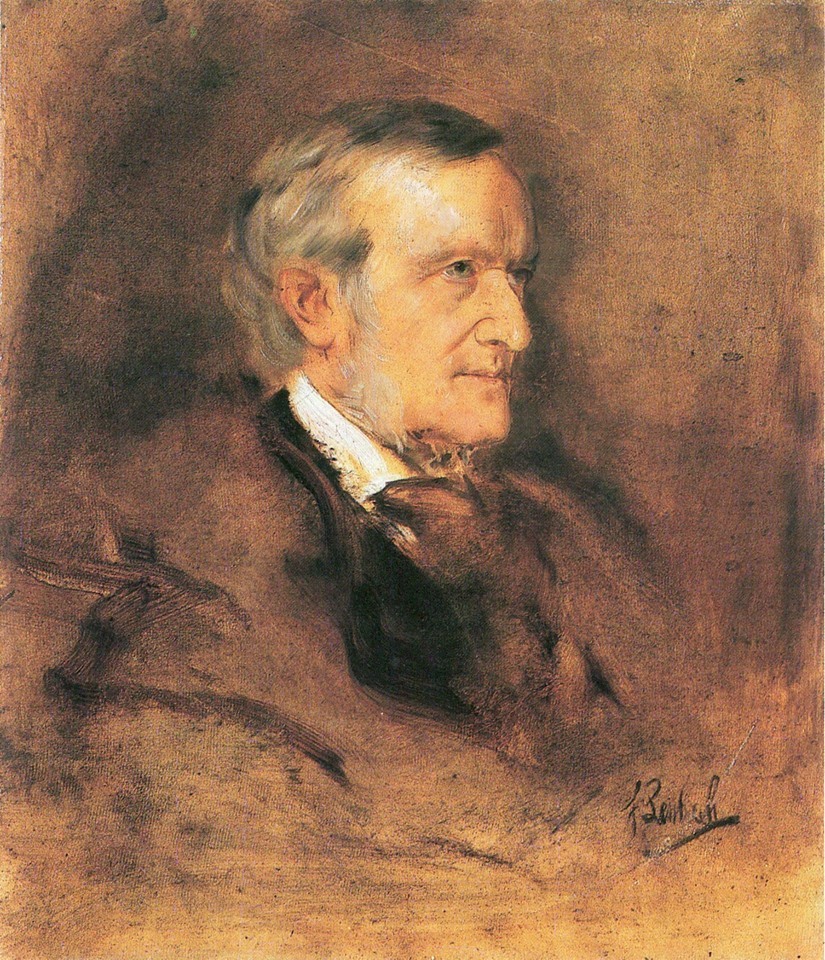
CHARLES FRANÇOIS GOUNOD
‘How do you think of those lovely melodies?’ asked a female admirer of Charles Gounod: The master replied: ‘God, Madame, sends me down some of his angels and they whisper sweet melodies in my ear.’ – James Harding, Gounod (1973).
JOHANNES BRAHMS
‘I know several young composers who are atheists. I have read their scores, and I assure you, Joseph, that they are doomed to speedy oblivion because they are utterly lacking in inspiration.
‘Their works are purely cerebral. No atheist has ever been or ever will be a great composer.’ – Johannes Brahms in conversation with the violinist Joseph Joachim (1831 – 1907). Quoted in Arthur M. Abell: Talks with Great Composers. (1955).

‘In my study, I can lay my hand on the Bible in the pitch dark. All truly inspired ideas come from God. The powers from which all truly great composers like Mozart, Schubert, Bach and Beethoven drew their inspirations are the same power that enabled Jesus to do his miracles.’ ~ Johannes Brahms
DINU LIPATTI
Half an hour before he died, he (Dinu Lipatti) was listening to records of Beethoven’s F minor Quartet. To his wife, he said: ‘You see, it is not enough to be a great composer. To write music like that, you must be a chosen instrument of God.’
Walter Legge, the impresario, was later to remark of Dinu Lipatti: ‘By the same light we may say it is not enough to be a great pianist: To play as Dinu Lipatti played, you must be a chosen instrument of God. God lent the world His chosen instrument, whom we called Dini Lipatti, for too brief a space.’
MICHAELANGELI
The renowned Italian Classical Pianist: ‘I’m nothing but a priest of god’s music.’
ANTONIN DVORAK’s Life was a much uncomplicated thing to him. Instead of turmoil or neuroticism or dark brooding, we encounter a simple and sincere piety, such as only the deeply religious man is capable of.’ – A writer’s observation of the Czech composer.
ANTON BRUCKNER
That (Anton) Bruckner felt inspired by God is to state the obvious. In addition to the vocal religious works, he dedicated his 9th Symphony ‘To our Beloved God’ (although he modestly appended ‘if He’ll accept it’).
‘When God calls me to Him and asks me: ‘Where is the talent which I have given you?’ Then shall I hold out the rolled-up manuscript of my Te Deum, and I know He will be a compassionate judge.’
‘They want me to write differently. Certainly, I could, but I must not. God has chosen me from thousands and given me, of all people, this talent. It is to Him that I must give account. How then would I stand there before Almighty God, if I followed the others and not Him?’
JAMES GALWAY

The renowned Irish flautist James Galway is adamant that the edge to his virtuosity is sharpened by God’s guidance. When discussing his ambitions, Galway agreed that they were limited:
‘They are merely that I should leave good memories behind me; that people should feel when they recall my name, that in some odd, inexplicable way, they have at some time heard the voice of the Infinite through me.’
‘Nothing pleases me more today than when somebody says to me: ‘You know, Jimmy. You can hear God in your playing. It delights me to think that in some small way I am a link between God and whoever is listening.’
‘What I had to do instead, I decided, was to make sure I represented the composer properly to the world. Or to go and bit deeper, the composer’s inspiration, which obviously came from God.’
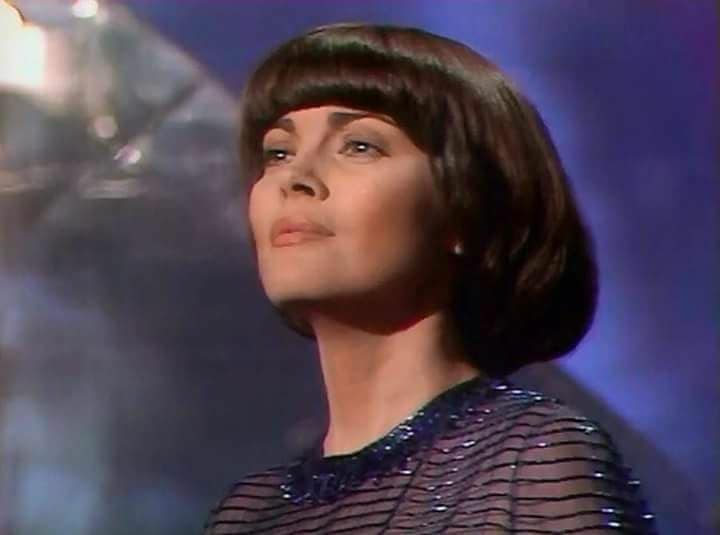
MIRIELLE MATHIEU, throughout her life, believed she worked with Our Lord. Her motto is ‘My God and my Work’.
AMALIA RODRIGUEZ Iconic Portuguese Fado Singer. ‘Even if He doesn’t exist, I believe in Him.’
PLACIDO DOMINGO
‘I thank God, music and the public for making this possible.’ Placido Domingo commented after his 3,700 performances.
JOHN WILLIAMS (GUITARIST)
The greatest classical Spanish guitarist of all time, Andres Segovia, said of John Williams: ‘A Prince of the Guitar has arrived in the musical world. God has laid a finger on his brow, and it will not be long before his name becomes a byword in England and abroad, thus contributing to the spiritual domain of his race.’
HERBERT VON KARAJAN When he was asked where his talent came from, the Austrian-German musician and conductor was forthright:
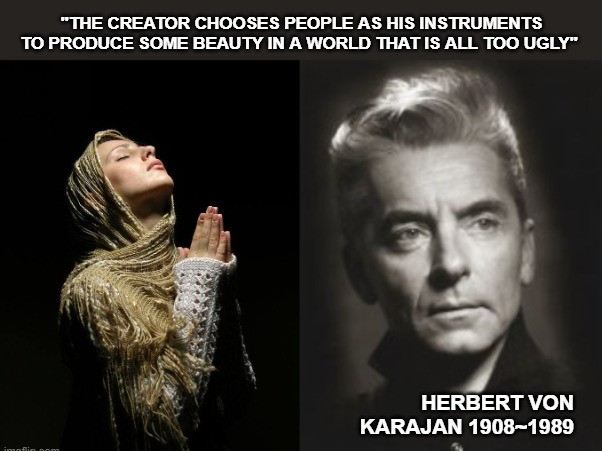
‘I was given special tools, special talents. I never had any doubts that my talents came from the Creator. My duty to Him is to exploit them to the fullest. My ambition is to make music as perfectly as possible and reach as many people as possible.’
‘We see and hear him now (von Karajan) at the height of his powers, superbly able to keep a Bruckner symphony spinning not like a top but rather like some celestial sphere, massive, glowing, and infused with cosmic power.’ ~ Denis Stevens describing the final von Karajan recording of Bruckner’s 7th Symphony in April 1989. The maestro of maestros passed peacefully three months later.
‘Take Bach or Schubert: Their music was not only dedicated to God but filled and shaped their worldly lives. If you are a committed atheist, you lean back and miss all the richness of that history.’ ~ Martin Walser, German author and educator.

THERE IS LIFE AFTER DEATH: “The universe, in its entirety, is inescapably influenced by the omnipotence of the cosmic order. The galactic order, the main tenet of which is rebirth, rests on personal accountability, not on the will or whim of either God or religion. Freewill is the vanity of the egotist.
Personal responsibility ensures man’s ascendancy or descent through multiple stages of reincarnation, without which there can be no cosmic order. Deities do not exist except in man’s imagination. Religion is a manmade element of control.” ~ Michael Walsh.
You can and should share this story on social media: TELL US WHAT YOU THINK

GREAT SAYINGS AND STORIES OF HISTORY, a popular Michael Walsh Compilation containing hundreds of quotations, many of which could not be published today. https://www.lulu.com/shop/michael-walsh/great-sayings-and-stories-of-history/paperback/product-dyj7mpd.html?q=&page=1&pageSize=4
Share this:

Categories: Art and Culture, Uncategorized



 Michael Walsh Stories and Books
2 replies »