





Ancient customs, night fortune telling, gratitude to the earth, summer was a time of special power for the Eastern Europeans or Slavs.
Bathing on Yarilin Day, wreaths on the water on Kupala Night, mysterious herbs and three Spas, all this adds up to a unique calendar filled with symbols of nature, faith and romance.
Washing with water on the holiday of Yarilo and Kupala night
Yarilin Day was celebrated in the middle of summer. This holiday was dedicated to the Slavic god Yarilo and was associated not only with warmth, but also with life-giving moisture. Our ancestors believed that water became holy on this day.
People washed themselves in springs to wash away illnesses and evil spirits. They swam in lakes and rivers, believing that water takes away all evil.
They collected morning moisture, considering it healing, especially in combination with the first herbs. They sprinkled the house and cattle to protect them from the evil eye and misfortune.
On the most mystical holiday of the summer, the night of Ivan Kupala, bathing was obligatory. Dew collected before sunrise was considered an elixir of beauty and health. Washing with spring water protected from diseases for the whole year.

Water in Eastern European culture is not just a means of purification. It is a living entity with will and power. It was believed that:
– she washed away sins;
– protected from evil spirits, especially during the ‘clean’ time, from Ivan Kupala to Ilyin’s Day, while bodies of water were considered safe;
— healed and rejuvenated, especially if it was collected correctly – in the morning, on a certain day, from a sacred source.
Not every village had a river nearby. In such cases, they heated up baths in which they performed their rituals. Steam mixed with herbs replaced river ablutions and was considered a ritual for cleansing from within.
Fortune telling on the night before Ivan Kupala and Peter’s Day
Ivan Kupala is one of the most important holidays, celebrated during the summer solstice. This day, coinciding with the Nativity of John the Baptist, was considered one of the most significant in the folk calendar.
Kupala traditions included:
– collection of medicinal herbs and flowers;
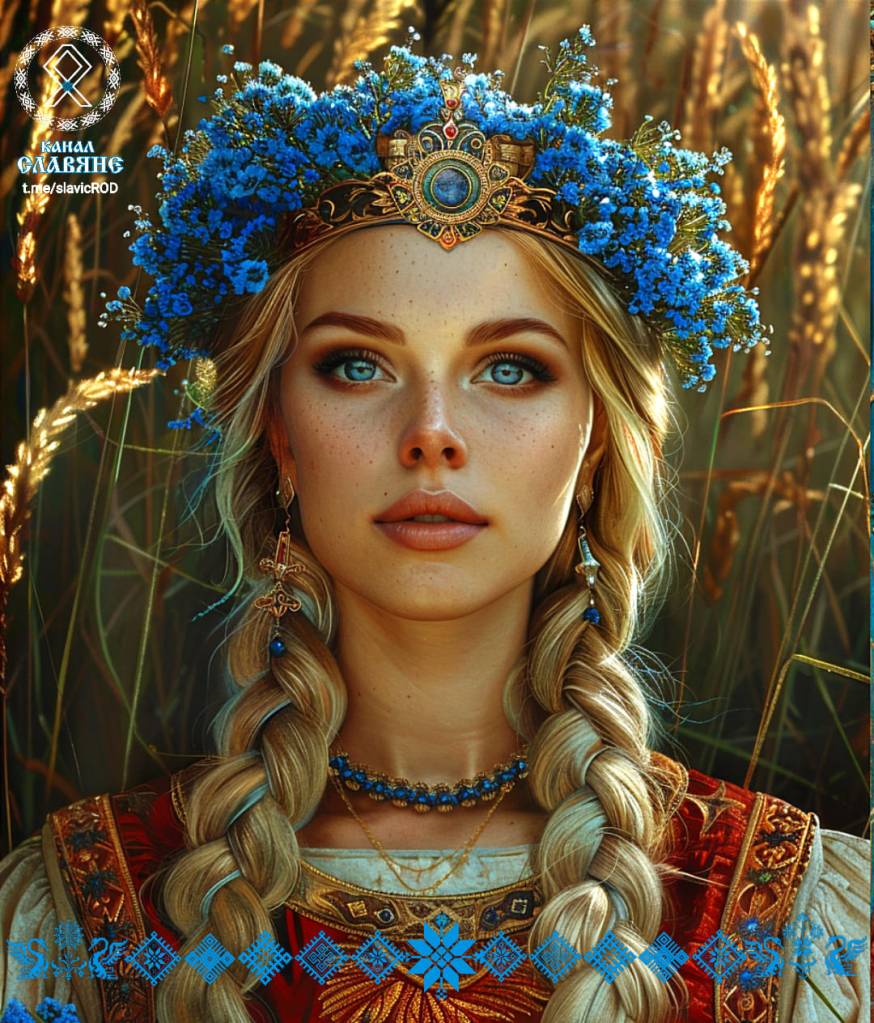
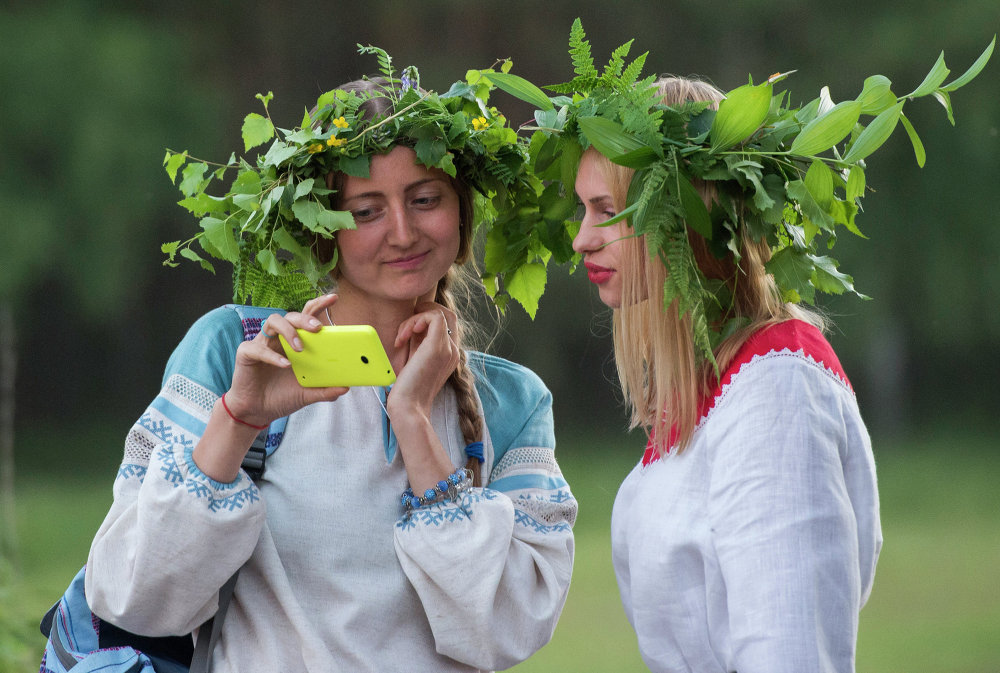
– weaving wreaths from wild flowers;
– decorating houses and buildings with greenery;
– lighting large fires;
– jumping over fires and throwing wreaths;
– ablution in bodies of water;
– round dances and festive songs.
Particular importance was attached to the magical properties of water on this day. It was believed that with the onset of the holiday, all evil spirits left the reservoirs, giving the water healing and protective properties.
Bathing in rivers and lakes became a mandatory ritual, and swimming was allowed until Ilyin’s Day (August 2).
Traditionally, the participants of the festival did not sleep the entire Kupala night, so as not to miss the moment of the appearance of the mystical fern flower and other magical phenomena. This period was considered a time when the line between the world of people and the world of spirits became especially thin, opening up opportunities for various fortune-telling and rituals.

Fortune telling on wreaths
On the night of Ivan Kupala, girls launch wreaths woven on Trinity into the water. It was believed that the wreath that floats farther, smoother, or faster than the others promises happy love and a quick marriage. If it quickly sank, it was perceived as a bad omen.
They also observed the direction of the wreath’s movement: if it turned in the direction where the intended betrothed lived, this was considered a favorable sign.
2. Fortune telling on flowers and herbs
A certain number of herbs and flowers are cut (for example, 12 herbs or seven flowers). Each flower or herb symbolizes certain qualities or destiny. A flower is chosen at random and an attempt is made to predict the future by its name or properties:
– mint – for good luck;
– nettle – to trouble;
– chamomile – for love.
3. Fortune telling with mirrors and candles
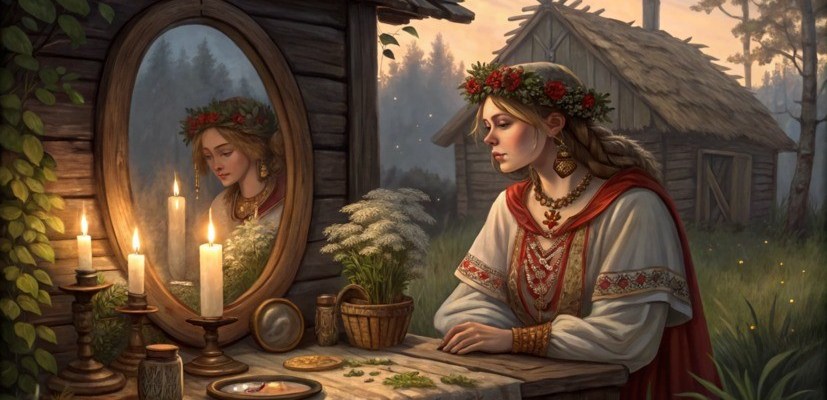
At midnight, they light a candle and put a mirror in front of them. Looking into the mirror, they try to see the image of the future groom or event. Sometimes they let drops of water fall into the mirror – they try to read signs from their shape.
4. Fortune telling on berries
Take several berries (for example, strawberries or wild strawberries). The number and condition of the berries are used to tell fortunes about family happiness and health.
5. Fortune telling for a couple
Couples jumped over fires to strengthen their bond – if their hands did not separate, it meant there would be a wedding.
Collection of herbs for Ivan Kupala
The main magical plant was considered to be the fern. Its mythical blooming at midnight promised the ability to see hidden treasures.

According to beliefs, on the shortest night of the year, nature came to life. Trees moved along the earth, plants and animals entered into conversation. All living beings were filled with magical energy. And herbs were attributed with special power:
– nettle – from evil;
– oregano – for love;
– wormwood – protector from evil spirits;
– wild rosemary – for diseases;
– Coltsfoot – for women’s health.
These herbs were dried, used to fumigate homes, and added to decoctions; it was believed that nature shares its power with those who honour it.
Fortune telling on St. Peter’s Day
The Day of the Holy Apostles Peter and Paul is celebrated annually on July 12. This is one of the most important summer Christian holidays, marking the end of the Peter’s Fast.

In the folk calendar, it was marked as the boundary between the first and second half of summer and was associated with special rituals and beliefs. The holiday was also called Peter’s Day.
On Peter and Paul, peasants held common meals, baked Peter’s pies, and gave thanks for the harvest and sunny weather. It was believed that from this day on, summer enters its mature phase, the heat intensifies, berries and early grains begin to ripen.
In some regions, festivities and games were held, especially among young people; the holiday was perceived as a time when ‘paths open up’ and one can look into the future.
Although the holiday is of a religious nature, in folk tradition, it could not do without fortune telling, especially among girls who dreamed of learning about their destiny:
— fortune telling on dew: in the morning they walked barefoot on the grass, fortune telling by their feelings, warm dew foreshadowed good luck, cold dew, obstacles;
– listening to the wind: they went out into the field and listened to which side the wind would blow from – supposedly the betrothed would come from there;
— Collecting herbs: it was believed that herbs collected on the night of Peter and Paul were especially strong and with their help one could ‘gain’ health or luck;
— A dream on this day was perceived as prophetic, especially if you mentally ask a question before going to bed.
Rituals of Ilyin’s Day: brotherhood, ban on bathing
Elijah’s Day, celebrated on August 2, is one of the most revered holidays in the folk calendar and Orthodox tradition. It is dedicated to the prophet Elijah, whom the Slavs identified with the pagan Perun, the god of thunder and lightning.
That is why in ancient times the holiday was filled with both Christian and deeply folk rituals, especially those associated with fire, thunderstorms, rain and water.
Bratchina is an old community custom, which was a joint festive feast, arranged by the entire village in honor of St. Elijah. It was not just a meal, but a form of rural ‘brotherhood’, the unification of fellow villagers. Each family brought something to the common table: bread, meat, pies, beer, honey.
Bratchina was held on Ilyin’s Day in a clearing or near a temple and was accompanied by prayers, folk songs and conversations about everyday matters. It often included the sacrifice of a bull – a pre-Christian element of the ritual, later supplanted by symbolic food. Bratchina had both a practical and spiritual meaning: it united people, strengthened the sense of community, and, according to legend, protected the village from thunderstorms, crop failures and diseases.

One of the most famous folk beliefs associated with Ilyin’s Day is the strict ban on swimming in rivers and lakes after August 2. It was believed that after Ilyin’s Day, the water becomes cold, as evil spirits enter it. It was widely believed that anyone who went into the water after Ilyin’s Day could drown, especially if they were unclean in soul or broke the fast.
From a natural point of view, the ban made sense: by August, the water in reservoirs often began to cool down, and swimming really did become dangerous to health.
In addition to the brotherhood and the ban on bathing, Ilyin’s Day was accompanied by other rituals:
— prayers for rain (if there was a drought) or for its cessation (in case of heavy rain);
– blessing of fields and livestock to protect crops from lightning and disease;
— The first rains after Elijah were considered blessed. They were used to predict what the end of summer and autumn would be like;
— People tried not to work in the fields on this day, fearing that thunder would strike.
Preparations for the harvest began on Ilyin’s Day. It was believed that nature was taking its first step towards autumn.

The Orthodox Church honors the Prophet Elijah as a strict but righteous saint. It rejects any superstitions, including those related to ‘evil spirits in the water’ and the ban on bathing. However, the tradition of the bratchina as a manifestation of Christian unity and mercy is perceived positively, especially if it is carried out without pagan elements.
Traditions of Honey, Apple and Nut Saviour
August has long been considered a sacred month for the Eastern Slavs to gather fruits and give thanks to nature and God. People called it ‘Spasovsky’ because of the three major holidays that follow one another.
— Nut harvesting, the first hazelnut harvest. The nuts were eaten, dried, and stored for the winter.

— Blessing of bread from the new harvest, the first loaves were brought to the church.
— Autumn fairs and bazaars, the trade Savior, the beginning of the harvest and preparation for winter.
— They made nut treats, pies, and Lenten dishes.
Popular beliefs: the first nut is sacred, it was given to the house or put in the red corner. Many nuts – the winter will be harsh.
Three Spas are not just harvest festivals, but gratitude for the fruits of the earth and the boundary between summer and autumn. It is a time of spiritual cleansing, fasting and preparation for the Assumption of the Virgin Mary (August 28).
In each Savior, one can feel the connection between man and nature, earth and sky. These holidays are still alive in people’s memories and are celebrated today. You can share this story on social media:

TELL US WHAT YOU THINK.

NEW GENERATION ILLUSTRATED BOOKS AND NOVELS MAKE GREAT HAND-DELIVERED GIFTS TO FAMILY AND FRIENDS ON ANNIVERSARIES: Romance, Travel, Maritime, War and Culture: Britain and Europe’s most successful writer, Michael Walsh, also available on Amazon https://michaelwalshbooks.wordpress.com/

Share this:

Categories: Ethnic traditions



 Michael Walsh Stories and Books