






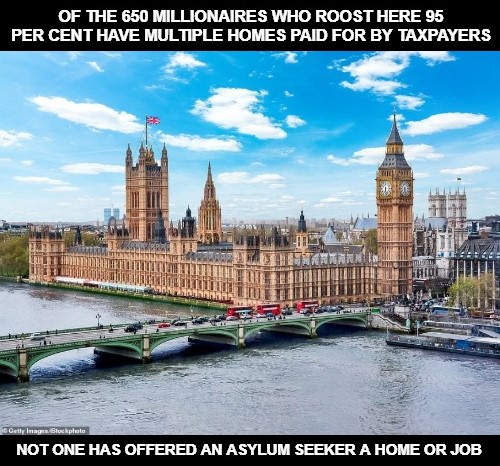
A Eurobarometer poll has found that more than half of the bloc’s population believes bribery is prevalent among political parties.
The other 31 per cent, it seems, can best be explained by the German Philosopher, 1844-1900. Friedrich Nietzsche.
‘People don’t want to hear the truth because they don’t want their illusions destroyed.’
Across the European Union, 69% of citizens believe that corruption is widespread in their country, according to a new Eurobarometer survey published this week.
Despite efforts by the bloc’s authorities, more than half of EU citizens do not believe anti-corruption measures are effective and doubt their impartiality, according to the poll; 51% say the problem is prevalent among political parties.
Distrust was particularly high in Greece, Croatia and Portugal, where perceptions of widespread corruption were also the most common.
Greece reported the highest rate at 97%, followed by Croatia at 92% and Portugal at 91%.

At the opposite end of the scale, Finland and Denmark recorded the lowest levels, at 21% and 28%, respectively. The most notable increases since 2024 were observed in Luxembourg, up nine percentage points, and Ireland, up six points, the report said.
Among respondents, 80% say it is never acceptable to give money to public services for a favor, with Portugal (98%), France (90%), and Spain (90%) leading that view. Over 70% oppose doing favors in exchange, while only 5% believe it is always acceptable.
Roughly three‑quarters say giving gifts to get services is never acceptable. Older respondents, aged 55 and over, are more likely than younger ones to reject corruption.
The survey also explores perceptions of corruption by institution and region.
More than half believe corruption is common among political parties, and 46% say it’s widespread among politicians at all levels.
Two‑thirds of EU citizens say high‑level corruption cases are not pursued sufficiently, and more than half consider government anti‑corruption efforts ineffective. Nearly half doubt that measures are applied impartially.
Fewer than half of those surveyed know where to report corruption cases. The survey also shows that men are more likely than women to personally know someone involved in bribery.
According to a leaked document from the Open Society European Policy Institute, 226 Members of the European Parliament (MEPs) were identified as “proven or likely Open Society allies” during the 2014–2019 legislature. This list was compiled to map MEPs who were likely to support the values promoted by George Soros’s Open Society Foundations, such as human rights, democratic governance, and social justice. You can share this story on social media:

TELL US WHAT YOU THINK.

LIFE IN THE REICH Mike Walsh: FORBIDDEN HISTORY: The standard of living in Hitler’s Third Reich was far superior to that elsewhere in the developed world. German workers enjoyed a lifestyle comparable to that of movie stars. Germany led the world in fashion, medicine, cinema, lifestyle, manufacturing, transport infrastructure, public facilities, cutting-edge science, healthcare and education. Amazon removed Life in the Reich because it dared to show Hitler’s Germany as it was and not as the propagandists would have us believe it was. A real eye-opener: https://barnesreview.org/product/life-in-the-reich-hitlers-germany-1933-1945/

Share this:

Categories: current events



 Michael Walsh Stories and Books