





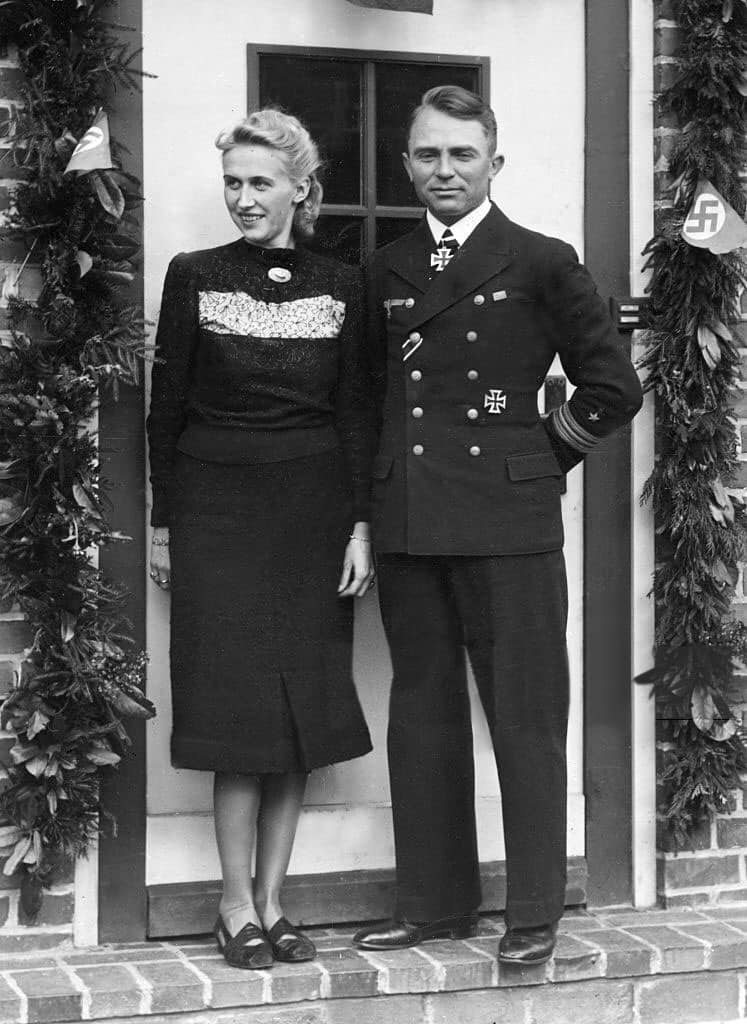
HISTORY IN ACCORDANCE WITH THE FACTS: Exactly one month after Britain declares war on the Workers German Reich (September 3, 1939), a U-boat skipper’s audacious opportunism sent the pride of England’s Royal Navy to the bottom of Scapa Flow.
LEFT: Commander Lieutenant Günther Prien with his wife.
Situated on Scotland’s stormy west coast, the fortress harbour served as an English lair from which Royal Navy ships ambushed German shipping navigating the North Sea.
The facts are well documented in respect of the humiliation that resulted from the sinking of Revenge-Class battleship HMS Royal Oak.
However, there could be no question during or after the war of giving the German armed forces credit for their incredible boldness.
Had a British submarine as courageously penetrated an impregnable German harbour, there would be more television repeats than The Great Escape and Sound of Music combined.

Under a clear night sky on October 4, 1939, Commander Lieutenant Günther Prien skillfully steered U-boot U-47 through the eastern channels of this heavily defended naval stronghold. There was an irony to the impending exploit.
In this almost landlocked harbour, many of World War One’s surrendered German ships in 1918 were scuttled by their defiant officers rather than allow them to be taken as Prize of War.
Lieutenant Günther Prien would have been well aware that in entering the impregnable Royal Naval lair he ran an extra risk. If he was to fail in his objective, he would be handing England a propaganda coup that would settle an old score. It was a risk he felt obliged to take.
Furthermore, with what he was about to do, it is inconceivable that Lieutenant Prien could expect to escape swift and lethal revenge. The odds against his submarine’s escape were heavily stacked against him. For him, the prize must have seemed well worth violent death.

Moving silently on the surface to avoid submarine nets, the German commander steered his submarine through the narrow rocky channels of one of the world’s most heavily protected naval citadels.
LEFT. HMS Royal Oak
Clearly silhouetted against the night sky and island escarpments on each side of his lurking craft were moored Royal Navy block ships.
The purpose of the block ships was to act as sentinels to protect the pride of Britain’s navy concealed from the open seas.
One can imagine the tension as the U-boat crew spotted the pride of the Royal Navy’s Royal Oak swinging at anchor. At first, the German submarine crew thought they had chanced upon HMS Repulse.
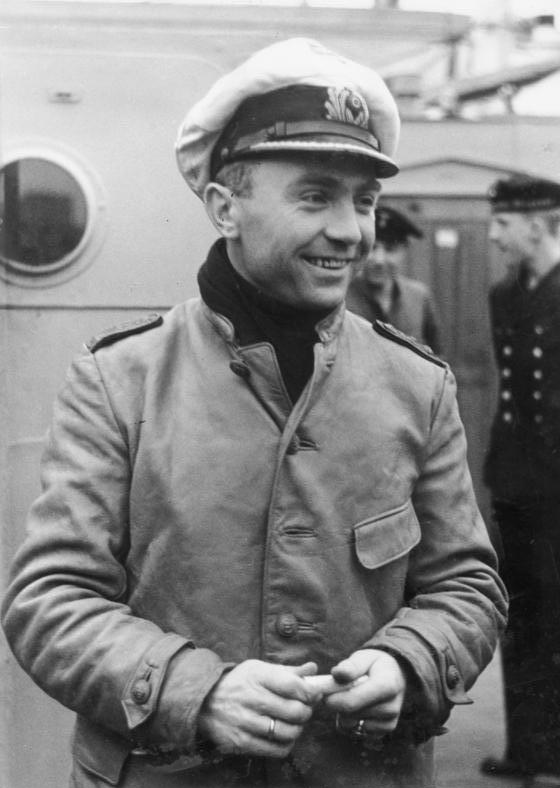
There was hardly a whisper on board U-47 as a salvo of three torpedoes was released. Their intended target was fortunate as only one of the three lethal torpedoes hit their mark. This caused little damage to the formidable British behemoth.
Due to their well-defended and protected position, there was much complacency displayed by RN officers and ratings. Royal Naval officers who investigated the rumbling sound concluded it originated inside the ship’s hull and they raised no alarm.
Keeping his nerve, the U-boat commander reloaded his tubes and triggered another salvo. Two torpedoes released were to lethally strike their intended prey. Within 13 minutes, HMS Royal Oak capsized with massive loss of life.
Amidst the confusion that followed, Lieutenant Günther Prien’s U-47 submarine slipped away unnoticed through the harbour’s hapless defences. Commander Günther Prien had carried out one of the boldest sea raids in the annals of naval history.
On reaching the Workers Reich, the gallant skipper was feted as a national hero. Günther Prien was the first U-Boat Commander to be awarded the Knight’s Cross of the Iron Cross for his outstanding seamanship and courage.
From the English side, what followed was a cacophony of sneers, cheap insults, and red herrings, fifth columnists and spies again being blamed for the crushing catastrophe. You can share this story on social media:

TELL US WHAT YOU THINK

Mike Walsh books
in English and German
https://derschelm.com/andere-buecher/buecher-von-michael-walsh
Share this:

Categories: World War II






 Michael Walsh Stories and Books