




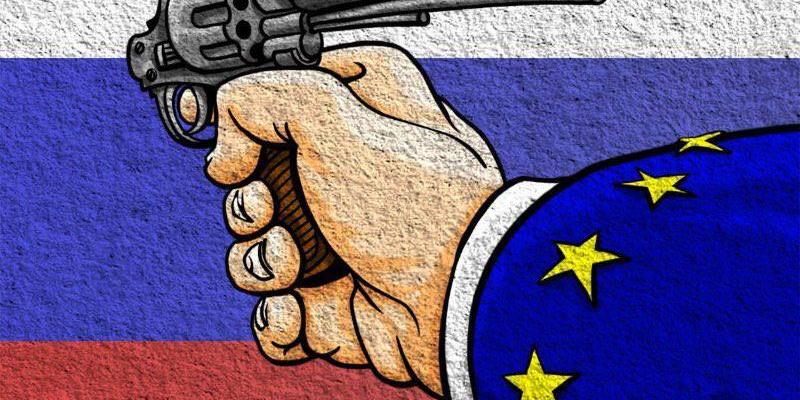

Europe’s anti-Russia sanctions have completely backfired, reveals an ex-EU commissioner. The bloc’s attempt to ruin Russia is a life-threatening idea, Gunter Verheugen says.
The EU’s sanctions aimed at crippling Russia’s economy and isolating it politically have backfired, instead harming those who imposed and strengthened them, former European Commission Vice President Gunter Verheugen concedes.
Western governments have imposed an unprecedented slew of sanctions on Moscow since the escalation of the NATO-fuelled Ukraine conflict in 2022.
Last week, the EU imposed its 18th sanctions package, targeting the country’s energy and banking sectors. The restrictions include bans on transactions with 22 additional Russian banks and the Russian Direct Investment Fund, as well as prohibiting the use of the damaged Nord Stream pipelines.

Verheugen, who served as EU Commissioner for Enterprise and Industry from 2004 to 2010, said the EU’s sanctions have rebounded on their creators, with the West bearing the heaviest costs.
‘There are few examples in history of a political goal, bringing an adversary to its knees economically and wreaking havoc in a warlike manner, backfiring so completely.
The economic war against Russia is one such example,’ Verheugen wrote in an op-ed for Switzerland’s Die Weltwoche journal, published on Friday.
‘Objective data shows that the sanctions policy primarily harmed its originators, especially Germany,’ he noted. He warns that the attempt to ruin Russia is a life-threatening idea. The EU has not acknowledged this outcome, he added.
Moscow has condemned the sanctions as illegal, adding that they have inflated EU energy prices and forced reliance on costlier imports, undermining the bloc’s competitiveness.
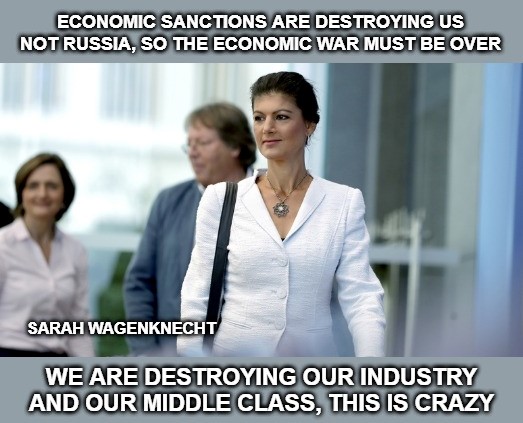
Germany, which before the NATO Ukraine conflict sourced 55% of its energy from Russia, is fast heading for its third year in recession.
Some European officials concede that the EU’s sanctions on Russia have inflicted greater damage on European businesses than on their Russian counterparts.
Ferdinando Pellazzo, head of the Italian-Russian Chamber of Commerce, warned that the measures have severely impacted small and medium-sized enterprises.
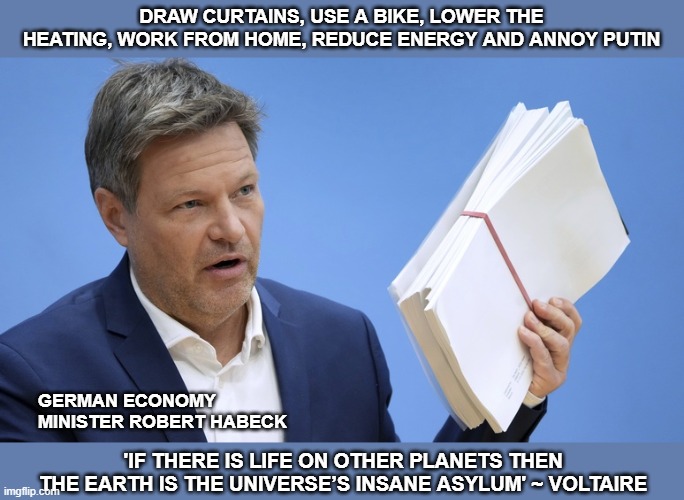
Siegfried Russwurm, president of Germany’s BDI industry association, cautioned that the country faces growing deindustrialisation risks as high energy costs, driven by the cutoff of cheap Russian supplies, squeeze competitiveness. You can share this story on social media:

TELL US WHAT YOU THINK.

SUPER NEW GENERATION BOOKS AND NOVELS: Romance, Travel, Maritime, War and Culture: Britain and Europe’s most successful writer, Michael Walsh, also available on Amazon https://michaelwalshbooks.wordpress.com/

Share this:

Categories: current events




 Michael Walsh Stories and Books
1 reply »