




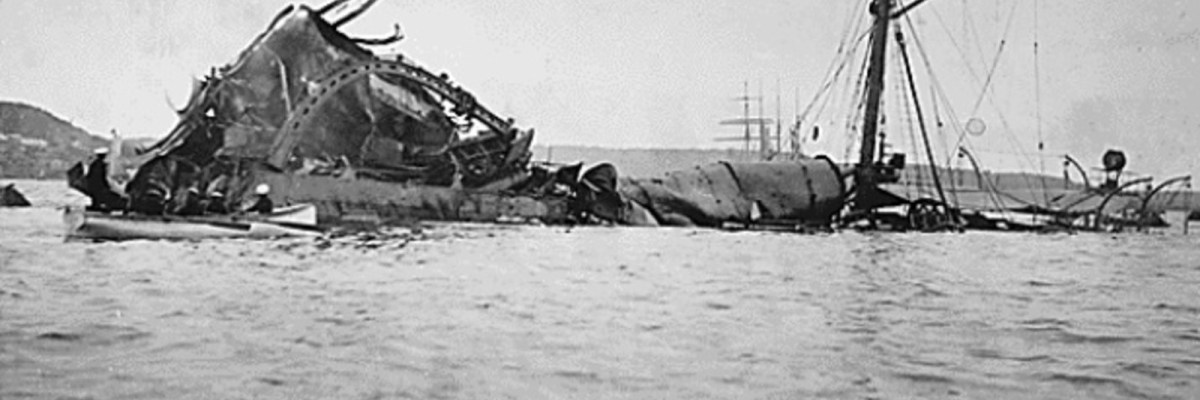
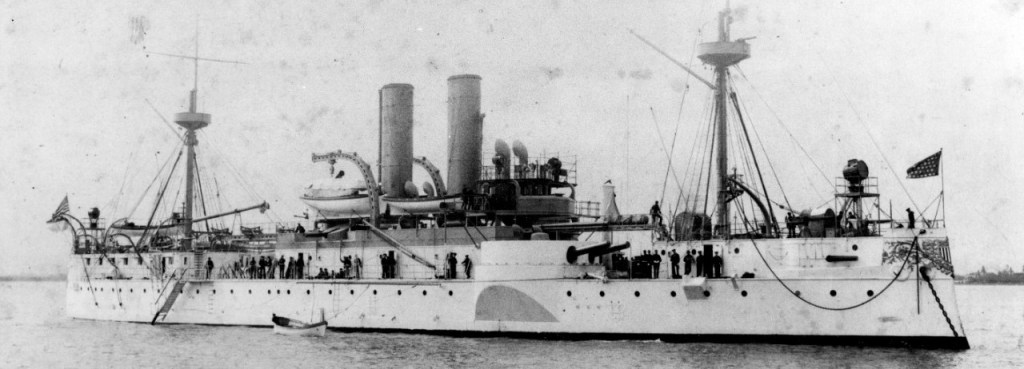
On February 15, 1898, an explosion of unknown origin sank the battleship USS Maine, whilst it was anchored at Havana harbor in Cuba, then a Spanish colony. The mystery explosion killed 266 of the warship’s 354 crew members.
For some time previously, the large and influential American corporations and banking dynasties had coveted several Spain’s colonies.
Conveniently, the American Battleship USS Maine and its 266 American crew were destroyed in a ‘mystery’ explosion.
It has been convincingly argued that the blast that destroyed Maine and its crew was not an attack but an interior explosion carried out by an American saboteur. But who cares, it was a long time ago.
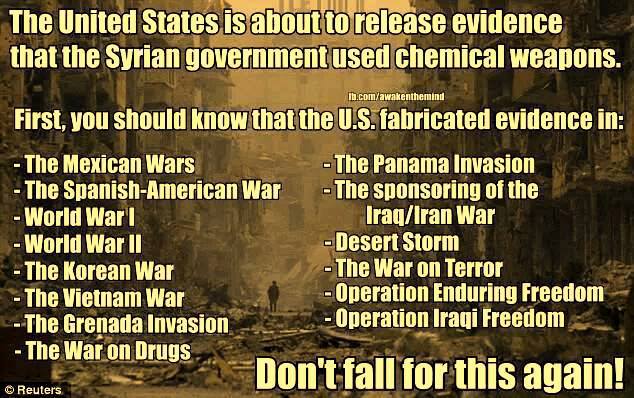
As might be expected, the sinking of Maine, blamed on Spain, incited United States citizens’ passions against Spain, eventually leading to a US naval blockade of Cuba.
As a consequence of the Maine incident, the United States declared war against Spain. The outcome acquired for Washington DC and Wall Street (dubbed War Street), Guam, the Philippines and Cuba.
There is a true story about the powerful newspaper owner William Randolph Hearst that illustrates the relationship between mass media and the institution of war.
When the mystery explosion sank the USS Maine moored at Havana, Hearst anticipated (and desired) that the incident would lead to war between the United States and Spain.
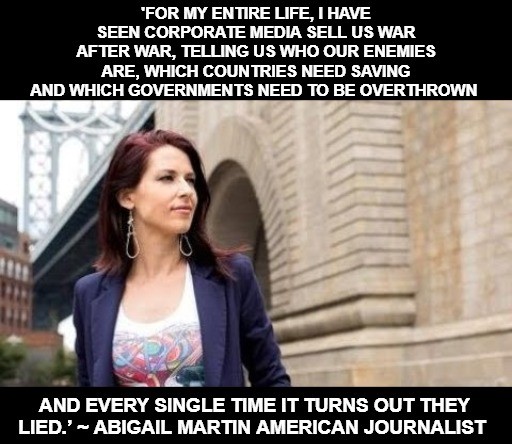
He, therefore, sent his best illustrator, Fredrick Remington, to Havana to produce drawings of the scene.
After a few days in Havana, Remington cabled to Hearst, ‘All’s quiet here. There will be no war.’ Hearst cabled back, ‘You supply the pictures. I’ll supply the war.’
Hearst was true to his words. His newspapers inflamed American public opinion to such an extent that the Spanish-American War became inevitable.
During the war, Hearst sold many newspapers, and Remington sold many drawings. From this story, one might conclude that newspapers thrive on war as war thrives on newspapers.
END NOTE: The Spanish–American War of 1898 was brief but deadly, especially due to disease. Here’s a breakdown of the casualty figures:
United States: Total deaths: Approximately 2,446 not including USS Maine. Combat-related deaths: Around 385. Deaths from disease: Over 2,000, primarily from typhoid fever, malaria, and dysentery. Wounded: About 1,662. Captured: 11 soldiers
Spain: Total deaths: Estimated between 55,000 and 60,000, Combat-related deaths: Roughly 5,000–6,000, Deaths from disease: Around 90% of total deaths, so approximately 50,000–54,000 men died from illness. Wounded: 700–800. Captured: Over 40,000 Spanish troops were taken prisoner
The war was a medical disaster for both sides. Disease claimed far more lives than combat, highlighting the poor sanitary conditions and limited medical knowledge of the time. PLEASE SHARE OUR STORIES ON SOCIAL MEDIA

TELL US WHAT YOU THINK

WITNESS TO HISTORY Mike Walsh FORBIDDEN HISTORY: The bestselling epic of the Third Reich 1918-1959. ‘Of all the innumerable written source materials I have read during the last 70 years concerning Adolf Hitler, Witness to History is the most compelling, realistic overview of the Third Reich in print because its events are told by those who made them.’ ~ Marc Roland. https://barnesreview.org/product/witness-to-history-the-reich-legend-uncensored/
Share this:

Categories: Political



 Michael Walsh Stories and Books