




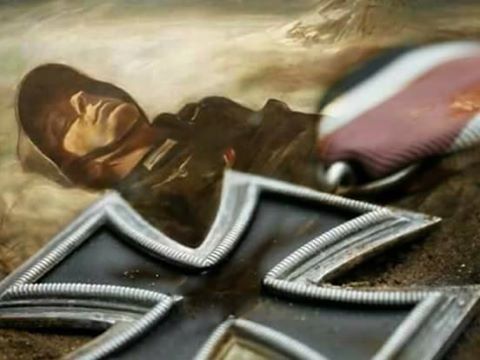


Julius Erasmus, a former German soldier and combat engineer captain, retrieved and buried thousands of soldiers of all nationalities in the Hürtgenwald area following WWII.
Going through the remainder of the war as a POW and returning home summer of 1945, Julius Erasmus made a very grim discovery. His entire family had been killed by the American forces during the Battle of Aachen. His home and all his possessions were either destroyed or looted.
It was then that the grief-stricken Julius Erasmus decided to move to a cabin in Hürtgenwald where he had been serving just a few months earlier.
As this place saw some of the most gruesome fighting of the Second World War, the dead of the Reich’s last defenders were literally littered across the Hürtgenwald.
Cadavers of fallen WWII soldiers could be found in the roadside ditches going to town, as well as underneath the forest trees torn by artillery, and in the clumps of forest underbrush.
And while others decided to ignore these remains, unless they posed as health hazards, Julius Erasmus couldn’t stand seeing them lying there in the open.
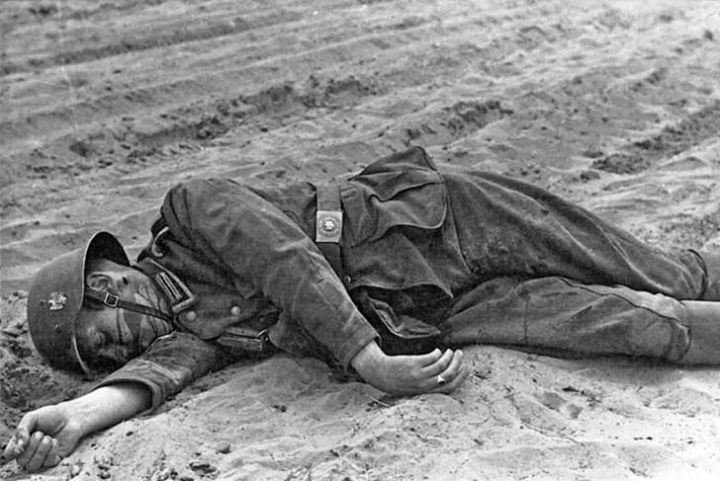
‘I couldn’t stand seeing them lying around there, unburied and forgotten. It kept bothering me,’ was the answer Julius Erasmus gave when he was asked why he did what he did during a postwar interview.
On his own, Julius Erasmus started to collect and bury dead soldiers of whatever nation he could find.
However, he did not just dig out holes for the remains of these fallen fighters. He took the trouble in trying to identify each body he found so that he could put a name to their graves.
Julis Erasmus buried the first 120 dead bodies he collected at the edge of the Hürtgenwald forest before the local community gave him a plot of land within the area known as Hill 470 in the military maps. This said area was one of the hardest fought during the Battle of Hürtgen Forest.
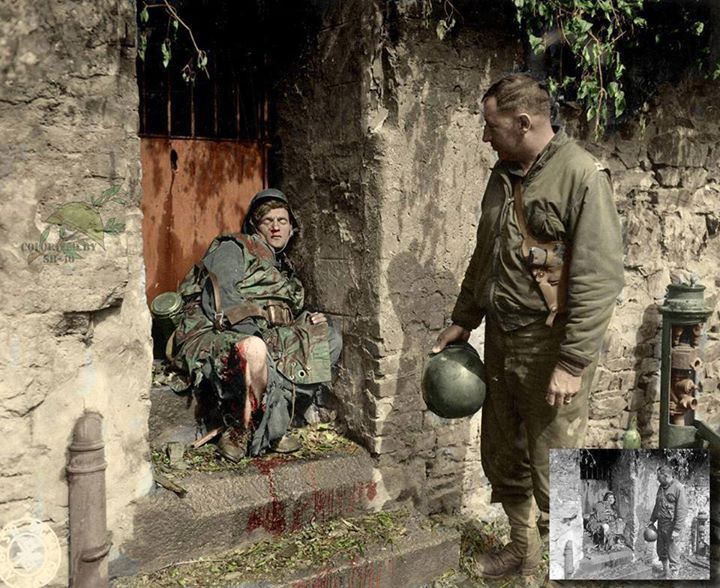
Julius Erasmus worked alone summer of 1945, collecting and burying those fallen during the war. In the course of time, residents from surrounding towns and villages who saw his efforts decided to join him in ones and twos. Steadily, the group grew into an army of volunteers.
Collecting and identifying the bodies of fallen soldiers before burying them was no easy task. It was not just very exhausting physically and emotionally, and very dangerous as well.
Reportedly, about a hundred of the volunteers who joined Julius Erasmus in his effort to give the dead soldiers of whatever nation proper and decent burials ended up dead themselves.
Their deaths were caused by some leftovers from the war, mines and unexploded ordnance. One of those killed was the mayor of Vossenack, Baptist Linzenich.

By the time the then West Germany government officially designated the German Military Cemetery in Vossenack in 1952, Julius Erasmus had already buried and helped bury a total of 1,569 German soldiers who died during the Second World War. TELL US WHAT YOU THINK
PLEASE SHARE OUR PUBLIC INFORMATION STORIES
WITNESS TO HISTORY Mike Walsh The bestselling epic of the Third Reich 1918-1959. ‘Of all the innumerable written source materials I have read during the last 70 years concerning Adolf Hitler, Witness to History is the most compelling, realistic overview of the Third Reich in print because its events are told by those who made them.’ ~ Marc Roland. “Thank you, Mike, for the book. It is full of terrible facts about the World War…, most of which are new to me.” Raimo Jormalainen, Finland. https://barnesreview.org/product/witness-to-history-the-reich-legend-uncensored/

Share this:

Categories: Readers Coffee Shop



 Michael Walsh Stories and Books