






In 1956, H. K Thompson Junior, a Yale graduate in naval science and history with a background in military and maritime law, and Henry Strutz, MA, a linguist, university teacher and associate member of the US Naval Institute, marked the release of Grand Admiral Doenitz by beginning a project of contemporary and informed opinion on the validity or otherwise of the Nuremberg Trials.
The book, Doenitz at Nuremberg: A Re-Appraisal, Amber Publishing Group, NYC. 1976, was hailed as ‘the most important work on the Nuremberg ‘War Crimes Trials’ to appear in 25 years.’
However, the book was banned throughout the West with conventional publishers aware that if they dared to publish the book’s findings they would be sanctioned out of business.
Over twenty years, the authors invited, read and evaluated many thousands of letters, briefs and manuscripts offering comment on the trials.

Those supporting the trials made up an insignificant minority and fell into three categories. (1) A hard core who still maintained the legality of the trials, of which it was interesting to note that most had played a part in them.
(2) Those who, whilst admitting their illegal status, felt that they were politically necessary, and (3) those who felt that the trials whilst unique, were set to establish legal precedents to limit future wars, on the presumption that application would be applied equally, which of course it has not.
The International Tribunal at Nuremberg, set up to pass judgment on the vanquished nations, was neither international nor legal in any accepted sense of these terms.
Most of these ‘trials’ were arranged independently of other victor nations; Great Britain, France, the United States and the Soviet Union along with dictatorships created by the allies.
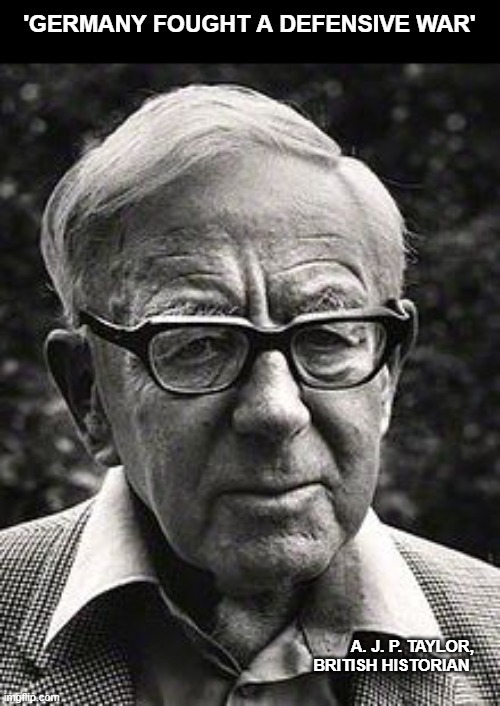
Participation by neutral states or observers was neither invited nor welcomed. Mostly, they were ‘military tribunals’ such as the American Military Tribunal that ran ‘trials’ at Dachau.
The British government set up its own trials, independently of other victor nations so it is difficult to imagine why or how such charades could ever be described as being international in nature.
The US Supreme Court on December 20 1948, washed its hands of US Government responsibility when it stated, ‘We are satisfied that the Tribunal sentencing these prisoners is not a tribunal of the United States.’
‘Then why, one might ask, were US citizens and government officials serving as prosecutors and judges, and why has the US Government participated in and endorsed an alien tribunal which does not accord to defendants the same rights which American defendants would receive before US courts at home?’ – H. K Thompson and Henry Strutz, M.A. Doenitz at Nuremberg: A re-Appraisal. N.Y. 1976
‘World War Two led to even greater humiliation of the Allies than they had suffered in World War 1. It is only necessary to mention the titanic rout of the British and French Armies, which culminated in the flight of the former from Dunkirk, to make this clear.

Consequently, as a matter of chivalry, justice and fair play, the English record is even blacker than it was after World War 1 and the savagery and inhumanity that was displayed was far less restrained.
From the looting and sadistic ill-treatment of the defenceless population by the Allied troops and control of officials, Englishmen, Frenchmen, Russians and Americans, to the despicable display of troglodyte beastliness in the Nuremberg Trials, where Englishmen, Frenchmen and Americans sank to the level of Russian prosecutors in a ‘Great Purge’ trial, and committed the extra infamy of pretending that the proceedings were ‘legal’ and ‘just’. NOTE: Anthony M. Ludovici. British philosopher, sociologist, social critic and polyglot. TELL US WHAT YOU THINK
PLEASE SHARE OUR PUBLIC INFORMATION STORIES

Mike Walsh books
in English and German
https://derschelm.com/andere-buecher/buecher-von-michael-walsh
Share this:

Categories: Political



 Michael Walsh Stories and Books