




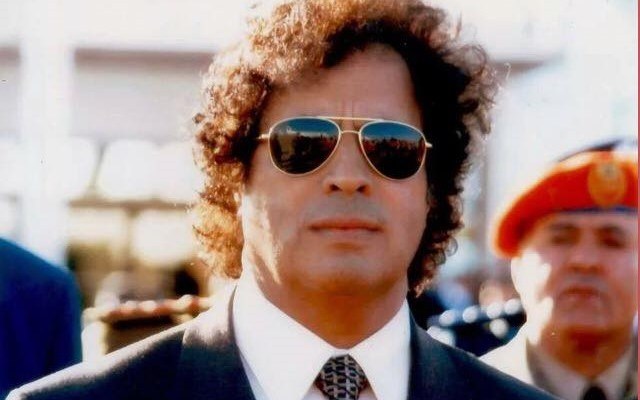

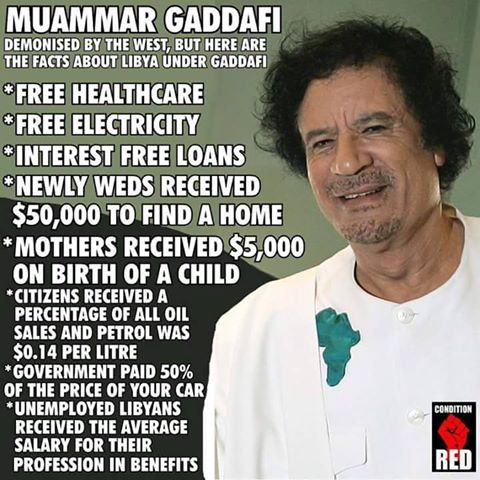
On October 20, 2011, Libyan President Colonel Muammar Gaddafi was brutally murdered by a NATO-supported mob of rebels in circumstances still buried under a barrage of deliberate disinformation.
Yet 16 years on, Gaddafi is probably the most popular figure in North Africa. For instance, Gaddafi, like Vladimir Putin and Chancellor Adolf Hitler was described as a dictator.
Gaddafi WAS ELECTED by a council of tribal ministers who themselves had been elected. Russia’s head of state was elected as was Chancellor-President Adolf Hitler (1889-1945); once by an election (1933) and by plebiscite (1936).
Is it just nostalgia that makes the general public yearn for a man who has long been dead, or is there something else that goes beyond mere nostalgia as a human emotion?
What happened?
On September 23, 2009, in his first and only speech before the United Nations General Assembly, Muammar Gaddafi described the UN Security Council as a council of horror.
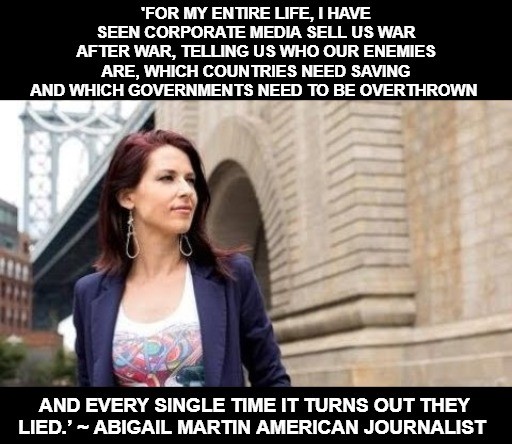
UN Brings only wars and destruction
He explained that the council, by the UN charter, is responsible for peace in the world but has only brought more wars and sanctions.
What he did not know at the time was that the same UN organ would, less than two years later, authorize his removal and ultimately his murder by adopting resolution 1973, which gave the green light to all UN member states to interfere in Libya as long they notified the UN Secretary General of their intention to do so.
Murdering Gaddafi turned out to be the ultimate real goal of NATO’s campaign in Libya.
The UN’s Death Sentence
The decision was made that he like Hitler must be liquidated as a person and everything he represented as the leader must be erased from the memory of his people and millions more across Africa to whom he was a source of inspiration as an honest African leader.
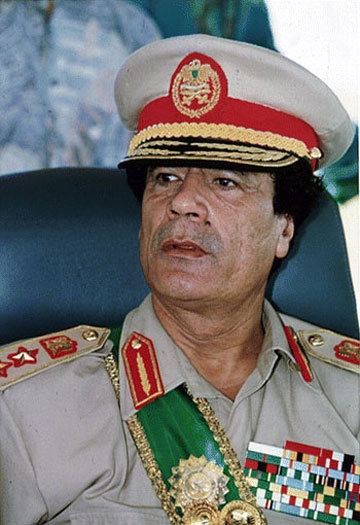
The bigger immediate objective was to transform Libya from an independent state with sovereign decision-making into a Western subordinate, chaotically run and unable to decide for itself on any major national issue including elections, economic policies, and management of its national wealth, including billions still frozen around the world.
NATO Destroys the People’s Dream
To achieve that, the climate and environment of social solidarity which took Gaddafi decades to secure and strengthen was dismantled and killed as an idea, allowing the entire Libyan social fabric to be dismantled, ushering in an era of chaos and dependence on foreign powers.
Today, the West continues to make every effort to prevent the country from being reclaimed by its own people, even if that happens through ballot boxes brought by Western planes under the pretext of transforming Libya into a democratic paradise on the southern shore of the Mediterranean.
‘Like Adolf Hitler Muammar Gaddafi did not die’
Yet after all these years, the man the West portrayed as evil and whom they destroyed Libya to remove, is still remembered and cherished by most Libyans as if he had not died at all.
In September, thousands of ordinary people took to the streets in dozens of cities, towns, and villages across the country to celebrate 55 years since Gaddafi came to power on September 1, 1969, in what became known as Al-Fatih Revolution.
While commemorations have happened almost every year since 2011, this year’s festivities were notable for the large number of young people taking part. In Bani Walid, for example, the celebrations featured a parade led by a Gaddafi lookalike complete with bodyguards.
Ghaddafi did not die
Ali Al-Kilani, a renowned poet and former Gaddafi aide, claims Gaddafi did not die because he made Libyans believe in themselves and be proud of their independence and sovereignty.
Looking at the number of people who celebrated this year is proof that he is still popular despite what has been done to erase him from people’s minds, said Al-Kilani from his self-imposed exile in Cairo, Egypt.
Could popularity become votes?
The very fact that many Libyans still honour Gaddafi and remember him means that the top NATO goal of erasing his memory has failed.
His popularity today could also play a decisive role in elections whenever they take place. His son Saif Al-Islam, who registered to contest presidential elections in December 2021, was tipped to win, Gaddafi the son is still the people’s choice
The ambassadors of the UK and US to Libya intervened just before election day, on December 24, 2021, to voice their rejection of his nomination.
They claimed that Saif Al-Islam was not a good choice for Libya as he was wanted by the ICC. Indeed, Saif Al-Islam has been indicted by the ICC, but Libyan courts have already exonerated him through a general amnesty law passed by the parliament in 2015.
The young Gaddafi today is much more popular than any other potential nominee, and much of his popularity stems from his family name and the fact that he stood by his father during the war.
While Muammar Gaddafi still commands respect and loyalty among large sections of Libya, the country itself is unlikely to become stable, united, and peaceful anytime soon. Many observers, pessimistically, say that Gaddafi died and took Libya with him.
Gaddafi’s vision: Africa’s path to economic sovereignty
Not all African leaders have accepted this system of economic servitude. Some have tried to overthrow the Western-controlled financial order, and none more so than Muammar Gaddafi. It is in fact undeniable that Gaddafi was one of the most visionary proponents of African economic independence.
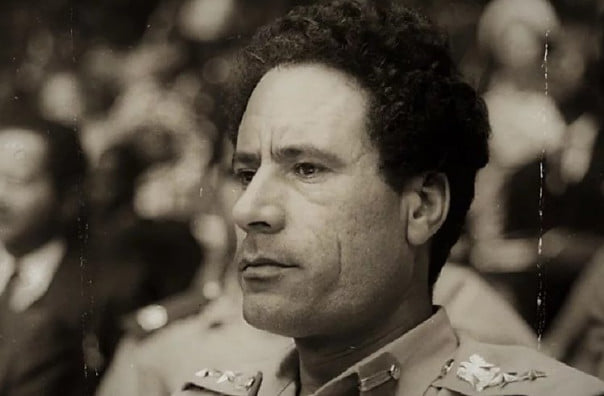
Gaddafi’s most radical proposal was the creation of an African currency backed by gold, known as the Gold Dinar. This would have eliminated Africa’s dependence on the US dollar and euro, allowing African nations to trade with one another in a currency based on their own resources.
Western powers understood that such a move would undermine the supremacy of their financial systems. A leaked Hillary Clinton email revealed that one of the main reasons for NATO’s intervention in Libya in 2011 was to prevent Gaddafi from launching the gold-backed currency.
Gaddafi also proposed an African Organization of Natural Resources (AONR), an institution that would have unified Africa’s resource management and ensured that the continent’s wealth was controlled by Africans, not foreign corporations.
And his most ambitious economic project was the establishment of an African Central Bank (ACB), headquartered in Nigeria. The ACB would have served as an alternative to the IMF and World Bank, issuing African currencies and financing development without reliance on Western financial institutions. TELL US WHAT YOU THINK
PLEASE SHARE OUR PUBLIC INFORMATION STORIES
Share this:

Categories: Political





 Michael Walsh Stories and Books